When someone dies, their car becomes part of their estate. The executor named in the will, or the administrator if there’s no will, decides whether it’s kept, sold or scrapped. Before any of that, tell the DVLA about the death, either through the government’s Tell Us Once service or by letter. That ends the vehicle tax, and any full months left are refunded to whoever you name. Don’t drive the car on the person’s insurance. If you need to use it, you’ll need your own insurance and to tax it in your name.
If you’re reading this because someone close to you has died, we’re sorry. Sorting out a car is rarely the first thing on anyone’s mind. But it’s often one of the first practical jobs that can’t wait, especially if the car is parked on the street with the tax about to run out.
We collect cars for families across Greater Manchester in exactly this situation. This guide covers what has to be done, what can wait, and how to keep things simple. It’s based on the DVLA’s bereavement guidance as of September 2026.
Quick facts
- Who deals with the car: the executor (if there’s a will) or the administrator (if there isn’t).
- Telling the DVLA: use Tell Us Once, or write to the DVLA Sensitive Casework Team, Swansea, SA99 1ZZ.
- Vehicle tax: it can’t be passed to anyone else. It’s cancelled and any full months are refunded.
- Insurance: don’t drive the car on the deceased person’s policy. Named drivers are not a safe assumption either.
- Selling or scrapping: both are possible. The money goes to the estate.
- Finance or Motability: speak to the finance company or Motability before you do anything with the car.
Who is responsible for a deceased person’s car?
The car is treated like any other possession the person owned. The person in charge of sorting out the estate is in charge of the car.
- If there’s a will, it names one or more executors. They deal with the car.
- If there’s no will, a close relative usually applies to become the administrator of the estate, and they deal with it.
- If the estate is small and simple, families often handle things informally without a formal grant. That works when everyone agrees. It’s riskier if they don’t.
It’s also worth knowing that the person named on the V5C logbook is the registered keeper, which isn’t always the same as the legal owner. For most private cars they’re the same person. But check before you assume the car is part of the estate in these situations:
- It’s on finance. On a hire purchase or PCP agreement, the finance company usually owns the car until it’s paid off. The balance becomes a debt of the estate.
- It’s a Motability car. It belongs to Motability and has to go back. Contact them, because they’ll arrange it.
- It’s a company or lease car. It goes back to the employer or leasing company.
- It was bought jointly or used by a partner, with the logbook in one name. Have a conversation within the family before anything is sold.
The first things to do
These are the jobs that matter in the first week or two. None of them commits you to keeping, selling or scrapping the car.
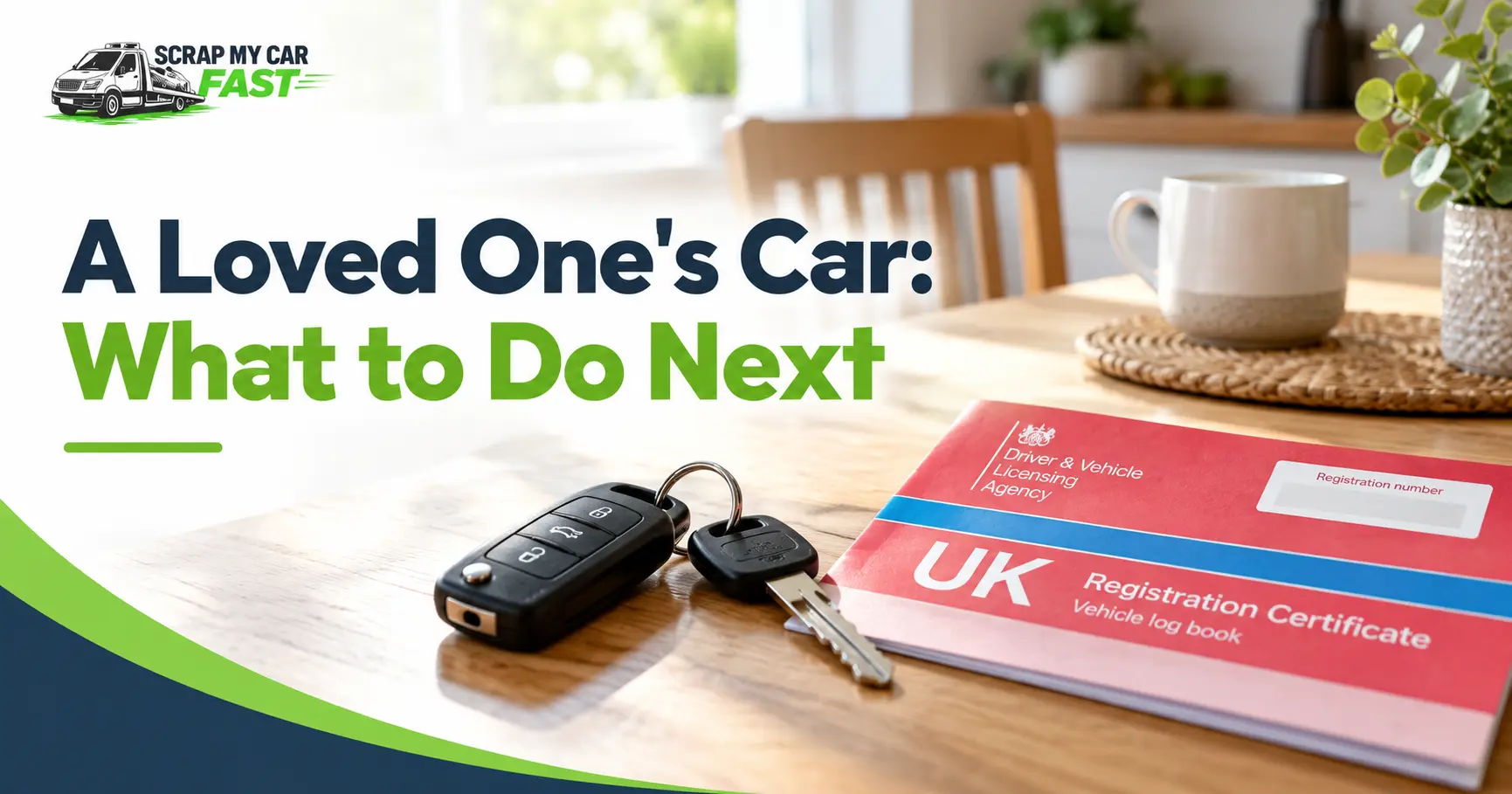
- Find the paperwork. You need the V5C logbook, all sets of keys, the insurance documents, the driving licence, and any finance agreement. Don’t worry if you can’t find the V5C, because there are ways round it.
- Check where the car is. If it’s on a public road and the tax is ending, move it onto a drive or private land. That can mean having it collected rather than driven. If it’s going to sit untaxed for a while, make a SORN.
- Tell the DVLA. See the next section.
- Call the insurer. Let them know about the death. Ask whether the car is still covered against fire and theft while it’s parked, and whether any refund is due.
- Contact the finance company or Motability, if either applies.
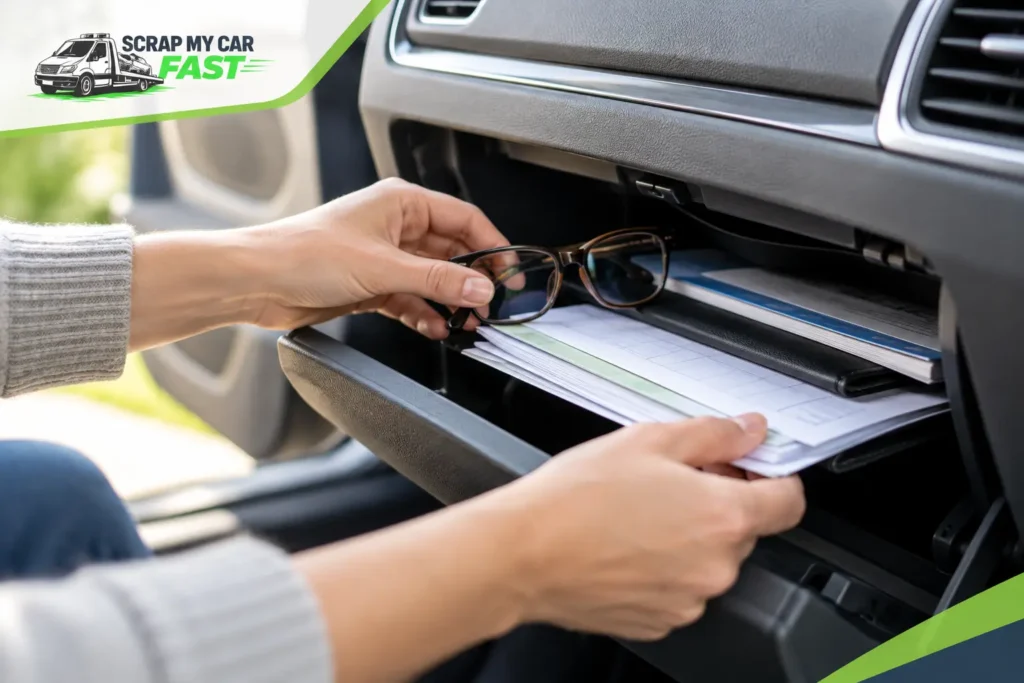
- Look through the car before anything else happens to it. People leave a surprising amount in their cars: letters, photos, sunglasses, a blue badge, parking permits. Our checklist of what to remove from a car before scrapping is useful here, even if the car isn’t being scrapped.
How to tell the DVLA someone has died
There are two ways to do it.
Tell Us Once. This free government service is usually offered when you register the death. One notification goes to several departments at once. It cancels the person’s driving licence and can remove them as keeper of up to five vehicles. Not every council offers it, so ask when you register the death.
By letter. If you don’t use Tell Us Once, or once you know what’s happening to the car, write to:
DVLA Sensitive Casework Team Swansea SA99 1ZZ
Your letter needs to include:
- your relationship to the person who died
- the date they died
- who should receive any vehicle tax refund. The DVLA won’t know otherwise.
What you send with the letter depends on what’s happening to the car. This follows the DVLA’s bereavement guidance:
| What happens to the car | What to do with the V5C |
|---|---|
| A family member is keeping it | Fill in the new keeper details, keep the green new keeper slip, and send the V5C with your letter. The new keeper taxes the car in their own name using the green slip |
| Selling to a private buyer | Fill in section 2 (section 6 on older logbooks). Give the buyer the green new keeper slip, then send the V5C with your letter |
| Selling to a dealer, or scrapping with a licensed scrap buyer | The trader fills in the yellow “sell, transfer or part-exchange to the motor trade” section. Send that perforated section with your letter and give the trader the rest of the V5C |
| No V5C | You can still sell or scrap the car. Write to the Sensitive Casework Team with the date it was sold, your relationship, the date of death and who should get the refund. A private buyer applies for a new logbook with form V62 |
Who gets the vehicle tax refund?
Vehicle tax can’t be transferred, so it’s cancelled once the DVLA knows about the death. Any full calendar months left are refunded, usually as a cheque, to the person you named in your letter. That’s normally the executor, so the money can go into the estate account. If you used Tell Us Once, check the confirmation letter. It explains how the refund will be handled.
Can you drive a deceased person’s car?
Not straight away, and not on their insurance. A car insurance policy is a contract with the policyholder, and it doesn’t carry on as normal after they’ve died. Even if you were a named driver, don’t assume you’re still covered. Ring the insurer and get a clear answer before you drive anywhere.
If you want to use the car, you need:
- your own insurance for that car,
- tax in your name, because the old tax ended when the DVLA was told, and
- a valid MOT. If it ran out during the person’s illness, which happens a lot, the rules on driving a car without an MOT apply.
If the car only needs moving off the street, collection is usually simpler and safer than arranging cover for one short journey.
Can you sell or scrap the car before probate?
Often, yes, but it depends on your role and on whether the family agrees.
- Executors get their authority from the will, which applies from the date of death. In principle they can deal with the car before the grant of probate comes through. Some buyers will ask to see the will or a solicitor’s letter.
- Administrators (where there’s no will) only get formal authority when the letters of administration are granted. In practice, for a low-value car in a straightforward estate, next of kin often sell or scrap it sooner, with everyone’s agreement. If there’s any disagreement, or the car is worth a lot, wait for the grant.
Whatever you do, keep a record. Note what the car was worth around the date of death, which may be needed for the estate valuation. Keep evidence of what it sold for and where the money went. Any sale or scrap payment belongs to the estate, not to the person who arranged it. If you’re unsure where you stand, a quick word with the solicitor handling the estate is worth it.
Should you keep, sell or scrap the car?
There’s no right answer. It usually comes down to three things: whether anyone in the family wants it, what it’s worth, and how much time and energy you have.
| Option | Makes sense when | Things to bear in mind |
|---|---|---|
| Keep it in the family | Someone needs a car, and this one is reliable | The new keeper needs their own tax and insurance. Get the V5C transferred properly |
| Sell it privately | It’s worth a fair amount and is in good order | It usually gets the best price, but it means adverts, viewings and test drives when you may have little energy for it. Our guide to selling a car privately covers the steps |
| Sell to a dealer | It’s worth something and you want it done quickly | Less money than a private sale, but much less hassle |
| Scrap it | It’s old, has sat for months, has no MOT, or needs work nobody wants to pay for | Quick and paperwork-light. The scrap facility tells the DVLA the car has been destroyed and issues a Certificate of Destruction |
Cars that belonged to an older relative often sat unused for a long time before they died. Flat batteries, seized brakes and an expired MOT are common. Getting a car like that ready for a private sale can cost more than it’s worth, and that’s when scrapping is usually the sensible choice.
Scrapping a deceased relative’s car: what you’ll need
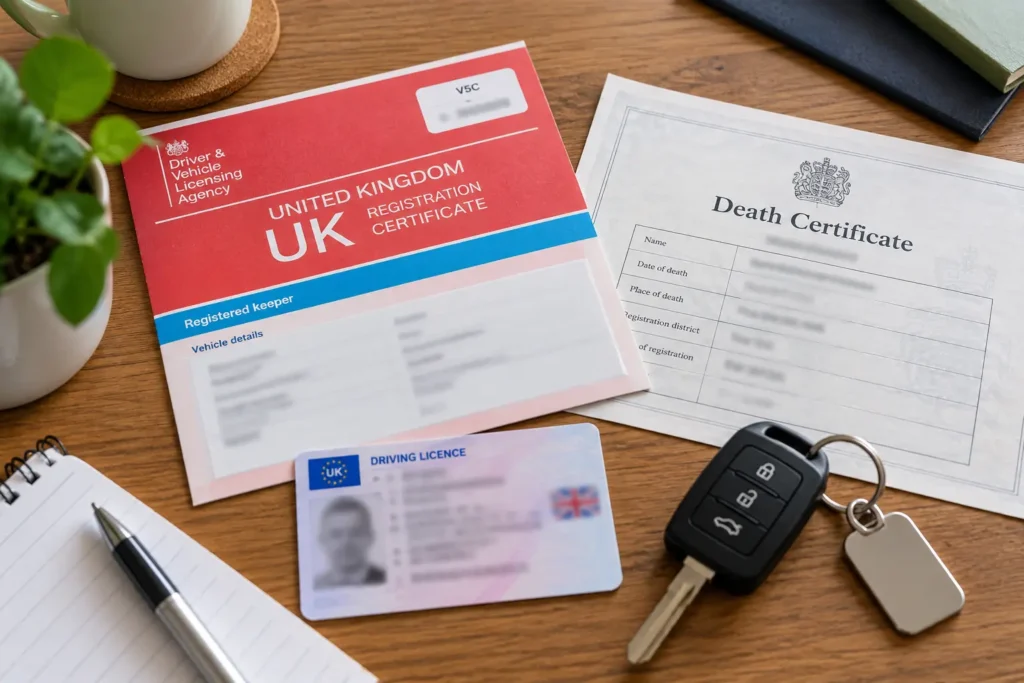
Every licensed scrap buyer has to confirm who they’re dealing with. You’ll normally be asked for:
- your photo ID,
- a copy of the death certificate,
- something that shows your role, such as the will naming you as executor, the grant of probate, or letters of administration. If you don’t have a grant yet, tell us at the start and we’ll talk it through with you,
- the V5C logbook if you have it. It isn’t essential, as our lost V5C guide explains.
Payment is made by bank transfer, never cash, so it’s easy to pay straight into the estate account. Keep the Certificate of Destruction with the estate paperwork.
Personalised number plate?
If the car has a private plate, take it off before the car is sold or scrapped, or it goes with the car. The executor or administrator can usually apply to keep the plate on retention, or transfer it to a family member. Our guide to keeping a number plate before scrapping explains how.
A car with finance still owing
Don’t sell or scrap a car that’s on finance until you’ve spoken to the lender. They’ll give you a settlement figure for the estate. Some agreements include cover that clears the balance on death, so ask. Our guide on scrapping a car with outstanding finance explains the options.
Other things to cancel or return
It’s easy to miss these, and each one can cause a letter or a charge months later:
- Breakdown cover and any car-related subscriptions, such as tracker or dashcam apps.
- Blue Badge. Return it to the council that issued it.
- Resident or workplace parking permits.
- Toll and charging accounts, such as the Dart Charge or electric car charging apps.
- Direct Debits for car tax, insurance or servicing plans. Check the bank statements.
Frequently asked questions
Who can sell a deceased person’s car?
The executor named in the will, or the administrator of the estate if there’s no will. Family members can only sell it with their authority. The money from the sale belongs to the estate.
Do I need probate to sell or scrap a car after someone dies?
Not always. An executor can often deal with the car before probate is granted, because their authority comes from the will. An administrator only gets formal authority once letters of administration are granted. Many families scrap a low-value car before then, but only when everyone agrees.
Does Tell Us Once tell the DVLA about the car?
Yes. Tell Us Once notifies the DVLA, cancels the driving licence and can remove the person as keeper of up to five vehicles. You’ll still need to deal with the V5C when the car is kept, sold or scrapped.
Who gets the car tax refund when someone dies?
Whoever you name in your letter to the DVLA, usually the executor. Vehicle tax can’t be transferred to a new keeper, so it’s cancelled and any full months remaining are refunded.
Can I drive my late parent’s car?
Only once you have your own insurance for it and it’s taxed in your name. Don’t rely on the deceased person’s policy, even if you were a named driver. The car also needs a valid MOT.
What if I can’t find the V5C logbook?
You can still sell or scrap the car. Write to the DVLA Sensitive Casework Team explaining the sale, your relationship to the person, the date of death and who should get any tax refund. A private buyer applies for a new logbook using form V62.
Is the car’s value part of the estate?
Yes. The car is an asset of the estate, so note its value around the date of death for the estate valuation. Keep records of any sale or scrap payment.
Need help with a loved one’s car in Greater Manchester?
If you’ve decided the car isn’t staying in the family, we can collect it from the house, a care home car park or wherever it’s been left. We cover Manchester, Salford, Stockport, Trafford, Tameside and the rest of Greater Manchester. Collection is free, it doesn’t matter if the car hasn’t been started in months, and we handle the DVLA paperwork and Certificate of Destruction. Get an instant quote online. If you’d rather talk it through first, call us on 07432 675878.
This guide reflects DVLA guidance for England, Scotland and Wales as of September 2026. It’s general guidance, not legal advice. For questions about the estate itself, speak to the solicitor or probate service handling it.