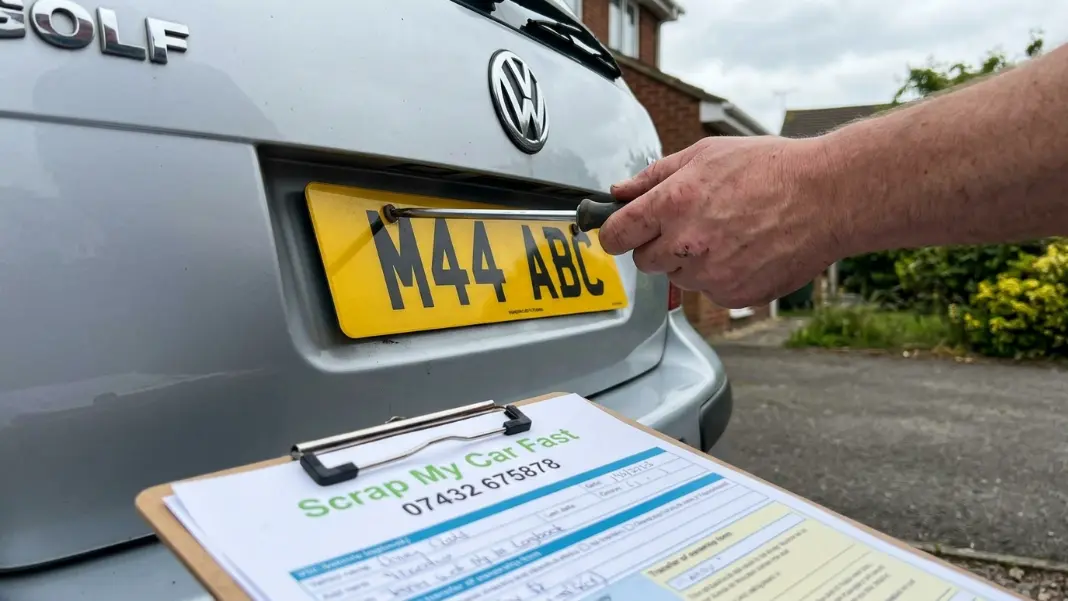
If your car is heading for the scrapyard and it’s wearing a private or cherished plate, there’s one thing you need to sort before it ever gets collected: taking that plate off with the DVLA. Get the order wrong and the registration goes with the car, permanently, no appeal, no exceptions.
We collect cars across Greater Manchester every week, and this is one of the most common calls we get, usually from someone who’s already booked their collection and only then remembered the plate. The good news is it’s a straightforward process if you start it early enough. The bad news is “early enough” means before collection day, not the morning of.
Here’s exactly how it works.
The one rule that matters more than any other
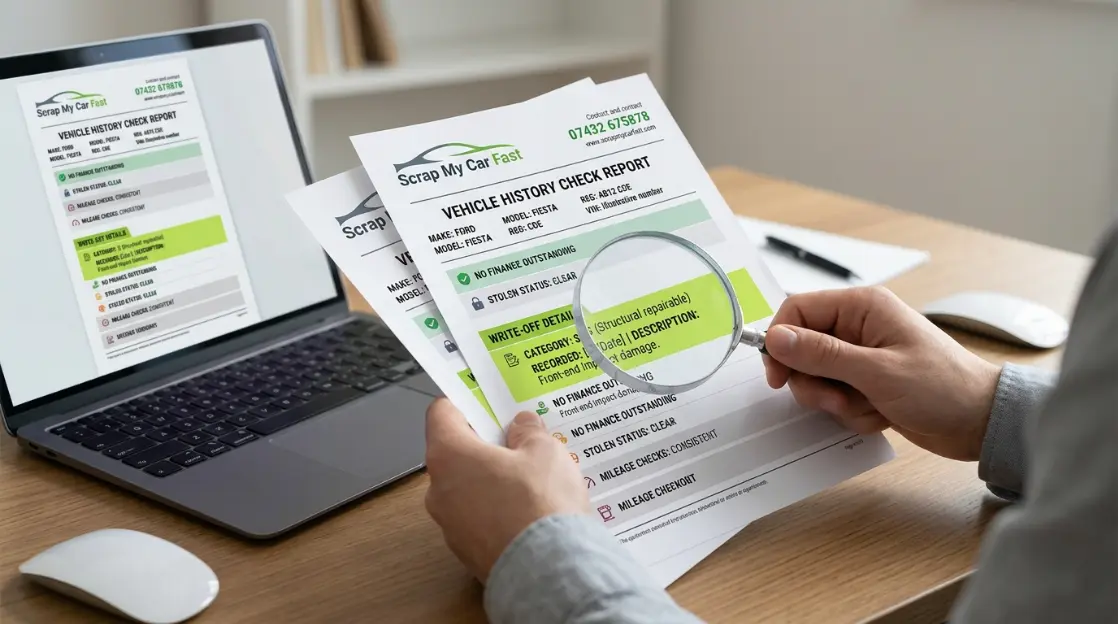
Once your car has a Certificate of Destruction, its registration is cancelled for good. There’s no retrieving it afterwards, no matter who you call or how quickly you call them. The DVLA is clear on this: you need your V778 retention document and your replacement V5C logbook in hand before you scrap or sell the vehicle, otherwise you lose the right to the plate.
That’s the whole guide in one paragraph. Everything below is how to actually do it, and how to avoid the timing mistakes that catch people out.
What “retaining” a plate actually means
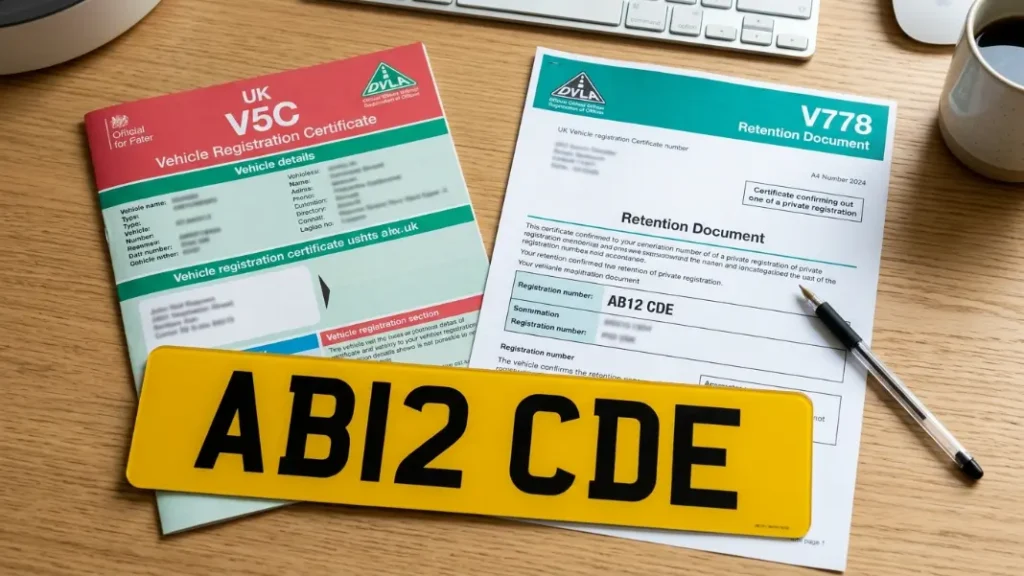
Retaining a number plate doesn’t mean it stays on your old car. It means you formally remove it from that car and hold it “on paper” with the DVLA, on a certificate, for up to ten years, until you’re ready to put it on another vehicle, sell it, or gift it.
Once the plate comes off, your car is automatically reassigned its original factory registration number so it can still legally be scrapped, taxed correctly, and processed through an Authorised Treatment Facility (ATF). You’re not left with a car that has no number plate at all.
Two documents come out of this process, and it’s easy to confuse them:
| Document | What it means |
|---|---|
| V778 Retention Certificate | Issued when you take a plate off a vehicle and hold it in reserve. This is the one you need before scrapping. |
| V750 Certificate of Entitlement | Issued for a brand new personalised plate that’s never been on a vehicle. Not relevant if you’re retaining a plate off your existing car. |
Step-by-step: taking your plate off before scrapping
Check you’re eligible first
The DVLA won’t process a retention if the vehicle doesn’t meet a few basic conditions. Before you start, your car needs to:
- Be registered with the DVLA in the UK
- Still be able to move under its own power (this trips up more people than you’d expect, a genuinely dead non-runner can complicate things, so check this early if your car’s beyond starting)
- Be a type that requires an MOT or HGV test certificate, and have a valid one, or be available for DVLA inspection
- Currently be taxed, or have been continuously taxed or on SORN for the past five years
You also can’t retain a plate that starts with Q or NIQ. If your registration starts with either of those, it isn’t eligible for retention, full stop.
If you’re unsure whether your specific car qualifies, our FAQs page covers the most common eligibility questions we get asked before a collection is booked.
A real timeline, so you can plan your collection date
Because this trips people up more than anything else, here’s roughly how the days actually stack up if you apply online:
| Day | What’s happening |
|---|---|
| Day 0 | You apply online, pay the £80 fee, and your original registration is usually reassigned to the vehicle almost immediately |
| Day 0-10 | The DVLA processes your application in the background; no physical documents yet |
| Week 4-6 | Your V778 retention certificate and new V5C logbook arrive by post |
| After documents arrive | You’re clear to book scrap car collection |
If you apply by post instead of online, add extra time on both ends, for the form to reach the DVLA and for the documents to come back, so treat 6 weeks as a minimum rather than a worst case. This is why we always recommend starting the retention before you get an instant quote or lock in a collection date, not alongside it.
Applying online (fastest route)
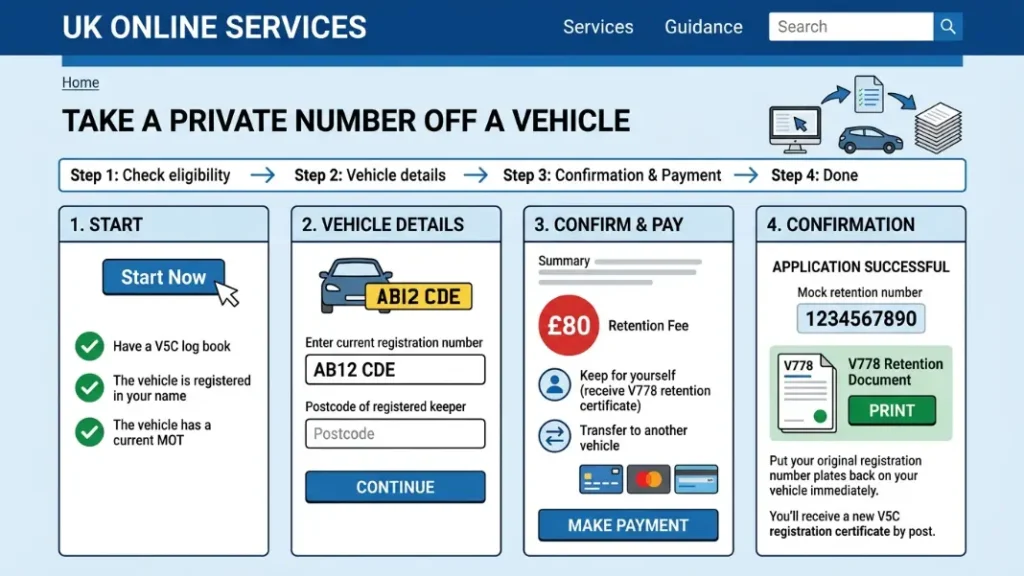
- Make sure your name is exactly as it appears on the V5C logbook.
- Go to the DVLA’s “Take a private number off a vehicle” page and select the online option.
- Enter the registration number you want to remove.
- Enter the registered keeper’s postcode, exactly as shown on the V5C.
- Confirm you’re the registered keeper.
- Pay the £80 fee, the same whether you apply online or by post.
If the application goes through, the DVLA usually reassigns your car’s original registration straight away, which means the vehicle is immediately ready to move on to scrapping once your paperwork arrives.
Applying by post
Post is the only route if the V5C isn’t in your name, if you don’t have the full logbook (you can use the green “new keeper” slip plus a completed V62 form instead), or if you’d simply rather do it on paper.
You’ll need:
- A completed V317 form (“Application to transfer or retain a vehicle registration number”) — tick Option B for retention rather than an immediate transfer
- Your vehicle’s V5C logbook (or the new keeper slip and V62)
- A cheque, banker’s draft or postal order for £80, made payable to “DVLA Swansea”
Post applications take noticeably longer than online ones, so build in extra time, especially if you’re trying to coordinate the paperwork with a collection date.
Can’t find your V5C logbook?
This is more common than you’d think, especially on older cars that have sat unused for a while before someone decides to scrap them. If the logbook is genuinely missing, you have two options:
- If you’re the registered keeper but have simply lost the document, you’ll need to apply for a replacement V5C (form V62) before, or alongside, your retention application
- If you’re a new keeper who’s never received a full V5C, the green “new keeper” slip plus a completed V62 form can stand in for it on the postal retention route
Either way, this adds time to the process, so if your logbook is missing, start here first rather than waiting until you’re ready to book a collection.
Applying on behalf of someone else, or after a bereavement
If the car belongs to a parent, relative, or someone who’s passed away, and it’s not registered in your name, you can’t apply for retention directly online. You’ll need to use the postal V317 route, and the DVLA may ask for supporting documents such as probate paperwork or written authority from the registered keeper, depending on the situation. It’s worth contacting the DVLA directly for guidance before you submit anything, since these applications are handled case by case rather than through the standard online eligibility checks.
What you get back, and how long it takes
Once approved, you’ll receive:
- A V778 retention document, valid for 10 years and renewable before it expires
- A new V5C logbook showing your car’s replacement registration number, which can take 4 to 6 weeks to arrive by post
This is the part that trips people up the most. The plate itself is often removed from the system almost immediately, but the physical documents proving you hold the retention can take over a month to land on your doormat. If you’ve already booked your scrap car collection for next week, that timeline matters.
The mistake we see most often
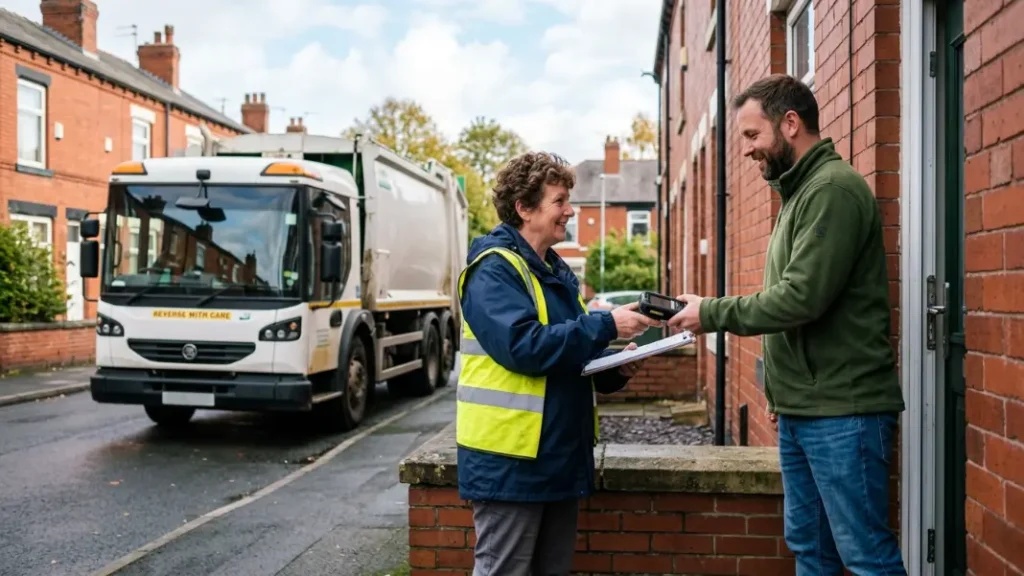
Someone books their car in for collection, gets a great price, and only remembers the private plate the day the driver turns up, sometimes after the car’s already on the truck. At that point there’s genuinely nothing that can be done. Once a vehicle is processed at an Authorised Treatment Facility and a Certificate of Destruction is issued, the registration is gone.
The fix is simple: treat the plate retention as the very first step of scrapping your car, not something you fit in afterwards. Start it before you book collection, not after. If you’re not sure your paperwork will land in time, tell whoever’s collecting your car so the date can be pushed back rather than rushed, our own collection process is flexible enough to work around a pending V778 if you let us know in advance.
What if your car is written off, not scrapped by choice?
If your insurer has declared your car a total loss, the same principle applies, just with an extra step. Once an insurer pays out on a total loss claim, the vehicle (and by default its registration) effectively becomes theirs. You need to tell your insurer you want to keep the private plate as soon as you know the car’s being written off, before settlement completes, or the retention becomes far harder to arrange. If you’re not sure what category your write-off falls into or what your options are, our guide on Cat N and Cat S write-offs explains the categories and what they mean for you.
Renewing a V778 that’s about to expire
If you retained a plate some years ago and you’re only now getting round to scrapping the donor vehicle, or an unrelated car, check the expiry date on your existing V778 before you do anything else. Retention certificates run for 10 years, and a large batch of them issued when the scheme changed in 2015 are now coming up for renewal.
A few things worth knowing:
- Renewal is free, and can be applied for up to 28 days before the certificate expires
- It’s usually done by post, using the original V778 form
- If the certificate lapses without being renewed, the registration reverts to the DVLA and can be reissued or auctioned to someone else, with no way to reclaim it afterwards
- Only the person named as the grantee on the certificate can apply to renew it
This isn’t something the DVLA lets slide. If your plate is genuinely valuable to you, put a reminder in well ahead of the expiry date rather than relying on a DVLA letter arriving on time.
Do you need to do anything else afterwards?
Once your plate is safely on retention, a few small admin jobs are worth ticking off:
- Update your insurance company with the car’s new (reassigned) registration number if you’re still driving or selling it before scrapping
- Update any automatic payment accounts tied to the old plate, such as Clean Air Zone charges, congestion charge accounts, or ANPR-linked parking permits
- Keep the V778 certificate somewhere safe and separate from the car itself, not in the glovebox of the vehicle you’re about to send off
Frequently asked questions
How much does it cost to retain a number plate before scrapping?
£80, whether you apply online or by post. This is a one-off DVLA fee and there’s no extra charge later when you assign the plate to another vehicle.
How long does number plate retention take?
The registration itself is usually removed and reassigned almost immediately once your online application is approved. The physical V778 certificate and replacement V5C can take 4 to 6 weeks to arrive by post, so don’t schedule your scrap collection until you’re confident that paperwork will land in time.
Can I retain a number plate on a non-runner?
It’s possible, but the vehicle must still meet DVLA’s eligibility rules, including being able to move under its own power in most cases. If your car genuinely can’t move, check with the DVLA before assuming retention is straightforward, as it can involve extra evidence and processing time.
What happens if I scrap my car before retaining the plate?
The registration is cancelled permanently once a Certificate of Destruction is issued. There’s no way to recover it afterwards, regardless of the reason it wasn’t retained in time.
Do I need the original V5C logbook to apply?
Yes, for both the online and postal routes, unless you’re a new keeper without a full V5C, in which case the green “new keeper” slip plus a completed V62 form can be used instead.
Can someone else keep the plate on my behalf?
Yes, the DVLA allows you to name a Nominee during the retention application if you want the certificate issued to someone other than yourself.
What if I can’t find my V5C logbook?
You’ll need to apply for a replacement V5C using form V62 first, or use the green “new keeper” slip plus a completed V62 if you’re a new keeper without a full logbook. This adds time, so deal with it before you plan a collection date.
Does a V778 retention certificate expire?
Yes, after 10 years. You can renew it for free up to 28 days before it expires. If it lapses, the registration reverts to the DVLA permanently and cannot be recovered.
Get the plate sorted, then let us handle the rest
If you’re planning to scrap a car anywhere across Greater Manchester and want to keep the number plate, start the DVLA retention first. Once your V778 and new V5C are in hand, get an instant scrap car quote and we’ll work the collection date around your paperwork rather than the other way round. If you’re not sure how the timing lines up with your V5C or logbook situation more broadly, our guide on what to do if you’re scrapping a car without a V5C covers that separately.
Got a specific situation, a non-runner, a written-off car, or a plate you’re not sure is eligible? Get in touch or call 07432 675878 and we’ll talk it through before you book anything in.