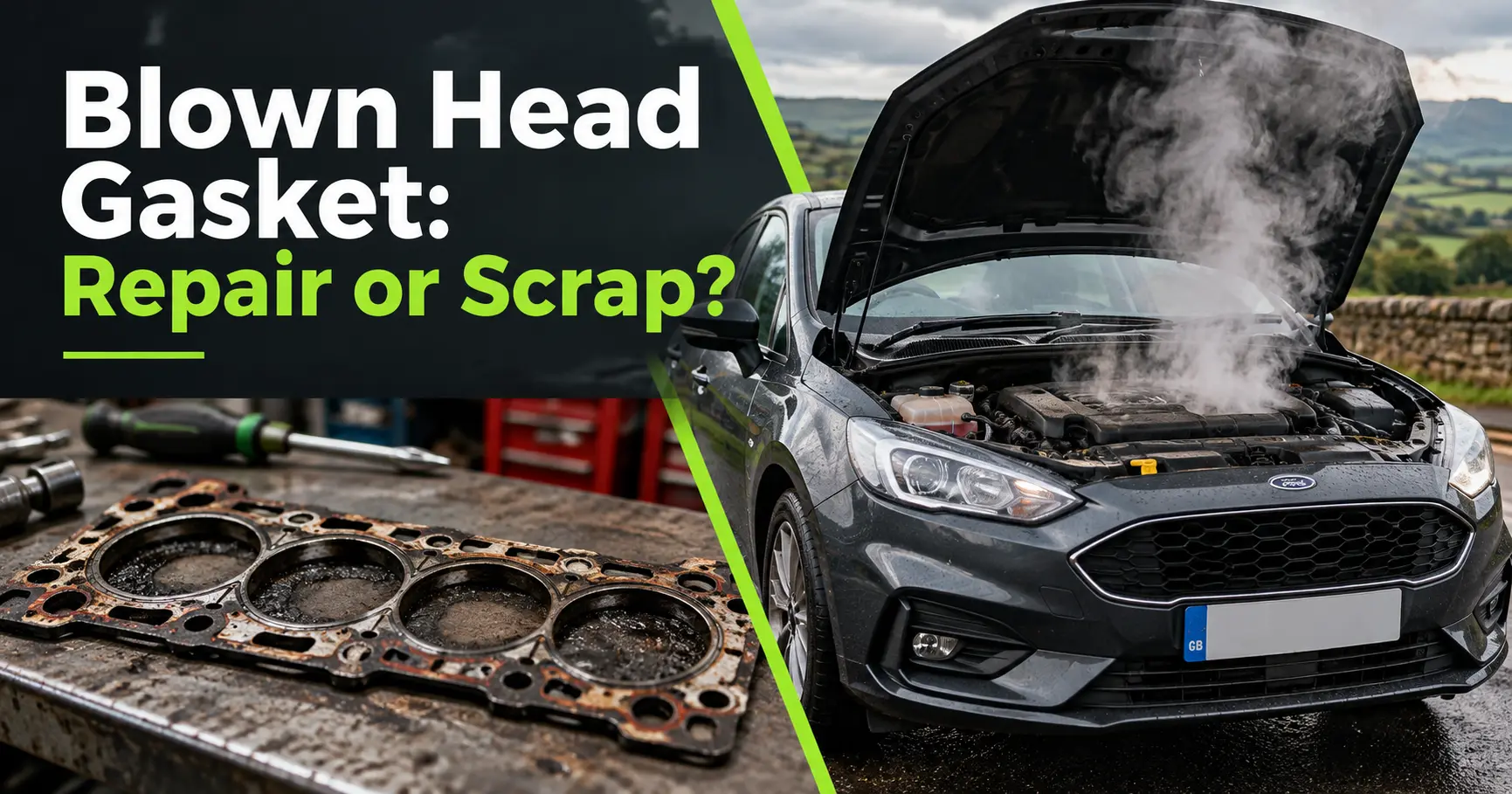
A blown head gasket is a failure of the seal between the engine block and the cylinder head. Once it goes, coolant, oil and combustion gases start leaking into places they shouldn’t. The usual signs are white exhaust smoke with a sweet smell, coolant disappearing with no visible leak, overheating, and bubbles in the coolant tank. Most UK repair bills land between about £600 and £1,500, and more if the cylinder head has warped. Whether it’s worth fixing comes down to one sum: the repair cost against what the car will be worth once it’s fixed.
We collect cars with blown head gaskets across Greater Manchester most weeks. Some of them could have been saved, and some were never going to be worth the bill. This guide covers how to tell if the gasket has really gone, what causes it, what it costs to fix, whether it’s safe to drive, and how to make the repair or scrap decision without guessing.
Quick facts
- Main signs: white, sweet-smelling exhaust smoke, unexplained coolant loss, overheating, bubbles in the expansion tank, and milky oil.
- Repair cost: usually £600 to £1,500 at an independent garage. Complex engines and warped heads can push it past £2,000.
- Why it’s expensive: the gasket itself is often under £100. You’re paying for 6 to 12 hours of labour to strip the engine.
- Driving on it: not a good idea. It can turn a gasket job into a dead engine.
- Repair or scrap: if the repair costs more than about half of what the car will be worth afterwards, think hard before paying it.
What is a head gasket, and what happens when it blows?
An engine is built in two main parts: the block at the bottom, where the pistons move, and the cylinder head on top, where the valves sit. The head gasket is a thin, layered seal clamped between the two. It has three jobs at once. It holds in the pressure of combustion, it keeps coolant in its channels, and it keeps oil in its passages.
When it fails, one or more of those seals breaks down. What happens next depends on where the breach is:
- Between a cylinder and a coolant channel: hot combustion gas is forced into the cooling system. Coolant gets pushed out or burned, and the engine overheats.
- Between coolant and oil passages: the two mix, and you get milky, contaminated oil that can wreck the engine’s bearings.
- Between two cylinders: compression leaks from one to the other. The engine runs rough, misfires and loses power.
- To the outside of the engine: you may see oil or coolant weeping from the joint between the head and the block.
Signs of a blown head gasket
No single symptom proves it on its own, but two or three together are a strong warning.
- White exhaust smoke that smells sweet. That’s coolant being burned in the cylinders. A puff of vapour on a cold morning that clears within a minute is normal condensation. Steady white smoke once the engine is warm is not.
- Coolant going down with no leak you can find. If you keep topping up the expansion tank and there’s nothing on the drive, the coolant is going somewhere inside the engine.
- Overheating. The temperature gauge climbs, especially under load or on the motorway, or you get a warning light.
- Bubbles in the expansion tank or radiator. With the engine running, a steady stream of bubbles in the coolant means combustion gas is getting into the cooling system.
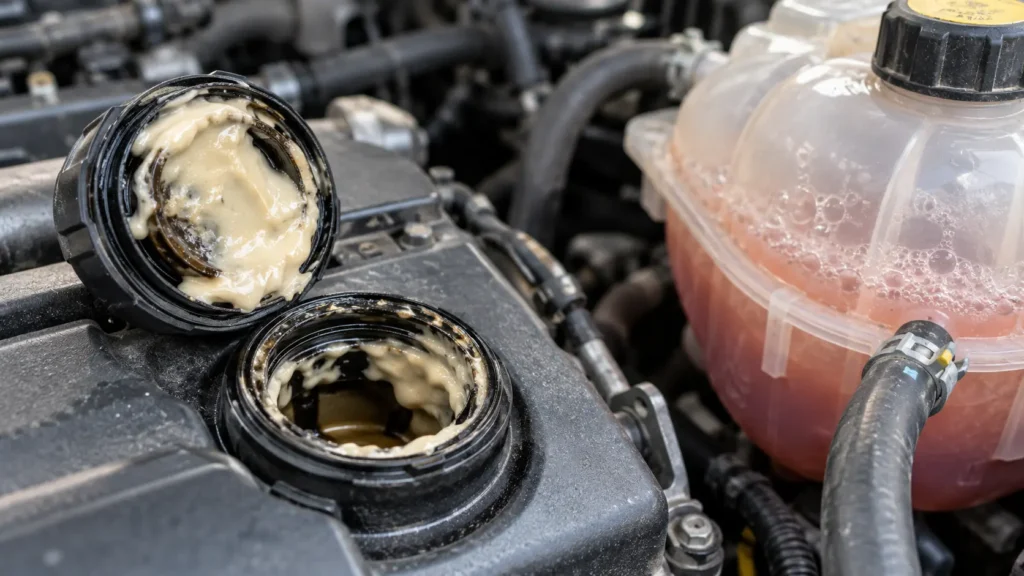
- Milky residue in the oil. Check the dipstick and under the oil filler cap. A light-brown, mayonnaise-like sludge can mean coolant in the oil.
- Rough running, misfires or a loss of power, often worse when the engine is cold.
- The heater blowing cold because the coolant level has dropped or air has got into the system.
Don’t misdiagnose it: the mayonnaise myth
A bit of creamy residue under the oil filler cap does not automatically mean a blown head gasket. Cars that only do short trips, especially in cold, damp weather, often build up condensation that mixes with oil vapour and looks exactly the same. If it’s only on the cap, the dipstick oil looks normal, and you’re not losing coolant, it’s very likely condensation. A long run usually clears it.
Lots of people scrap or sell a car cheaply because of this, when nothing was wrong. So before you decide anything, get the gasket properly tested.
How a garage confirms it
- Combustion leak test (block test). A tester draws air from the coolant tank through a special fluid. If exhaust gases are present, the fluid changes colour, usually from blue to yellow. It’s cheap and quick, and you can buy kits to do it yourself.
- Compression test. This measures the pressure in each cylinder. A low cylinder, or two neighbouring cylinders that are both low, points to a gasket breach.
- Cooling system pressure test. This checks whether the system holds pressure, and rules out a simple leaking hose, water pump or radiator.
Ask for these before you agree to a head gasket job. A failed water pump or thermostat can produce some of the same symptoms for a fraction of the cost.
What causes a head gasket to blow?
The most common cause by far is overheating. When an engine gets too hot, the aluminium cylinder head expands more than the block beneath it. That movement crushes and distorts the gasket until it stops sealing. Overheating itself usually starts somewhere else:
- a coolant leak, low coolant, or old coolant that has lost its protection
- a failed water pump or a thermostat stuck shut
- a blocked radiator or a cooling fan that has stopped working
- carrying on driving after the temperature warning comes on
Other causes include old age and high mileage, an earlier gasket that was fitted badly or with reused head bolts, and pre-ignition or detonation in hard-worked or modified engines. Some engines have a reputation for it. The old Rover K-series is the classic example.
That’s also why a blown gasket is often a sign of other trouble. If the engine overheated badly, the head may have warped, and on a bad day it can crack. Either one adds a lot to the bill.
Can you drive with a blown head gasket?
You can, in the sense that the car may still start and move, but it’s one of the worst things you can do to it. Each journey risks:
- Warping or cracking the cylinder head, which adds machining or a new head to the bill.
- Destroying the bottom end of the engine, if coolant keeps mixing with the oil and stripping out its lubrication.
- Hydrolock. If enough coolant collects in a cylinder, the engine can try to compress liquid and bend a connecting rod. At that point the engine is finished.
- Damaging the catalytic converter by burning coolant through it. That’s another expensive part, as we explain in our catalytic converter guide.
- Breaking down somewhere awkward once it overheats properly.
If you have to move it a very short distance, keep the coolant topped up and watch the gauge the whole way. Otherwise, park it, ideally on a drive. If it’s going to sit untaxed while you decide what to do, declare it off the road with a SORN.
What about head gasket sealant?
Bottled sealants, poured into the cooling system, can stop small leaks, and some drivers get months or more out of them. They’re worth trying on a minor leak in a car that isn’t worth a full repair. They won’t fix a gasket that has failed badly, a warped head or a cracked one, and they’re not a substitute for diagnosis. Treat a sealant as a way to buy time, not as a repair.
How much does a head gasket repair cost in the UK?
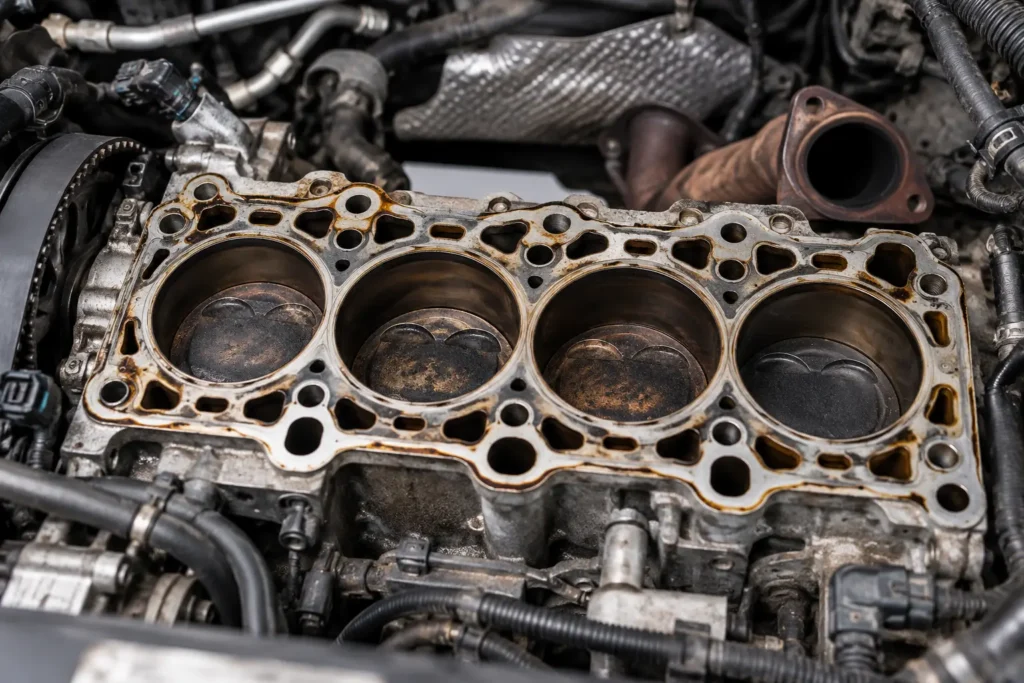
The part is cheap. The job isn’t. To replace a head gasket, a mechanic has to drain the engine, remove the intake, exhaust, timing gear and cylinder head, check the head is flat, fit the new gasket with new head bolts, and put everything back together. That’s typically 6 to 12 hours of labour.
Industry averages vary, but most quotes fall in these ranges:
| Type of car or job | Typical UK cost (independent garage) |
|---|---|
| Small, simple petrol engine | £500 to £800 |
| Typical family car | £700 to £1,300 |
| Premium, diesel, V6 or hard-to-reach engine | £1,200 to £2,500 |
| Extra if the head needs skimming (resurfacing) | Usually £100 to £300 on top |
| Cracked head or engine damage | New or used engine, often £1,500 to several thousand pounds |
Guide figures for 2026. Main dealers usually charge more. The RAC’s own estimate for a straightforward job is around £630, while bills on more complex engines can run well into four figures.
When you get a quote, ask whether it includes new head bolts, skimming the head, a coolant and oil change, and a new timing belt if yours runs one. Doing the belt while the engine is apart saves paying that labour twice later. A cheap quote that leaves these out often ends up being the expensive one.
Is it worth fixing a blown head gasket?
This is the question that matters, and it’s mostly maths. Work out three numbers:
- The full repair cost. Use a written quote that says what’s included, not a phone estimate.
- What the car will be worth once it’s fixed. Look at similar cars for sale with the same age and mileage and a fresh MOT.
- Anything else due soon. That includes MOT advisories, tyres, brakes, the clutch, or a timing belt that’s overdue.
It helps to know the fourth number too: what the car is worth as it stands. Get an instant scrap price by entering your registration. It takes seconds, there’s no obligation, and you’ll have something firm to set against the garage’s quote.
Our rule of thumb: if the repair plus the other urgent work comes to more than about half of the car’s repaired value, think very hard before paying it. A head gasket job also doesn’t make the rest of an old engine new. If it has done 150,000 miles and has overheated badly, other things may follow.
| Example | Car A: 2011 hatchback, 120,000 miles | Car B: 2018 family car, 60,000 miles |
|---|---|---|
| Value once repaired | About £1,800 | About £7,500 |
| Head gasket quote | £1,100 | £1,200 |
| Head needs skimming | +£250 | No |
| Other work due | Two tyres and rear brakes, about £300 | None |
| Total spend | £1,650, around 92% of its value | £1,200, around 16% of its value |
| Sensible choice | Sell as is or scrap | Repair |
Illustrative figures. Use your own quote and your own car’s value.
There are good reasons to repair even when the numbers are close. The car may be otherwise excellent and you know its history. Replacing it might cost you far more. Or you may have a trusted garage that will do the job properly. The point is to decide with real figures, not on hope.
Your options if you don’t repair it
Sell it as spares or repair
Some buyers, often home mechanics and small traders, look specifically for cars with blown gaskets to fix cheaply themselves. You can sell privately, but be completely honest about the fault in the advert and in writing. Expect a low price and plenty of time-wasters. Our guide to selling for parts vs scrapping covers whether breaking it up pays more.
Scrap it
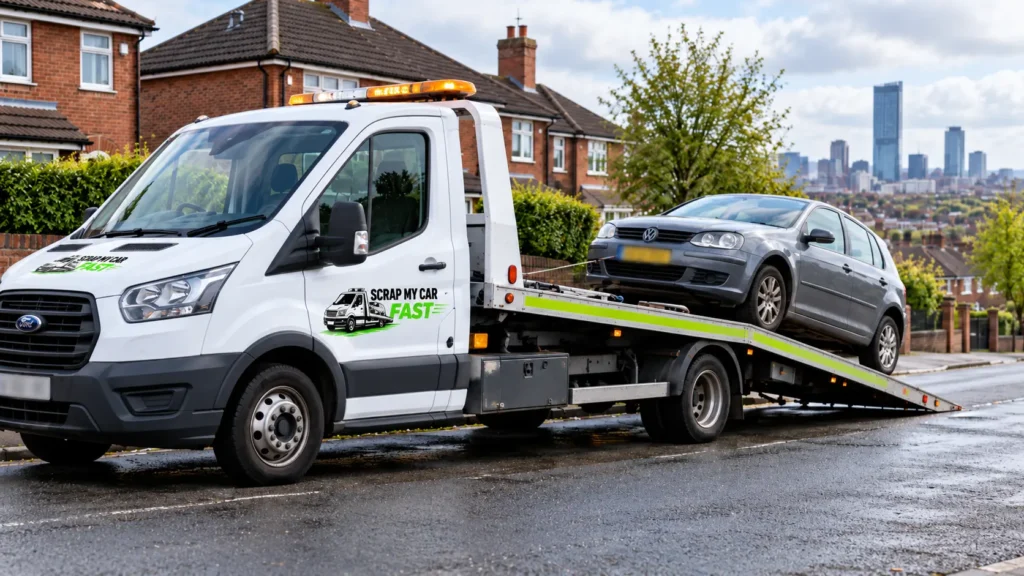
Scrap value is based on the car’s weight and metal content, not on whether the engine works. A car with a blown head gasket is worth the same to us as an identical car that runs, as long as the parts are all there. We collect on a flatbed, so it doesn’t matter if it won’t start or isn’t safe to drive. See how we price cars in how scrap car prices are calculated. If the fault has left the car undriveable, our non-runner collection page explains how pickup works.
How to avoid a blown head gasket
- Watch the temperature gauge. If it climbs or a warning light comes on, pull over safely and switch off. Driving on for another few miles is how most gaskets die.
- Check the coolant level every few weeks when the engine is cold, and investigate any loss straight away.
- Change the coolant at the interval in your service book. Old coolant corrodes and stops protecting the engine.
- Fix small cooling faults early. A weeping hose, a lazy fan or a sticking thermostat is cheap to fix. A gasket isn’t.
- Never open a hot coolant cap. Let the engine cool first. The system is under pressure and can scald you.
Frequently asked questions
How long can you drive with a blown head gasket?
There’s no safe number of miles. A small leak might let a car limp on for weeks, while a bad one can overheat the engine within minutes. Every mile risks warping the head or ruining the engine, so the honest answer is as little as possible.
How much does it cost to fix a blown head gasket?
Most UK repairs cost between about £600 and £1,500 at an independent garage. Premium, diesel and complex engines can cost £2,000 or more, and a warped or cracked cylinder head adds to the bill.
What does a blown head gasket sound like?
Often there’s no specific noise. Sometimes you’ll hear bubbling or gurgling from the coolant tank, or a rough, misfiring engine note. If the gasket has failed to the outside, there may be a ticking or hissing sound from the joint between the head and block.
Is milky oil always a blown head gasket?
No. Creamy residue only under the oil filler cap is often condensation from short journeys. If the dipstick oil is clean, the coolant level is steady and the exhaust isn’t smoking, a head gasket fault is unlikely. A combustion leak test will confirm either way.
Will a blown head gasket fail an MOT?
Not automatically, because the MOT doesn’t directly test the gasket. But the symptoms can cause a fail, including heavy smoke, high emissions, fluid leaks or an engine warning light. The car may also simply be unsafe to drive to the test.
Is a car with a blown head gasket worth anything?
Yes. As a spares or repair sale, it depends on the model and its condition. As scrap, it’s worth the same as a working car of the same make and weight, because scrap value comes from the metal, not from whether the engine runs.
Can head gasket sealant fix it permanently?
Sometimes, on minor leaks, but not reliably. Sealants can’t repair a badly failed gasket, a warped head or a cracked head. Use one to buy time on a car that isn’t worth a full repair, not as a permanent fix.
Head gasket gone and the numbers don’t add up?
If the repair costs more than the car is worth, we’ll take it off your hands as it is. It doesn’t need to run, and there’s no need to drive it anywhere. Get an instant scrap car quote, or read more about scrapping a broken car. We collect for free across Manchester, Salford, Bolton, Rochdale, Wigan and the rest of Greater Manchester. Payment goes to your bank on the day, and we handle the DVLA paperwork and Certificate of Destruction. You can also call us on 07432 675878.
Repair costs are typical 2026 UK guide figures. Always get a written quote from a garage that has inspected your car.