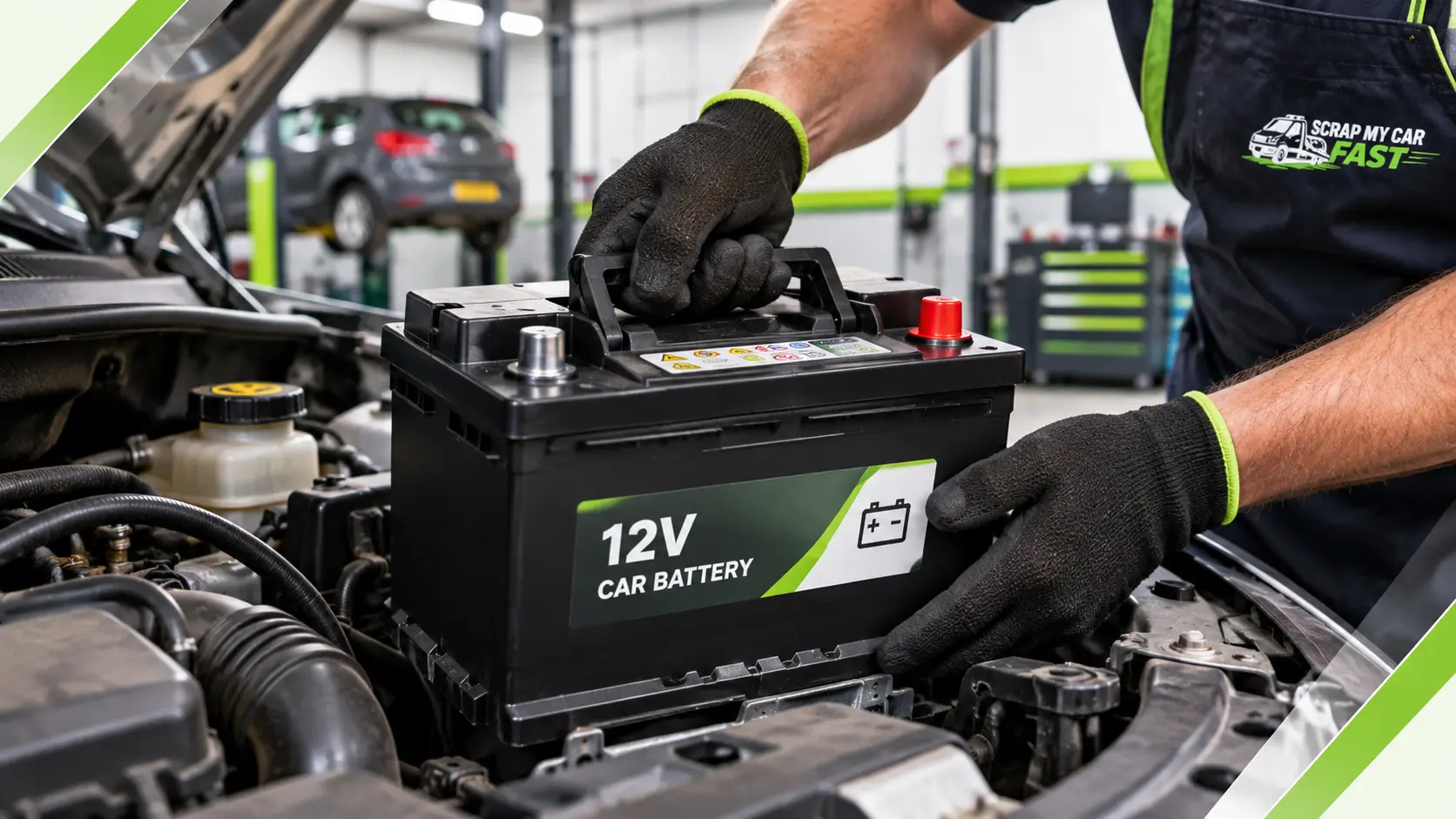
A car battery replacement in the UK typically costs £80 to £160 fitted for a standard battery, £100 to £200 for an EFB battery and £150 to £300 or more for an AGM battery in a car with start-stop. Fitting at a fast-fit centre adds about £30 to £50 to the price of the battery itself, while main dealers and premium brands sit at the top of the range. In Manchester, the average battery replacement comes to around £180.
We scrap a lot of cars across Greater Manchester that came to us with a flat battery, so we see both sides: the owner who just needs a £100 battery, and the owner about to put a £250 battery into a car that’s worth less than the repair bill. Here’s what you should expect to pay, how to check whether you need a battery at all, and how to tell when it’s time to stop spending money on the car.
How much does a new car battery cost?
The biggest factor is the type of battery your car needs, not the make. Most older cars without start-stop take a standard lead-acid battery. Cars with start-stop need an EFB (enhanced flooded battery) or an AGM (absorbent glass mat) battery, which are built for constant restarts and cost more.
| Battery type | Typical cars | Battery only | Fitted |
|---|---|---|---|
| Standard lead-acid | Older petrol and diesel cars without start-stop | £50 to £150 | £80 to £160 |
| EFB | Basic start-stop cars, many superminis and family cars | £100 to £160 | Up to about £200 |
| AGM | Advanced start-stop, premium cars, cars with lots of electrics | £120 to £250+ | £150 to £300+ |
At the big fast-fit chains, a common standard battery fitted usually costs £95 to £130, and a start-stop AGM battery around £240, often with a long guarantee. Large and premium batteries can push the bill towards £400.
Car battery replacement cost by make
Make matters mainly because it decides the battery type, its size and how hard it is to reach. Here’s the typical fitted price for three popular makes:
| Make | Typical fitted price |
|---|---|
| Ford | £130 to £230 |
| Volkswagen | £150 to £260 |
| BMW | £195 to £290 |
The spread is wide because the same job can cost £50 to £100 more depending on who does it. Main dealers and call-out services tend to sit at the top of these ranges, and independent garages and mobile mechanics nearer the bottom. Get two quotes before you book.
What it costs in Manchester and the North West
A battery replacement in Manchester averages around £180, a little more than in Liverpool or Leeds and a little less than in London. Labour rates in Greater Manchester are generally lower than in London, but the battery itself costs the same wherever you buy it, so the type your car needs still decides most of the bill.
Where you get it fitted makes a difference
- Fitting it yourself: cheapest, as you only pay for the battery. Realistic on older cars without start-stop. See the DIY section below first.
- Fast-fit centres such as Kwik Fit and Halfords: usually the best value for a straightforward swap, with fitted prices you can check online before you go.
- Independent garages: similar money, and useful if the battery is awkward to reach or the car needs the new battery registered.
- Main dealers: the most expensive option, but sometimes the easiest for newer premium cars that need coding.
- Mobile fitters and breakdown services: convenient when the car won’t start at home, but you pay extra for the call-out unless your breakdown cover includes it. In Greater Manchester, our sister company MW Recovery Services offers mobile jump starts and battery replacement.
Why some cars cost more: start-stop, coding and location
Start-stop needs the right battery. A car that switches its engine off at traffic lights needs an EFB or AGM battery. Fitting a cheaper standard battery in its place usually leads to early failure, so it’s a false saving.
Some cars need the new battery registered. Many BMW, Volkswagen Group (VW, Audi, Seat, Skoda) and Mercedes models use a battery management system that has to be told a new battery is fitted, using a diagnostic tool. If it isn’t, the car may charge the new battery wrongly, and start-stop often stops working. Ask the garage whether registration is included in the quote.
Some batteries are hard to reach. Batteries under a seat, in the boot floor or behind other parts take longer to change, which adds labour.
Do you actually need a new battery?
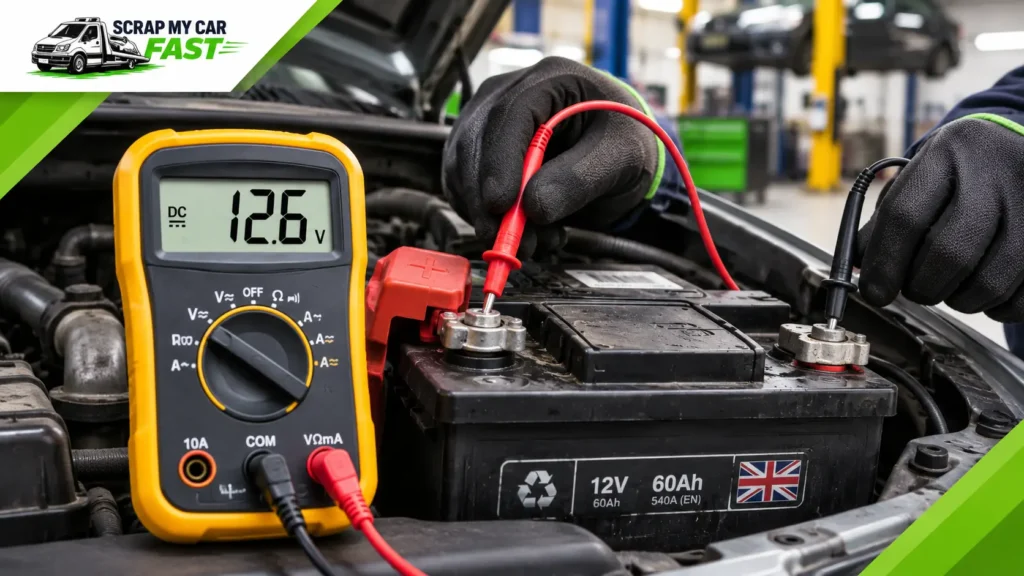
A flat battery isn’t always a dead one. Batteries usually last 3 to 5 years, so if yours is younger than that, it’s worth testing before you buy. With a cheap multimeter set to DC volts, check across the terminals after the car has stood for a few hours:
| Reading (engine off) | What it means |
|---|---|
| 12.6V or above | Fully charged. If the car still won’t start, the battery may not be the problem. |
| About 12.4V | Around three-quarters charged. Usually fine. |
| About 12.2V | About half charged. Recharge it and test again. |
| Below 12.0V | Discharged. If it won’t hold a charge after recharging, it needs replacing. |
With the engine running, a reading of roughly 13.5V to 14.5V means the alternator is charging the battery. If it’s much lower, the alternator may be the real fault, and a new battery will just go flat again. Most fast-fit centres will test your battery for free.
Signs that a battery is on its way out include the engine turning over slowly, dim lights at start-up, the battery warning light coming on, and a swollen or leaking battery case.
Can you replace a car battery yourself?
On an older car without start-stop, yes. It’s usually a 15 to 30 minute job with basic tools. Disconnect the negative (black, minus) terminal first and reconnect it last, so you don’t short the battery against the car’s body. Before you start:
- Match the new battery to the old one: size, terminal layout, capacity (Ah) and cold cranking amps (CCA) are all on the label.
- Check whether your car has start-stop or needs battery registration. If so, a garage may be the better option.
- Find your radio security code if your car has an older stereo, as some ask for it after power is cut. A plug-in memory saver keeps settings while the battery is out.
- Expect to reset the clock, and on some cars the one-touch electric windows.
What to do with the old battery
A car battery is hazardous waste and must not go in any of your bins at home. You have three easy options:
- Leave it with the fitter. Most will take it away when they fit the new one, but they don’t have to by law, so ask first. Some add a small disposal charge of a pound or two.
- Take it to a recycling centre. Every Recycle for Greater Manchester centre accepts car batteries.
- Sell it for scrap. An old car battery is worth a few pounds for its lead. Our guide to car battery scrap value has current prices.
When a new battery isn’t worth it
If the battery is the only fault, replacing it is almost always worth doing. Even a £250 AGM battery is cheap next to the cost of another car. The picture changes when the battery is one problem among several on an older car.
| Situation | Usually the best move |
|---|---|
| Battery is the only fault, car otherwise sound | Replace the battery |
| Car has stood for months, flat battery and flat tyres, no MOT | Get a scrap quote before spending anything |
| Battery dead and the car has failed its MOT on other items | Compare the total repair bill with the scrap value |
| New battery fitted but it keeps going flat | Check the alternator first. If that has failed too, consider scrapping |
Most cars are worth £150 to £300 in scrap, and large SUVs and vans up to £550. You can check yours on our scrap car prices page or with the scrap car value calculator. If a battery plus other repairs would cost more than half of what the car is worth once fixed, scrapping it is usually the better deal. The same rule applies to bigger faults, such as a failing clutch or a blocked DPF.
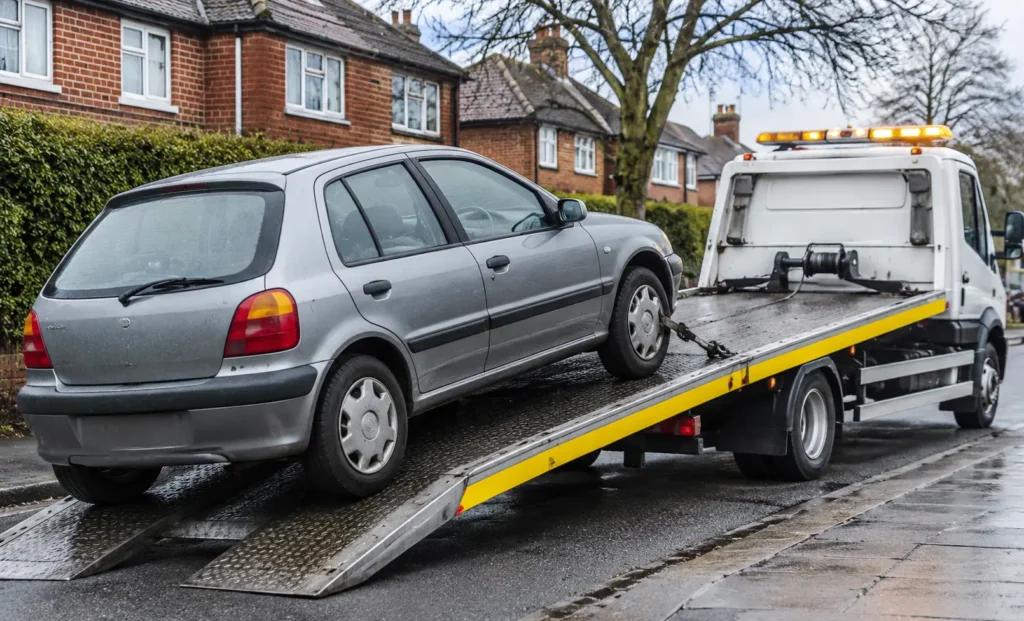
You don’t need to buy a new battery just to scrap a car. We collect non-runners on a flatbed at no charge, so a car with a dead battery is no problem. See our non-runner collection page for how it works.
Frequently asked questions
How long does a car battery last?
Usually 3 to 5 years. Short trips, cold winters and cars left standing for long periods shorten that.
How long does it take to replace a car battery?
Around 30 minutes to an hour at a garage. Cars with hard-to-reach batteries or that need registration can take longer.
Is it cheaper to buy a battery online and fit it yourself?
Usually, yes, by the £30 to £50 a fast-fit centre charges for fitting. It’s only a saving if you choose the correct battery and your car doesn’t need registration, though.
Does a new car battery need coding?
Many BMW, Volkswagen Group and Mercedes models do, as do other cars with a battery management system. Without it, the battery may not charge correctly and start-stop may not work. Check your handbook or ask the garage.
Can a flat car battery be recharged instead of replaced?
Often, yes, if it’s under about 3 years old and was drained by something like lights left on. A battery that won’t hold its charge after a full recharge needs replacing.
What is the difference between an EFB and an AGM battery?
Both are built for start-stop. EFB batteries suit basic start-stop systems and are cheaper. AGM batteries handle more demanding systems and cars with heavy electrical loads. Always fit the type your car came with, or an AGM in place of an EFB, never a standard battery in a start-stop car.
Car not worth a new battery? Get your instant scrap car quote or call us on 07432 675878. We collect free from anywhere in Manchester and across Greater Manchester, flat battery or not, and pay you the same day.