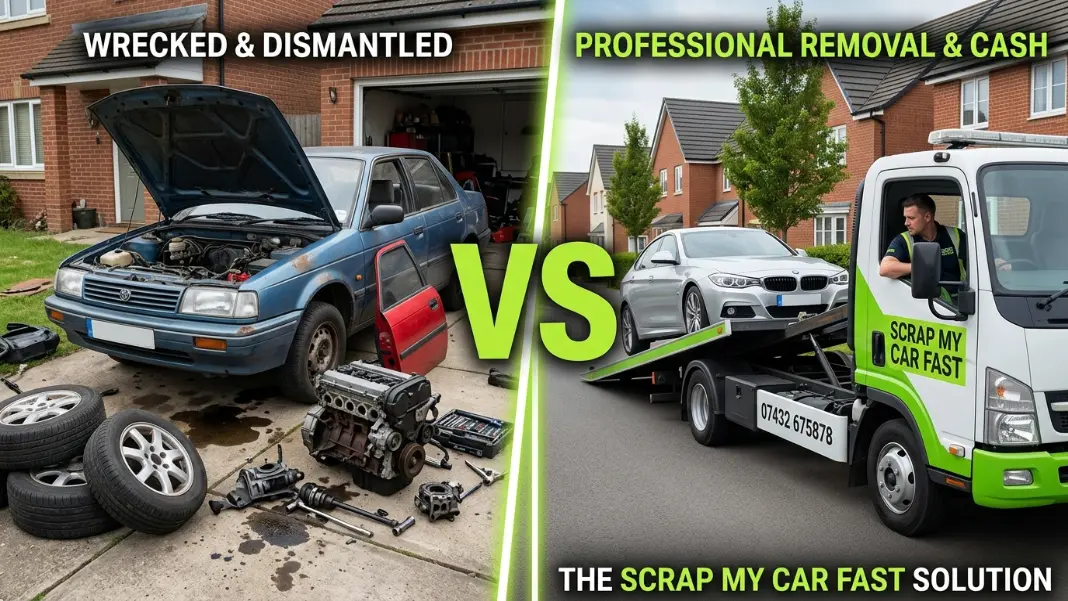
If your car has reached the end of the road, you are probably weighing up whether to sell it for parts or scrap it as a whole. On the surface, selling for parts sounds like the better deal. After all, individual components seem to fetch more than the scrap metal value of the whole car. But the real picture is more complicated than that, and for the vast majority of car owners, scrapping the car outright puts more money in their pocket with far less hassle.
This guide breaks down both options honestly, including the numbers, the time involved, the risks, and the hidden costs that most articles do not mention, so you can make the right call for your specific situation.
The Short Answer: Which Option Actually Pays More?
For most cars, scrapping pays more in practice. Selling a car for parts can yield a higher gross total on paper, but after you factor in the time investment, listing fees, storage costs, buyer disputes, and the unsellable remainder left at the end, the net return is almost always lower than a straightforward scrap collection.
If your car is a popular model with high-demand parts that are still in good condition, there is a narrow case for breaking it yourself. For the vast majority of everyday vehicles, scrapping is the faster, safer, and more profitable route.
What Does Selling a Car for Parts Actually Involve?
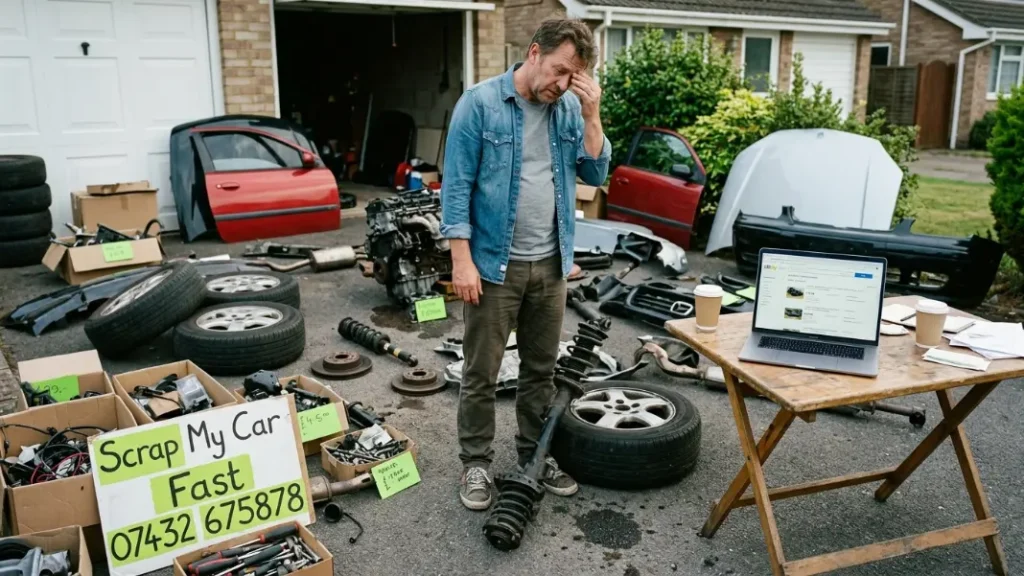
Selling your car for parts privately means dismantling the vehicle yourself, listing each component separately, storing everything while it sells, and dealing with individual buyers for every single piece. It is a second job.
The Parts You Can Realistically Sell
Not every part of a car has a resale market. The components that buyers actually search for include:
- Catalytic converters (valuable due to platinum and palladium content)
- Alloy wheels and tyres
- Engines and gearboxes in good working order
- Body panels without damage
- Infotainment systems, sat navs, and dashcams
- Seats and interior trim in clean condition
- Headlights, tail lights, and wing mirrors
- ECU units and sensors
The issue is that most of these parts only have value if they are in working order and compatible with common models. A corroded engine block, cracked bumper, or worn interior is worth nothing to a private buyer. You are essentially trying to sell the good pieces from a car that is mostly worn out.
The Time Commitment
Stripping a car properly takes anywhere from 20 to 60 hours depending on the vehicle and your mechanical knowledge. Then comes the photography, listing creation, pricing research, answering buyer enquiries, packaging parts safely, arranging postage or collection, and handling returns when something does not fit or work as expected.
Realistically, breaking a car for parts is a project that runs over several weeks or months. Parts do not all sell at once. You will often have a half-stripped car sitting on your driveway for far longer than you planned, which brings its own set of problems including council complaints, weather damage, and the ongoing cost of insuring a vehicle you are no longer using.
What Happens to the Remainder?
Even if you sell every desirable part, you are left with a shell. The bodywork, chassis, glass, and fluids still need to be disposed of legally. You cannot simply leave a stripped car on a public road or have it collected by a regular skip company. The remaining shell will need to go to an authorised treatment facility, and you may have to pay for that collection yourself. This cost rarely gets mentioned when people calculate how much selling for parts will earn.
What Does Scrapping a Car Involve?
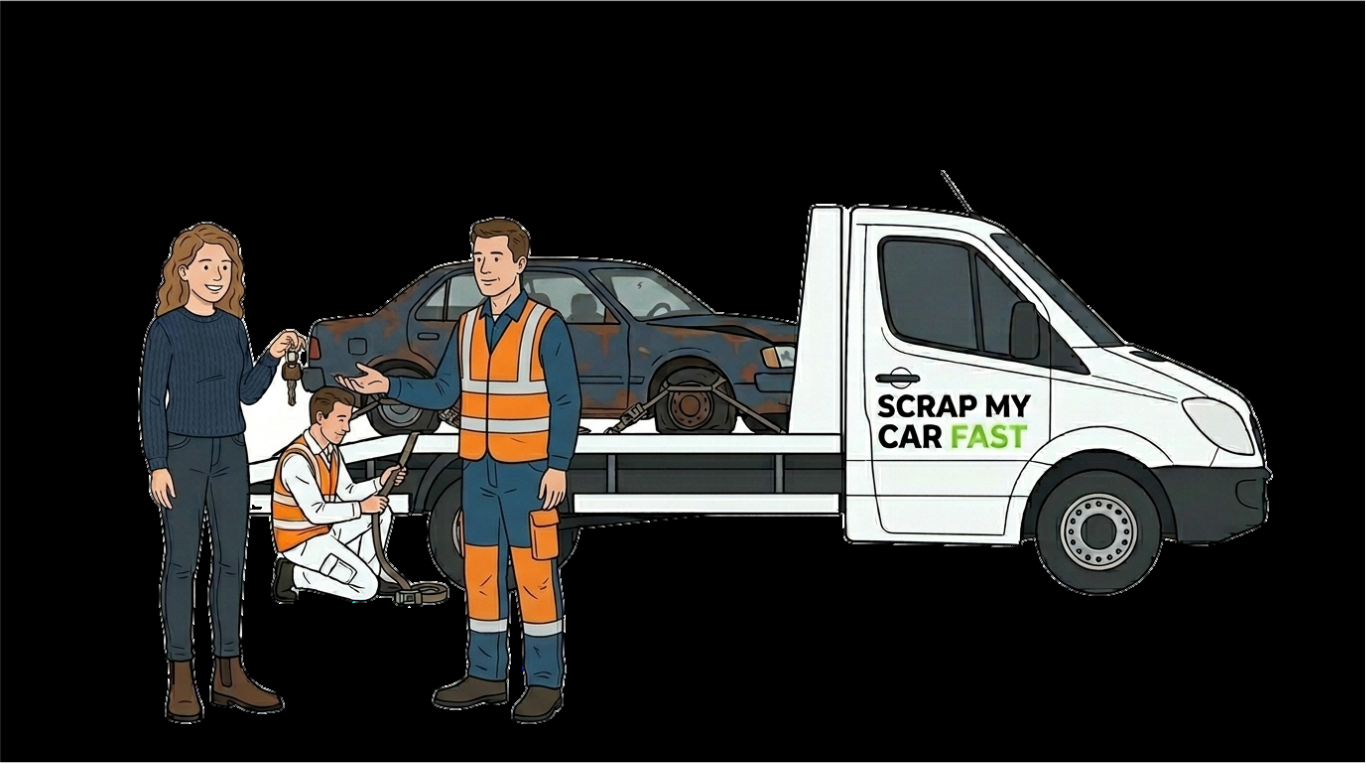
Scrapping your car with a reputable buyer like Scrap My Car Fast takes around ten minutes of your time. You get an instant online quote based on your car’s weight and the current live scrap metal rate, book a collection time that suits you, and the car is collected from your door for free. Payment arrives in your bank account the same day by bank transfer.
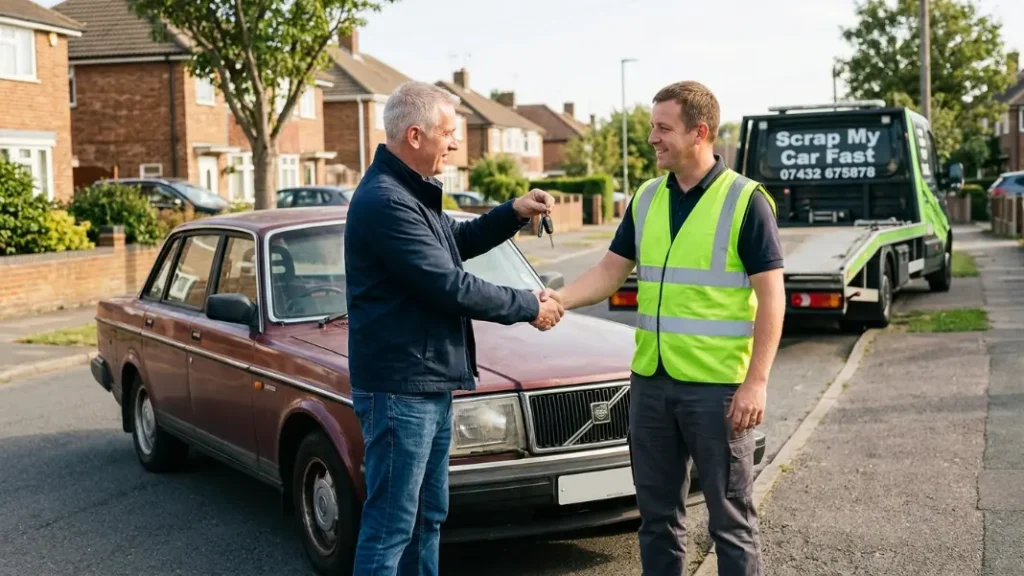
The buyer handles all the paperwork, notifies the DVLA on your behalf, and issues a Certificate of Destruction so the vehicle is legally removed from your name. There is nothing left to deal with.
You can find out exactly how much your scrap car is worth today using a live pricing tool that accounts for your vehicle’s make, model, weight, and current metal prices in your area.
The Real Numbers: Selling for Parts vs Scrapping
To make this concrete, consider a typical 2012 Ford Focus with 120,000 miles, minor bodywork damage, and a working but tired engine. Here is a realistic breakdown.
Selling for Parts (Gross Estimate)
| Part | Estimated Sale Price |
|---|---|
| Alloy wheels x4 | £80 to £120 |
| Catalytic converter | £50 to £150 (standard non-sport cat) |
| Headlights | £30 to £60 |
| Rear lights | £20 to £40 |
| Engine (tired, high mileage) | £100 to £200 |
| Gearbox | £80 to £150 |
| Interior trim | £30 to £80 |
| Doors and body panels | £40 to £100 |
| Gross total | £430 to £900 |
This looks good. But now subtract the real costs.
Selling for Parts (Net Reality)
| Deduction | Cost |
|---|---|
| eBay / Facebook Marketplace fees (approx 10-13%) | £43 to £117 |
| Packaging and postage for smaller parts | £40 to £80 |
| Your time at a modest £12/hour (30 hours minimum) | £360 |
| Shell disposal to authorised facility | £50 to £150 |
| Unsold parts (realistic 30-40% of listings go unsold) | £130 to £270 lost |
| Net total | Loss to break even |
After accounting for time, fees, postage, and the parts that simply do not sell, many people who break cars privately find they have worked for weeks and ended up with less money than a scrap quote would have given them on day one.
Scrapping (What You Actually Receive)
A 2012 Ford Focus weighs approximately 1,350 kg. At current scrap metal rates (which fluctuate but have sat between £130 and £210 per tonne), a complete Focus would typically bring £195 to £275, with a same-day payment and zero effort on your part.
Is that lower than the gross figure from selling for parts? Yes. Is it higher than the net figure? Almost always.
When Selling for Parts Does Make Sense
There are genuine scenarios where selling for parts is worth considering.
You have a desirable, low-mileage classic or performance car. If you own a car that enthusiasts actively search for, such as certain Japanese imports, performance variants, or classic British models, individual parts can command prices well above scrap value and sell quickly. The economics change when demand is high and parts are genuinely rare.
You have a single high-value component. If your car has a brand-new catalytic converter, a recently replaced engine, or a set of premium alloy wheels in excellent condition, selling that one part privately and then scrapping the rest can be a sensible middle ground.
You are a mechanic or someone with the tools and space already. If stripping a car is something you can do quickly in your own workshop without paying for your time, the calculation changes. The labour cost is the biggest factor that kills the economics of selling for parts for most people.
The car is very popular and parts are in short supply. Models like the Range Rover Sport, BMW 3 Series, or certain Honda Civics have large owner communities and active parts markets. Even average-condition components sell reliably.
When Scrapping Makes More Sense
Scrapping is almost always the better option in these situations.
The car is not running. A car that will not start limits your options significantly. Buyers are reluctant to purchase mechanical parts from a non-runner without being able to verify they work, which drives prices down sharply. Scrapping a non-runner is straightforward because scrap value is based on weight, not whether the car runs. If you have a non-runner that needs collecting, the process is exactly the same as for a running vehicle.
The car has high mileage or significant wear. Buyers looking for used parts want low-mileage, reliable components. A 130,000-mile engine with worn piston rings is not going to sell for anywhere near book price. The scrap metal value does not care about mileage.
You need the money quickly. If you need funds this week rather than in two months, scrapping is the only option that delivers same-day payment. Selling for parts is a long-tail process with no guaranteed timeline.
The car has been written off or flood damaged. Insurance write-offs and water-damaged vehicles have components that buyers rightly treat with suspicion. Most serious buyers check the HPI history of parts from written-off vehicles, making them difficult to sell. If you are looking to sell a written-off car, scrapping is usually the most straightforward path.
You have no space to store a stripped vehicle. Councils can issue fines for keeping a SORN vehicle on a public road. If you do not have off-road storage, breaking a car privately is simply not a practical option.
The Hidden Costs Nobody Mentions
Beyond the obvious time and fees, selling for parts carries several costs that people only discover halfway through the process.
Postage damage and disputes. Car parts are heavy and awkward. When something arrives damaged or does not fit a buyer’s specific model variant, you face a return, a refund, and sometimes negative feedback that affects your ability to sell future listings.
Liability concerns. If you sell a safety-critical part such as a brake component, ABS module, or steering part and it fails in the buyer’s car, you may face a dispute even if the part was fine when it left you. Selling whole cars to authorised buyers removes this risk entirely.
DVLA obligations. If you sell the shell of your car privately after stripping it, you are still the registered keeper until the buyer transfers it. If the shell sits somewhere without being properly scrapped, you could continue to receive penalty charge notices or SORN reminders for a vehicle you no longer own. When you scrap through an authorised treatment facility, the DVLA is notified automatically and you receive a Certificate of Destruction as legal proof. You can read more about what happens when you scrap your car and how the paperwork is handled.
A Note for Drivers in Manchester and Greater Manchester
If you are based in Manchester, Salford, Stockport, Bolton, Oldham, or anywhere across Greater Manchester, the practical case for scrapping is even stronger. The region has strong scrap metal infrastructure, which means competitive scrap car prices and fast collection availability. Collection is free across all Greater Manchester postcodes, and payment is made by same-day bank transfer regardless of where you are located.
For Manchester drivers who want to compare their options, the scrap car price calculator gives an instant quote based on live metal rates so you can see exactly what your car is worth before committing to anything.
Frequently Asked Questions
Can I sell some parts and then scrap the rest of the car? Yes, and this is often the smartest approach. If your car has one or two genuinely valuable and easily removed parts, sell those privately first, then book a scrap collection for the remainder. Just be aware that removing certain parts, particularly the catalytic converter, may reduce the overall scrap quote since buyers check for these components during collection.
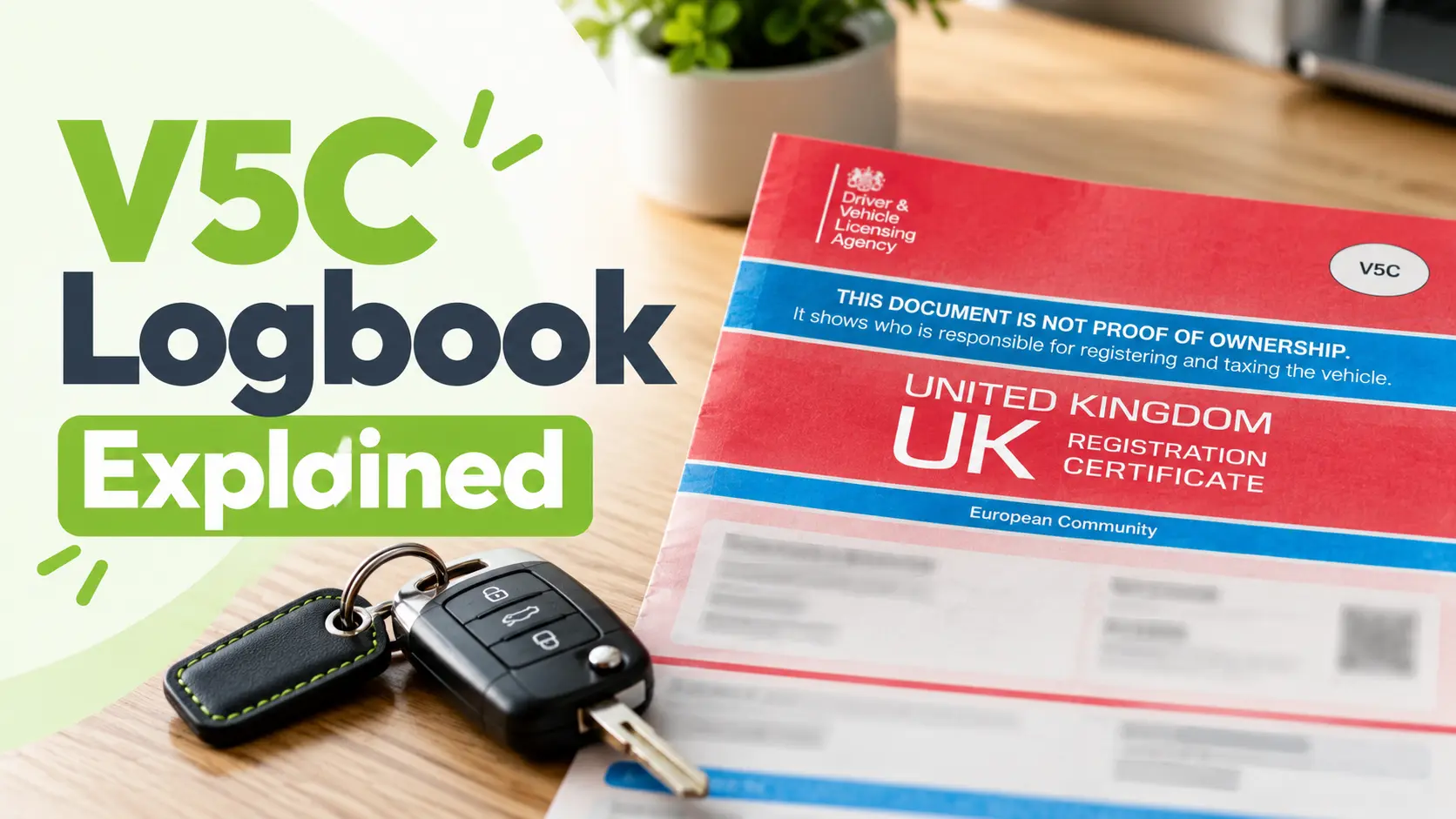
Do scrap car buyers accept cars without a V5 logbook? Yes in most cases. You can scrap a car without a logbook as long as you can prove your identity and show reasonable proof that you own the vehicle. The authorised treatment facility will still issue a Certificate of Destruction.
How is scrap car value calculated? Scrap car prices are based primarily on the vehicle’s weight and the live scrap metal rate, which changes daily. Heavier vehicles naturally return more. The condition of the car matters less than you might expect, since the value comes from raw materials rather than working components.
Is it legal to sell car parts privately? Yes, selling used car parts privately is legal. You do not need a licence unless you are operating as a commercial dismantler. However, you must ensure you are not selling parts from a stolen vehicle and you should retain receipts showing you owned the car.
How long does scrapping a car take? From getting a quote to receiving payment, the process typically takes one to two days including the collection appointment. If you need same-day service, that is available across most of Greater Manchester with advance booking.
What happens to my road tax when I scrap my car? DVLA is notified as part of the scrapping process and your road tax is cancelled automatically. Any remaining full months are refunded to you directly by DVLA. This is one of the administrative advantages of scrapping through an authorised buyer rather than selling privately.
The Bottom Line
Selling your car for parts sounds like the high-value option, but when you account for the time required, the fees involved, the parts that will not sell, and the cost of disposing of the remainder, the actual money in your pocket is rarely better than a clean scrap quote.
Unless you have a genuinely desirable vehicle, mechanical skills, storage space, and time to spare, scrapping your car is the faster and more financially sensible choice for most people.
If you want to see what your car is worth right now, you can get an instant scrap car quote in under a minute with free collection and same-day payment included.