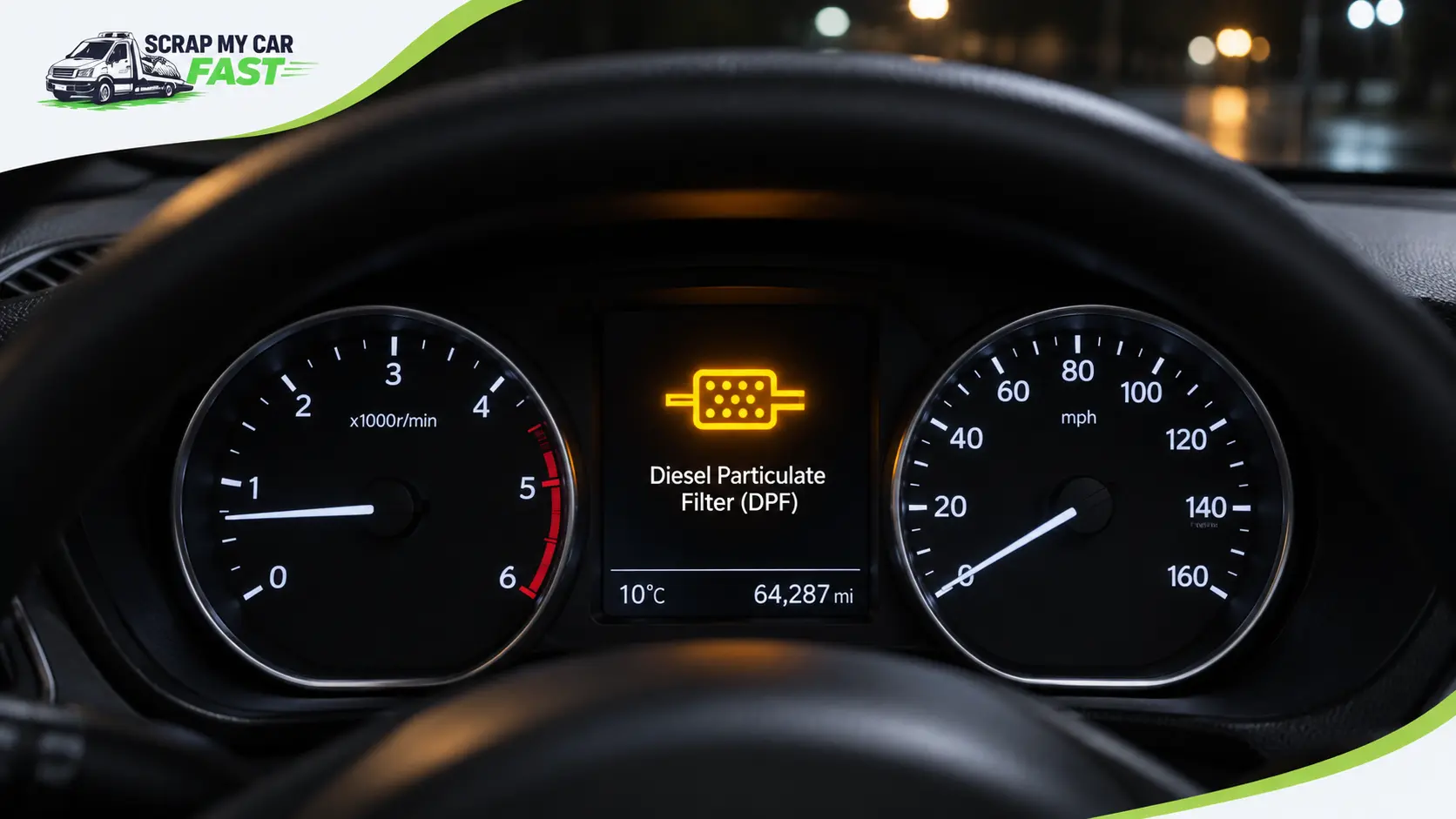
A diesel particulate filter (DPF) warning light means the filter is filling with soot faster than it can burn it off. Often a steady drive of 10 to 20 minutes at over 40mph on a motorway or dual carriageway clears it. If the light stays on, a garage forced regeneration typically costs £80 to £150, a professional clean £150 to £400, and a new DPF £1,000 to £3,500 fitted. On an older, high-mileage diesel, that last figure is often more than the car is worth.
We collect a lot of older diesels across Greater Manchester that have stopped in limp mode with the DPF light glowing. This guide covers what the light means, how to try clearing it yourself, what each fix really costs, and how to decide between paying for the repair and scrapping the car. If you already know it isn’t worth fixing, you can get a free scrap car quote in about a minute.
What a DPF does and why it blocks
Every diesel car built in roughly the last 15 years has a DPF in the exhaust. It traps the soot the engine produces so it doesn’t come out of the tailpipe. The filter has to empty itself regularly by burning that soot off, which is called regeneration.
- Passive regeneration happens on its own when the exhaust gets hot enough, usually on motorways or fast A-roads.
- Active regeneration is triggered by the engine software when the filter is getting full. According to the AA, it starts roughly every 300 miles and takes 5 to 10 minutes, with extra fuel injected to raise the temperature.
The problem comes when a car never gets the chance to do either, usually because it only does short trips. Used properly, the AA says a DPF should last well over 100,000 miles.
Blocked DPF symptoms
The warning light is the obvious sign, but a blocked or clogged DPF usually shows other symptoms too:
- The DPF warning light on the dashboard, sometimes with the engine management light if a sensor has failed
- Loss of power or limp mode, where the car won’t rev or accelerate properly
- Worse fuel economy than usual
- Stop-start not working, cooling fans running after you switch off, or a higher idle, which are signs the car keeps trying to regenerate
- A hot, acrid smell from the exhaust
- Visible smoke. A car with a working DPF shouldn’t smoke, so smoke usually means a damaged filter or another engine fault
How to clear the diesel particulate filter warning light
- Don’t ignore it. Most manufacturers want the DPF dealt with within days, not weeks.
- Try a regeneration drive. The AA suggests around 10 minutes at over 40mph, though many cars need 20 minutes or longer. A motorway or dual carriageway at a steady speed works best. Check your handbook, as the advice varies by make.
- Make sure you have fuel. Some cars won’t run an active regeneration if the tank is below about a quarter full.
- Watch the light. If it goes out, the regeneration has worked.
- If it stays on, flashes or the car goes into limp mode, book it into a garage or DPF specialist. Ask for a diagnostic check before paying for a clean, because a faulty sensor, EGR valve or injector can cause the same warning.
Can you keep driving with the DPF light on?
For a short distance to a garage, usually yes. Driving for weeks with it on lets the filter block further, and a fully blocked DPF can push the car into limp mode, damage the filter for good, and add strain to the engine and turbo. That’s how a £100 fix turns into a £2,000 one.
Common DPF problems and why they keep blocking
- Short journeys. The most common cause. The exhaust never gets hot enough and active regenerations get cut off when you switch off.
- The wrong engine oil. DPF cars need a specific low-ash oil, listed in the handbook.
- An engine fault such as a sticking EGR valve, leaking injector or worn turbo, which makes more soot than the filter can handle.
- An overdue service or ignored warning lights.
- Low DPF additive. Some cars, mostly Peugeot and Citroën diesels, use an additive fluid. The AA says a tank lasts about 70,000 miles and a refill costs around £200.
If the light keeps coming back soon after a clean, there’s almost always an underlying fault. Paying for clean after clean without fixing it is the most common way people waste money on a DPF.
DPF fixes and what they cost
| Fix | Typical UK cost | When it works |
|---|---|---|
| Regeneration drive | Free | Light to moderate soot build-up, caught early |
| DPF cleaning additive in the fuel tank | Low cost | Light blockages only, used alongside a good run |
| Forced regeneration at a garage | £80 to £150 | Filter partly blocked but not damaged |
| Professional clean (on or off the car) | £150 to £400 | Heavy soot or ash build-up in a sound filter |
| Replacement DPF, fitted | £1,000 to £3,500 | Filter cracked, melted or full of ash. Main dealers are usually at the top of the range |
These ranges come from UK garage price guides published in 2026, and real quotes vary by car and garage. Any underlying fault, like an EGR valve or injector, is extra on top.
Is DPF removal an option?
No. “DPF delete” services still get advertised, but removing the filter causes more problems than it solves:
- It fails the MOT. GOV.UK states that if a vehicle was fitted with a DPF when it was built but doesn’t have one now, it will fail.
- Tampering is a major fault. The MOT inspection manual lists evidence that a DPF has been tampered with as a major defect, and so is visible smoke of any colour from a car fitted with a DPF.
- It’s against the law and can void your insurance. The AA points out that removing a DPF breaks the Road Vehicles (Construction and Use) Regulations.
It also makes a car much harder to sell, because any buyer who checks will walk away.
Repair or scrap? A simple way to decide
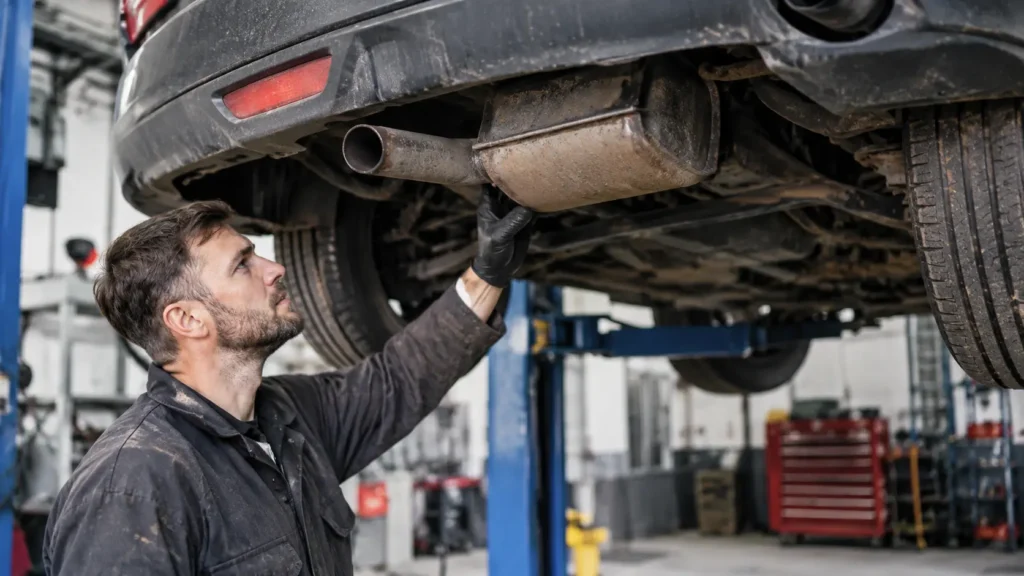
The right answer depends on what the car is worth once it’s fixed. Our rule of thumb: if the repair costs more than half of what the car would be worth afterwards, and it’s an older, high-mileage diesel, scrapping is usually the better deal.
| Your situation | Usually the best option |
|---|---|
| Newer car, light came on after a run of short trips, no other faults | Try a regeneration drive, then a forced regeneration |
| Light keeps coming back after cleaning | Get a proper diagnosis before spending more |
| Replacement quoted, car worth well over twice the bill | Repair it |
| Replacement quoted at £1,000 or more on a 10+ year old, 120,000+ mile diesel | Scrap it or sell it as it is |
| DPF plus other big faults, such as a turbo, clutch or MOT failures | Scrap it |
Blocked DPFs often turn up alongside other expensive faults on older diesels. If you’re weighing up more than one repair, our guides on head gasket failure and a slipping clutch use the same approach.
What a blocked DPF does to your car’s value
- Private sale: most buyers walk away from a diesel with a DPF warning light, or offer far less.
- Trade-in or car buying sites: expect the offer to drop by roughly the cost of the repair, often more.
- Scrap: the price is based mainly on the car’s weight, so a blocked DPF makes little difference. A typical family-size diesel earns £195 to £275, and you can see the full guide on our scrap car prices page.
Don’t take the DPF off to sell it separately before scrapping. Most are combined with the catalytic converter, buyers want the original part intact, and a car missing parts is worth less as a whole. Our catalytic converter scrap value guide explains why the whole car usually earns more.
Scrapping a diesel with a blocked DPF in Greater Manchester
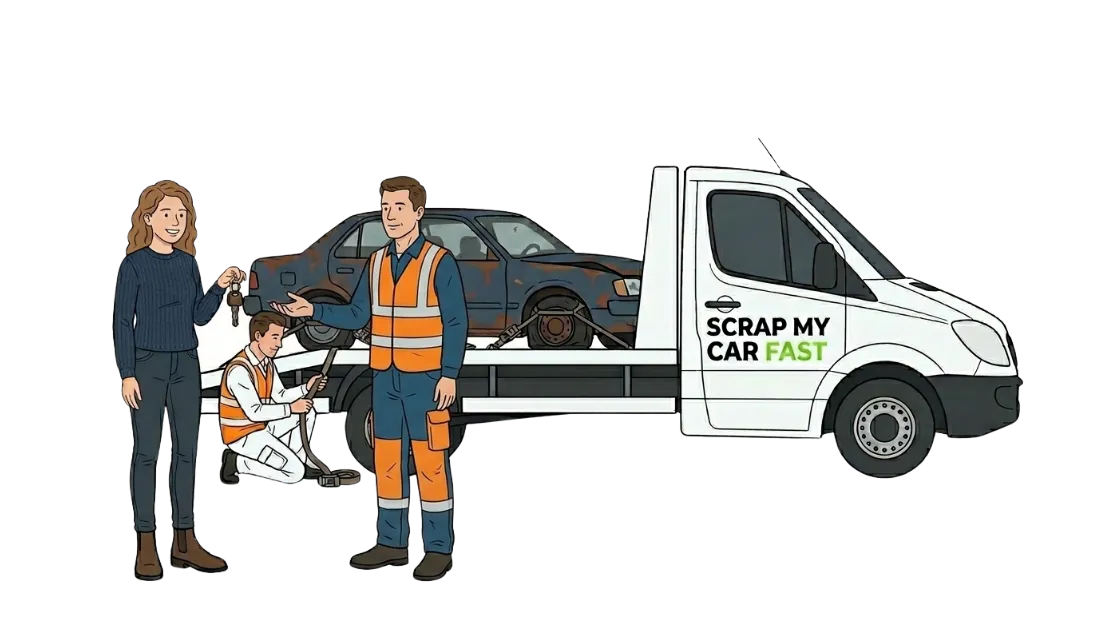
You don’t need to fix anything first. We collect cars that are in limp mode, won’t start or have failed their MOT, at no charge, and it doesn’t need a valid MOT to be scrapped. Our faulty car collection service covers every postcode from Manchester to Salford and the rest of Greater Manchester. Payment goes to your bank on the day, and we handle the DVLA paperwork.
Frequently asked questions
Can you drive with a blocked DPF?
Briefly, to try a regeneration drive or to get to a garage. Driving on for weeks risks limp mode, a permanently damaged filter and extra strain on the turbo.
How long does it take to clear a DPF?
An active regeneration takes about 5 to 10 minutes once it starts. A clearing drive usually needs 10 to 20 minutes at a steady speed over 40mph, and some cars need longer.
Can a blocked DPF cause turbo failure?
It can add strain, because a blocked filter raises the pressure in the exhaust. It also works the other way: a worn turbo leaking oil can clog a DPF quickly. If both are failing on an older car, scrapping often makes more sense than fixing either.
Does DPF cleaner work?
Fuel additives can help with a light blockage when you follow them with a proper run. They won’t clear a heavily blocked filter or one full of ash.
Does my car have a diesel particulate filter?
Almost certainly, if it’s a diesel built since around 2009. Your handbook will confirm it, and most of these cars have a DPF warning symbol on the dashboard.
Will a blocked DPF fail the MOT?
A car fails if the tester sees smoke of any colour from a DPF-equipped exhaust, if the DPF has been tampered with, or if one fitted at the factory has been removed. A blocked filter that causes smoke or a warning light can lead to a failure, so it’s worth fixing or deciding before the test. If it’s already failed, see our guide on driving a car that has failed its MOT.
Got a diesel with a DPF problem that isn’t worth fixing? Get your instant scrap car quote or call us on 07432 675878. We collect free across Greater Manchester, even if the car won’t start.
This guide reflects GOV.UK, DVSA and AA guidance and UK garage pricing as of November 2026. Costs vary by car and garage, so always get a quote for your own vehicle.