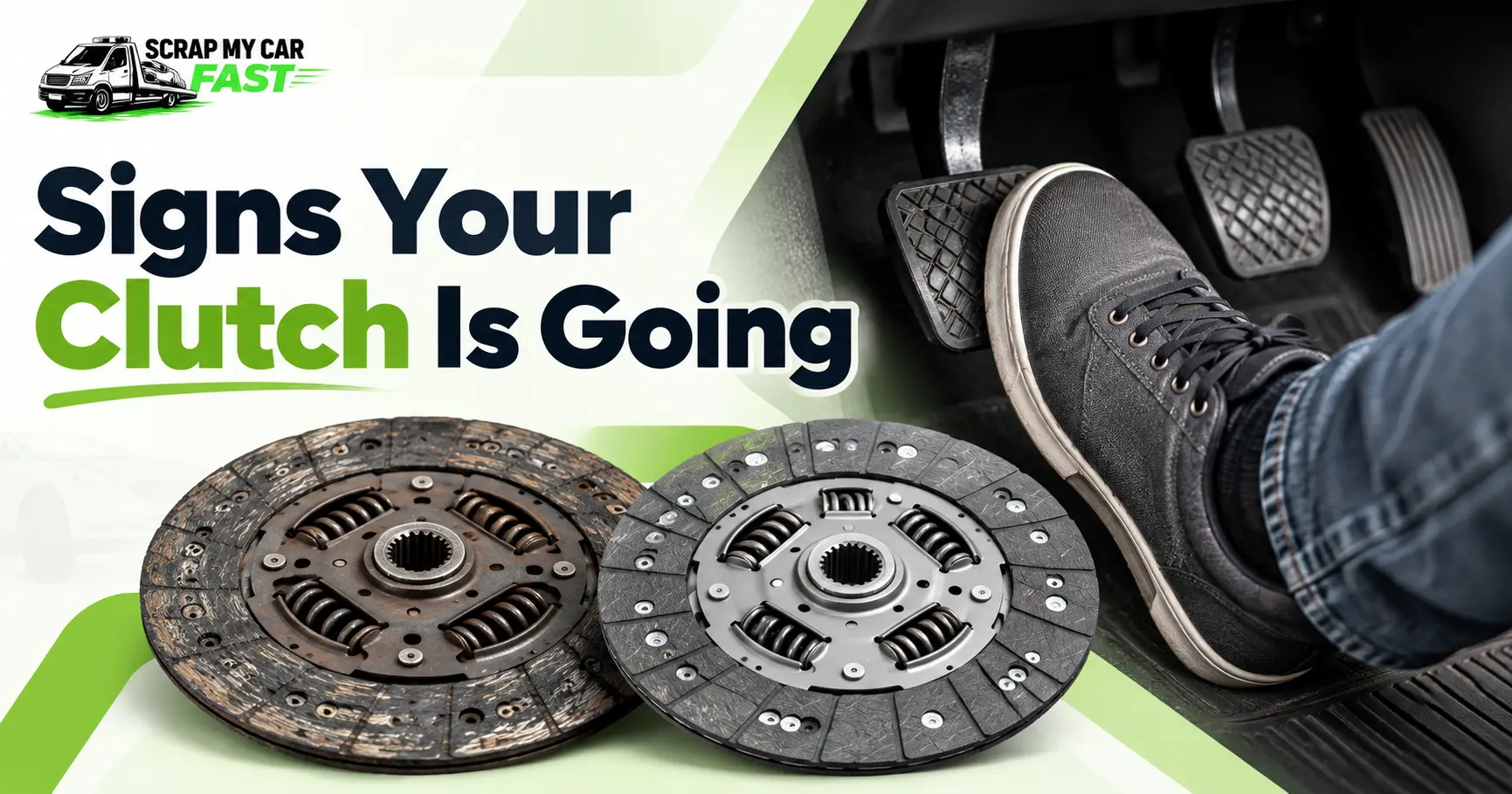
The most common signs your clutch is going are the engine revs rising without the car speeding up (slipping), a biting point that has crept high up the pedal, a burning smell, and trouble getting into gear. A clutch replacement in the UK usually costs £400 to £900. If the dual-mass flywheel has to go as well, which is common on diesels, it’s more like £800 to £1,500. Gearbox faults look similar but tend to be more expensive. Whether the car is worth fixing depends on the repair bill compared with what it will be worth afterwards.
A worn clutch is one of those faults that creeps up slowly and then suddenly isn’t optional any more. We collect cars and vans with failed clutches and gearboxes across Greater Manchester most weeks. Some owners didn’t realise they had a cheap fix, and others put good money into a car that wasn’t worth it. This guide covers how to tell what’s actually wrong, what it costs, whether you can keep driving, and how to decide between repairing and scrapping.
Quick facts
- Classic clutch signs: slipping, a high biting point, burning smell, juddering when pulling away, and grinding or stiff gear changes.
- Clutch replacement: about £400 to £900. Add £300 to £600 or more if the flywheel needs replacing.
- Gearbox repair: about £450 to £900 for a manual repair, £900 to £2,000 for a reconditioned manual box, and £1,200 to £3,500 for automatics and DSGs.
- Check the cheap causes first: a hydraulic fault on a manual, or old fluid on an automatic, can look like a failed clutch or gearbox.
- Repair or scrap: if the bill is more than about half of the car’s repaired value, think hard before paying it.
How a clutch works, in one minute
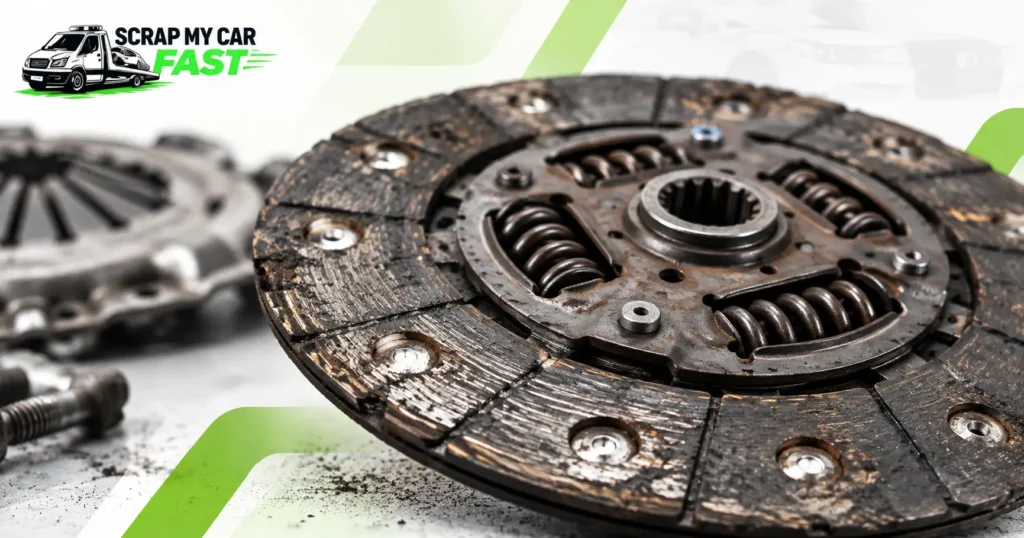
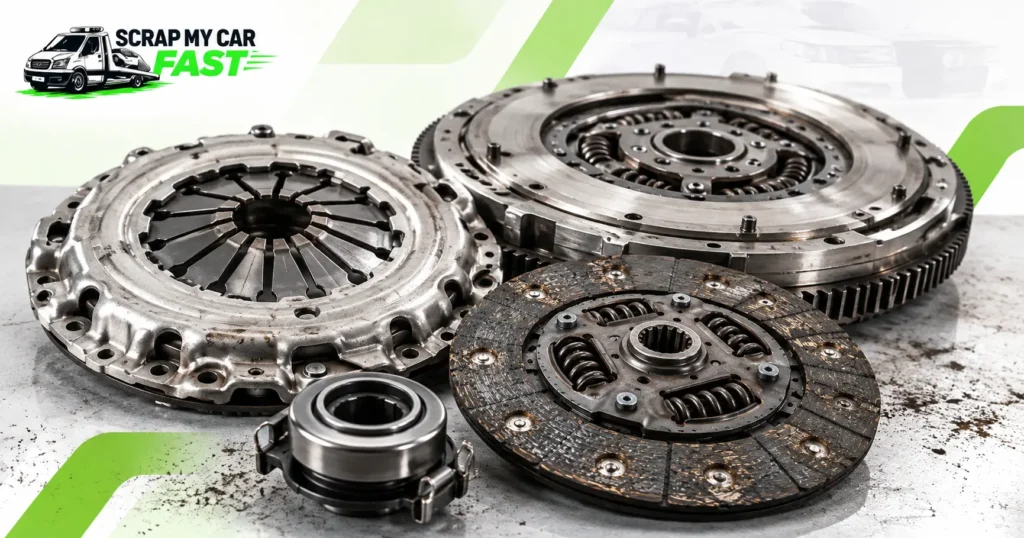
The clutch sits between the engine and the gearbox. When your foot is off the pedal, a friction plate is clamped against the engine’s flywheel, and power goes through to the wheels. Press the pedal and the clamp lets go, so you can change gear or stop without stalling.
The friction plate wears every time you pull away or change gear, a bit like a brake pad. A clutch often lasts somewhere between 60,000 and 100,000 miles, but it can be far less with lots of town driving, towing, hill starts or riding the clutch. It can also last much longer with gentle motorway miles.
Many modern cars, including most diesels and a lot of turbo petrols, also have a dual-mass flywheel. It’s a heavier, sprung flywheel that smooths out vibration. It wears too, and it’s often the part that turns a clutch job into a big bill.
Signs your clutch is going
These are the symptoms worth paying attention to, roughly from the most to the least common:
- Slipping. You press the accelerator, the revs climb, but the car doesn’t pick up speed to match. It’s most noticeable in higher gears, going uphill, or when overtaking. This is the clearest sign the friction plate is worn.
- A high biting point. The car only starts to move when the pedal is almost all the way up. As the plate wears, the bite point creeps higher.
- A burning smell. It’s a sharp, acrid smell, a bit like burning paper or rubber, especially after a hill start or a lot of stop-start traffic. That’s the friction material overheating.
- Juddering when you pull away. The car shakes or shudders as the clutch bites. It can point to a worn or contaminated plate, or a failing flywheel.
- Difficulty getting into gear, or grinding. If the clutch isn’t fully letting go, gears crunch or are hard to select, especially first and reverse.
- A spongy, sticky, heavy or very light pedal. A pedal that feels different, stays down, or drops to the floor usually points to the hydraulics or the cable rather than the clutch plate. More on that below.
- Noise when you press the pedal. A whirring or squealing that appears when the pedal is pressed, and goes when you lift it, is often the release bearing.
- Rattling or knocking at idle, or heavy vibration. On cars with a dual-mass flywheel, this is a classic sign the flywheel is wearing out.
A simple slip check you can do yourself
On a quiet, straight road, at about 30 mph in third or fourth gear, press the accelerator firmly. If the revs jump but the speed barely changes, the clutch is slipping. If the car pulls forward cleanly as the revs rise, the clutch is still gripping. Only do this where it’s safe and legal, and stop if you smell burning.
Check the cheap causes before you pay for a clutch
Not every clutch problem means a new clutch. On a manual car with a hydraulic clutch, a leaking master or slave cylinder, or low or old clutch fluid, can cause a spongy pedal, a pedal that stays down, or gears that won’t engage. Fixing those usually costs a few hundred pounds at most, compared with the full clutch job. On cable-operated clutches, a stretched or snapped cable gives similar symptoms and is cheaper still.
So if the problem is the pedal rather than slipping, ask the garage to check the hydraulics or cable first.
Is it the clutch or the gearbox?
The two sit right next to each other and share some symptoms. These clues usually point one way or the other:
| Symptom | More likely clutch | More likely gearbox |
|---|---|---|
| Revs rise but the car doesn’t speed up | Yes, a slipping clutch | Rarely |
| Bite point high or changing | Yes | No |
| Noise only when the pedal is pressed | Yes, often the release bearing | No |
| Whine or howl that rises with road speed, in certain gears | No | Yes, often worn bearings |
| Crunching into one particular gear even with the pedal fully down | Sometimes | Yes, often worn synchromesh |
| Jumping out of gear while driving | No | Yes. Get it checked straight away |
| Oil leaking from between the engine and gearbox, or under the gearbox | Possible (engine or gearbox seal) | Possible (gearbox oil) |
A good garage can usually tell the difference on a short test drive. If they can’t, they should be able to after a proper inspection, before quoting for a full gearbox.
Automatic and DSG gearboxes
Automatics don’t have a clutch pedal, but the warning signs are similar: delayed engagement when you select Drive or Reverse, slipping between gears, harsh or jerky changes, juddering when pulling away, or the car going into “limp mode” and staying in one gear.
Before you accept a quote for a new or reconditioned automatic, ask about a fluid and filter service. Old, burnt fluid can produce symptoms that look a lot like mechanical failure. A service costs a fraction of a new gearbox and sometimes cures the problem. On dual-clutch gearboxes such as VW’s DSG, the electronic control unit (the mechatronic unit) is a common failure point, and it can often be repaired or replaced without changing the whole gearbox.
Can you drive with a bad clutch?
Usually you can for a while, but it only gets worse, and it can leave you stranded.
- A slipping clutch slips more as it wears, until the car won’t move under load at all. That usually happens on a hill or a junction, at the worst possible moment.
- Driving on a worn clutch can damage the flywheel’s surface. That can turn a clutch-only job into a clutch-and-flywheel job.
- A clutch that won’t disengage makes it hard or impossible to stop without stalling. That’s a safety problem in traffic.
- A gearbox that jumps out of gear can leave you with no drive mid-manoeuvre. Don’t keep driving on that.
If the car is going to sit while you decide what to do, keep it on a drive or private land. If the tax runs out, declare it off the road with a SORN.
How much does a clutch or gearbox repair cost in the UK?
On both jobs, most of the bill is labour, because the gearbox has to come out to reach the clutch. That’s typically 3 to 8 hours of work, depending on the car.
| Job | Typical UK cost (independent garage) |
|---|---|
| Clutch hydraulics (master or slave cylinder) or clutch cable | About £100 to £400 |
| Clutch kit replacement, small petrol car | £400 to £600 |
| Clutch kit replacement, typical family car | £550 to £900 |
| Clutch and dual-mass flywheel together | £800 to £1,500 |
| Manual gearbox repair (bearings, synchros) | £450 to £900 |
| Reconditioned manual gearbox, fitted | £900 to £2,000 |
| Automatic fluid and filter service | £150 to £350 |
| DSG mechatronic unit repair or replacement | £800 to £2,000 |
| Reconditioned automatic or DSG gearbox, fitted | £1,500 to £3,500 |
These are 2026 guide figures, and main dealers usually charge more. To give one benchmark, FixMyCar’s data puts the average clutch replacement at around £670, and around £1,080 for a clutch and dual-mass flywheel together.
When you compare quotes, check what’s included. A proper clutch job should cover the full kit: the friction plate, pressure plate and release bearing. It should also say clearly whether the flywheel is being replaced, skimmed or reused. A cheap quote that only covers the plate, or leaves the flywheel as a “we’ll see”, often isn’t the cheap one by the end.
Is it worth fixing? The repair or scrap decision
Work out three numbers:
- The full repair cost, from a written quote that states exactly what’s included.
- What the car will be worth once it’s fixed. Look at similar cars for sale with the same age and mileage.
- Anything else that’s due soon, such as the MOT, tyres, brakes, the timing belt, or advisories you already know about.
It also helps to know what the car is worth as it stands today. You can get an instant scrap price from your registration in a few seconds, with no obligation. That gives you a firm figure to set against the garage’s quote.
As a rule of thumb: if the repair plus other urgent work comes to more than about half of the car’s repaired value, think very carefully. Here’s how that works on three example cars. Your own figures will be different, so plug in your quote and your car’s value.
| Older diesel hatchback, 140,000 miles | Small petrol hatchback, 110,000 miles | Newer family car, 55,000 miles | |
|---|---|---|---|
| Fault | Clutch and dual-mass flywheel | Gearbox bearing noise, needs reconditioned box | Clutch slipping |
| Value once fixed | About £1,500 | About £1,200 | About £6,500 |
| Repair quote | £1,100 | £1,100 | £700 |
| Share of value | Around 73% | Around 92% | Around 11% |
| Sensible choice | Sell as is or scrap | Sell as is or scrap | Repair |
Closer cases come down to the rest of the car. If it’s otherwise solid, you know its history, and replacing it would cost far more, a new clutch can buy you years of driving. If it’s also rusting, leaking oil and due a cambelt, the clutch is often the moment to let it go.
Your options if you don’t repair it
Sell it with the fault
Some buyers, often home mechanics and small traders, look for cars with clutch or gearbox faults because they can do the work cheaply themselves. You can sell privately, but describe the fault honestly in the advert and in writing, and expect the price to reflect it. Our guide to selling for parts vs scrapping covers whether breaking it pays more.
Scrap it
Scrap value depends on the car’s weight and metal content, not on whether the clutch or gearbox works. A car with a dead clutch is worth the same to us as an identical one that drives, as long as it’s complete. We collect on a flatbed, so it doesn’t matter if it won’t go into gear. See how we work out prices in how scrap car prices are calculated, or read about scrapping a faulty car. If it’s completely stuck, our non-runner collection page explains how pickup works.
Faced with an engine fault rather than a clutch? Our guide to blown head gasket repair or scrap works through the same decision.
How to make a clutch last longer
- Don’t ride the clutch. Keep your foot right off the pedal unless you’re using it.
- Use the handbrake on hills rather than holding the car on the bite point.
- Go into neutral at long stops, rather than sitting with the pedal pressed.
- Pull away gently, without lots of revs and a slow release.
- Change gear with one smooth movement, and don’t rest your hand on the gear lever while driving.
- Get problems looked at early. A hydraulic leak or a judder caught early is cheaper than a clutch that has worn down to the rivets.
Frequently asked questions
How do I know if my clutch is going?
The most reliable sign is slipping: the revs rise when you accelerate but the car doesn’t speed up to match. Other signs are a biting point high up the pedal, a burning smell, juddering when pulling away, and grinding or difficulty selecting gears.
How much does it cost to replace a clutch in the UK?
Usually £400 to £900 at an independent garage. If the dual-mass flywheel also needs replacing, which is common on diesels, expect £800 to £1,500. Premium and four-wheel-drive cars can cost more.
How long does a clutch last?
Often 60,000 to 100,000 miles, but it varies a lot with driving style. Lots of town driving, hill starts and towing wear a clutch faster. Steady motorway driving makes it last longer.
Can I drive with a slipping clutch?
For a short time, but it will get worse and can fail suddenly, often on a hill or at a junction. Continuing to drive can also damage the flywheel and make the repair more expensive.
How can I tell if it’s the clutch or the gearbox?
Clutch faults usually show up in the pedal and when pulling away: slipping, a high bite point, or noise only when the pedal is pressed. Gearbox faults tend to show up while driving: whining that rises with speed, crunching into a particular gear, or jumping out of gear.
Is it worth replacing a clutch on an old car?
It depends on the numbers. If the repair costs more than about half of what the car will be worth once fixed, or other big jobs are also due, it’s often better to sell it as it is or scrap it.
Is a car with a broken clutch or gearbox worth anything?
Yes. As a spares or repair sale, the price depends on the model and condition. As scrap, it’s worth the same as an identical working car, because scrap value comes from weight and metal, not from whether it drives.
Clutch or gearbox gone and the numbers don’t add up?
If the repair costs more than the car or van is worth, we’ll take it as it is. It doesn’t need to drive, and there’s no need to get it to a garage first. Get an instant scrap quote for your car, or see our van scrapping page if it’s a van. We collect for free from anywhere in Manchester, Bury, Oldham, Tameside, Stockport and the rest of Greater Manchester. Payment goes to your bank on the day, and we handle the DVLA paperwork and Certificate of Destruction. You can also call us on 07432 675878.