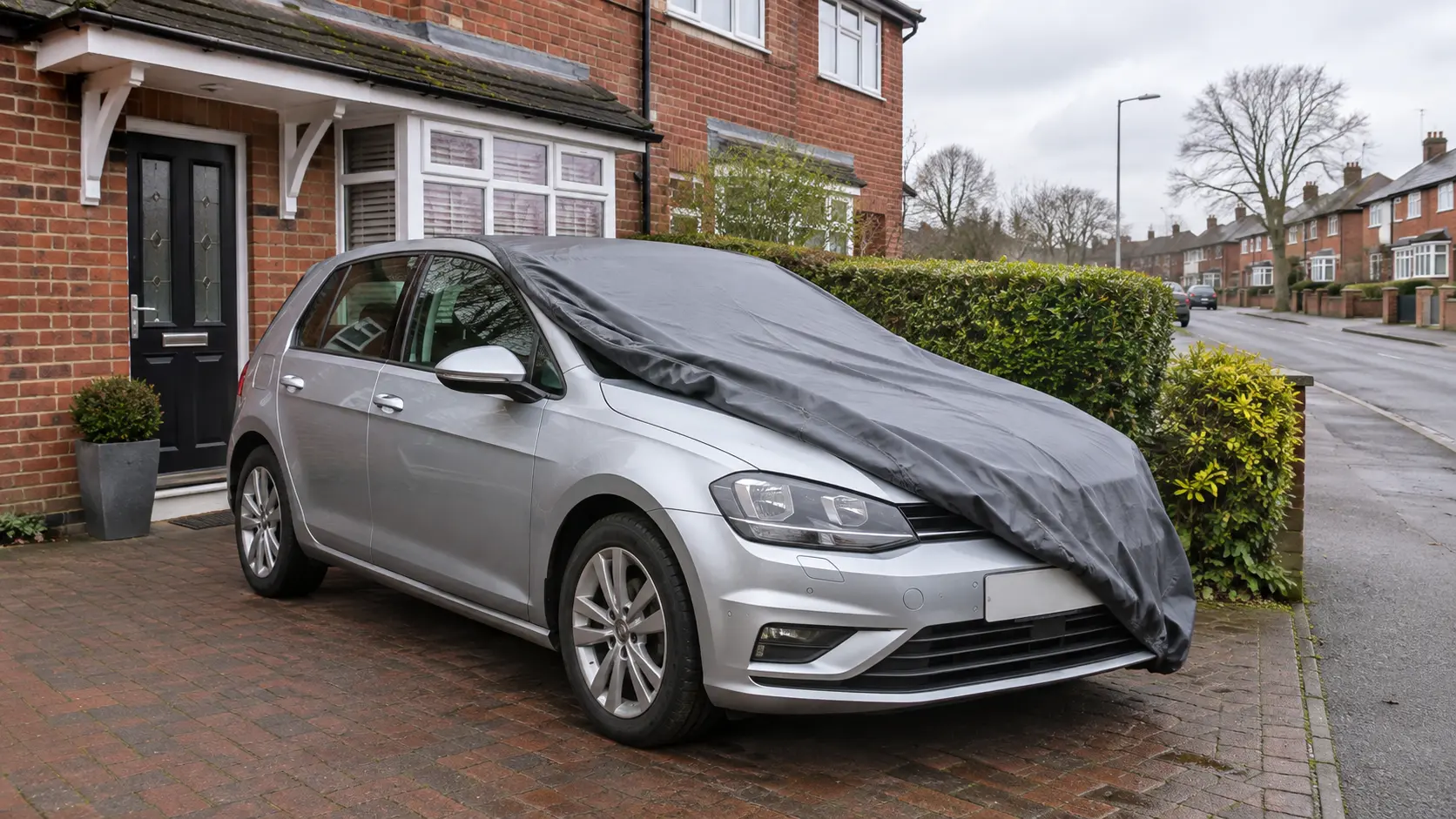
No. If your car is declared SORN and kept off the road, the law doesn’t require you to insure it. That changes the moment it goes on a public road, and the one trip a SORN does allow, to a pre-booked MOT, needs insurance too.
We collect a lot of cars that have been sitting SORN on drives across Greater Manchester, and the insurance question comes up all the time. This guide covers when a SORN car needs cover, whether it’s worth keeping some anyway, and what to do with your policy when the car is scrapped. If you still need to declare the car off the road, our guide on how to SORN a car walks you through it.
Does a SORN car need insurance?
No. GOV.UK states that you do not need to insure a vehicle if it is kept off the road and declared as off the road (SORN). It’s the only exception to Continuous Insurance Enforcement, the rule that a registered keeper must keep their vehicle insured.
Off the road means a garage, your own driveway or other private land. A car parked on the street outside your house is on a public road, SORN or not, and so is one left on a grass verge or the pavement. If you park in a shared or communal car park, check it’s private land before relying on a SORN.
Does making a SORN cancel your insurance?
No. SORN and insurance are separate. Making a SORN tells the DVLA the car is off the road, but it doesn’t change your policy. If you want to cancel or switch to cheaper cover, you have to contact your insurer yourself.
If the car is on finance
Check your finance or lease agreement before you cancel anything. Some agreements require the car to stay insured for the whole term, even while it’s declared off the road.
Getting rid of the car altogether? You can get a free scrap car quote in about a minute, and then the SORN and the insurance question both go away.
When a SORN car does need insurance
Driving it to a pre-booked MOT
GOV.UK allows one journey on a public road while a car is SORN: to or from a pre-booked MOT or other test. The SORN covers you for tax on that trip, but not for insurance. Drive to the test centre uninsured and you’re driving without insurance like anyone else.
If you do have a policy, check it covers a car with no valid MOT or tax for that trip, because some don’t. If you don’t want a full policy running, temporary cover for the day of the test is an option. If the car fails and you’re deciding whether it’s worth fixing, our guide on driving a car that has failed its MOT covers the rules for the journey home.
Parking it on the road
A SORN car can’t be kept on a public road at all, insured or not. Using a SORN vehicle on the road for anything other than the MOT trip can lead to prosecution and a fine of up to £2,500.
Getting a SORN car back on the road
A SORN stays in place until you tax, sell, scrap or permanently export the car. To use it again, do things in this order:
- Book an MOT if the old one has expired.
- Insure the car, at least for the drive to and from the test.
- Once it passes, tax it. Taxing the car ends the SORN automatically.
- Keep full road cover in place from then on.
Is it worth keeping some cover on a SORN car?
It isn’t a legal requirement, but there are good reasons to keep a cheaper policy running. Most insurers offer laid-up cover, also sold as SORN or parked car insurance. It costs less than a normal policy because the car isn’t being driven, and it usually comes in two levels:
- Fire and theft: the cheapest option, covering the car if it’s stolen or catches fire while stored
- Fire, theft and accidental damage: also covers damage while it’s parked up, such as a falling branch or another vehicle hitting it
Specialist policies for classic or higher-value cars can also offer an agreed value, so you know what you’d be paid if it’s stolen.
It’s worth having if:
- The car is worth fixing or selling later, so a theft or fire would cost you real money
- It’s kept somewhere with a theft risk, such as an open driveway
- You plan to put it back on the road within months, not years
If the car is only waiting to be scrapped, laid-up cover is rarely worth paying for. Getting it collected sooner saves you the premium and the worry.
What happens if you cancel insurance without a SORN
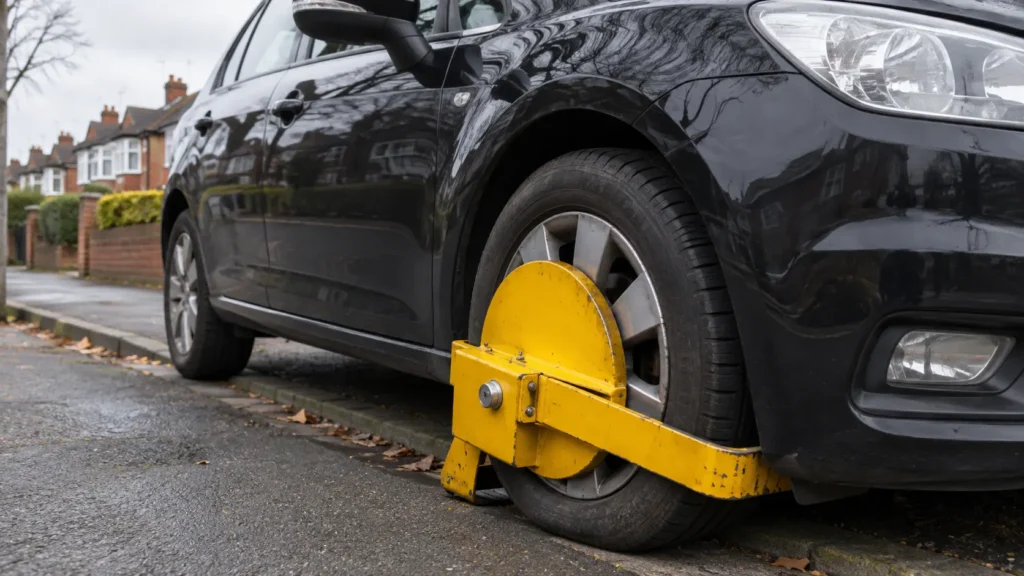
This is where people get caught out. Cancel the insurance on a car that isn’t SORN and it counts as an uninsured vehicle, even if it never leaves the drive. These are the penalties GOV.UK lists for uninsured vehicles and driving without insurance:
| Situation | Penalty |
|---|---|
| Keeping an uninsured car that isn’t SORN | £100 fine, and the car can be wheel-clamped, impounded or destroyed |
| Taken to court for an uninsured car that isn’t SORN | Fine of up to £1,000 |
| Driving without insurance | £300 fixed penalty and 6 penalty points. In court, an unlimited fine and possible disqualification. The police can also seize the car |
| Using a SORN car on the road, other than for an MOT | Fine of up to £2,500 |
It does get noticed. Insurance records and DVLA records are checked against each other, so a car with no insurance and no SORN usually triggers a warning letter first, and a penalty if it’s ignored. You still have to pay for insurance on top of any fine. So the order matters: make the SORN first, then cancel or reduce the cover. Never the other way round.
What to do with your insurance when you scrap your car
Scrapping ends the problem completely, but your insurer isn’t told automatically. When a car goes to an Authorised Treatment Facility, the DVLA is notified, which ends the tax and your record as the keeper. Our guide on telling the DVLA you’ve scrapped your car explains that part. Your insurance is a separate private contract, so you have to cancel it yourself.
When to cancel
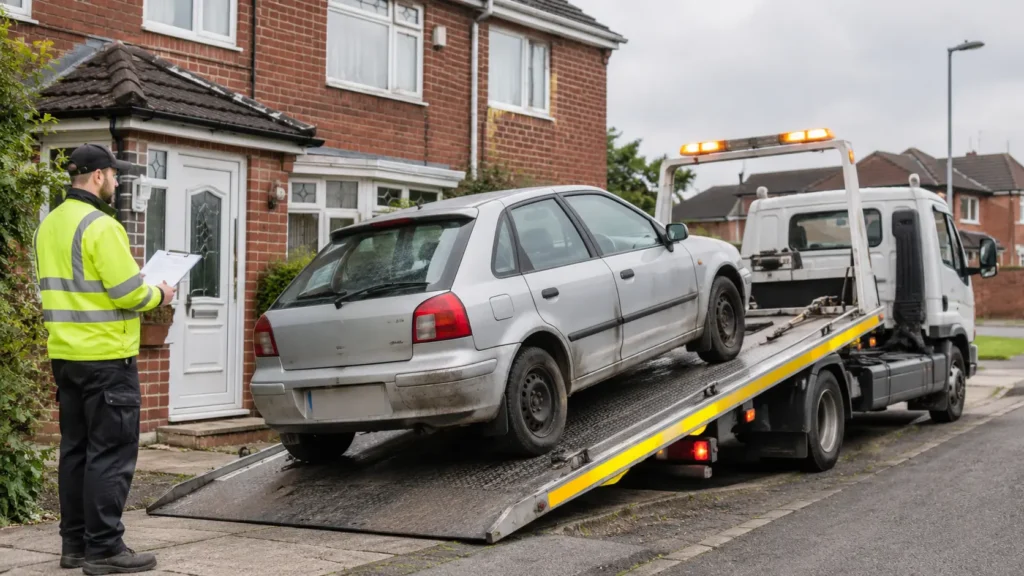
Cancel on the day the car is collected, not before. Until it has gone, it’s still yours, and if it isn’t SORN it still needs insuring. Keep a note of the collection date and the Certificate of Destruction, because your insurer may ask for proof of when the car was scrapped. You can see what happens on the day on our collection process page.
How to cancel your car insurance
- Contact your insurer or broker by phone or through your online account. Have your policy number ready.
- Tell them the car has been scrapped and give the collection date.
- Send the Certificate of Destruction if they ask for proof.
- Ask for the refund figure, any cancellation fee and written proof of your no-claims discount.
- Only cancel your Direct Debit once the insurer has confirmed the policy has ended.
Do you get a refund?
It depends on when you cancel and what your policy says:
- Within 14 days of the policy starting: FCA rules give you the right to cancel without giving a reason. The insurer can charge for the days you were covered, but the charge has to be in proportion to the cover you had, not a penalty.
- After 14 days: most insurers refund the unused part of the premium, minus a cancellation fee set out in your policy documents.
- If you’ve made a claim this policy year: many insurers won’t refund anything. Check the cancellation section of your policy.
- If you pay monthly: ask how cancelling affects the credit agreement, as some insurers ask you to settle the balance for cover already given.
Ask for the exact figure in writing before you cancel. Cancellation fees vary a lot from one insurer to the next.
Moving the policy to your next car instead
If you’re replacing the car, you may not need to cancel at all. Most insurers let you change the vehicle on your existing policy for an admin fee, which is often smaller than a cancellation fee, and you keep the cover you’ve already paid for.
Your no-claims discount
Cancelling doesn’t wipe out your no-claims discount. Ask your insurer for written proof of the years you’ve built up before the policy ends. Many insurers only accept a no-claims discount earned within the last two years, so if you won’t be driving for a while, check how long yours stays valid.
If your insurer has written the car off
If the car was declared a write-off after a claim, the insurer settles the claim and decides what happens to the car, unless you buy it back. Our guide to Cat N, Cat S and the other write-off categories explains what happens next.
SORN or scrap: which makes more sense?
SORN is useful if you genuinely plan to use the car again. If it’s been sitting for months with no MOT and a repair bill you don’t want to pay, scrapping is usually the better deal: no insurance, no tax, and the car pays you instead. You don’t need to make a SORN before scrapping, because the DVLA is told when the car is scrapped. Our guide to selling a car with no MOT, tax or SORN compares the options.
Frequently asked questions
Can you drive a SORN car to an MOT without insurance?
No. A SORN lets you drive to and from a pre-booked MOT, but you still need insurance for the journey. Driving uninsured carries a £300 fixed penalty and 6 penalty points.
Can you insure a SORN car?
Yes. Most insurers offer laid-up or SORN cover, usually for fire and theft, at a lower price than a standard policy.
Do you get money back if you cancel car insurance?
Usually, if you haven’t made a claim. Within the first 14 days you can cancel and pay only for the days you were covered. After that, most insurers refund the unused months minus a cancellation fee.
What happens if I cancel my car insurance and the car isn’t SORN?
The car becomes an uninsured vehicle, even if it’s parked on your drive. You can be fined £100, the car can be clamped or impounded, and a court can fine you up to £1,000.
Will I lose my no-claims discount if I SORN my car?
Not because of the SORN itself. If you cancel the policy while the car is off the road, many insurers only accept a no-claims discount earned within the last two years, so a long break can cost you it. Ask your insurer for written proof of your discount before you cancel.
Can I keep a SORN car on my driveway?
Yes, if it’s your private driveway. A SORN car can’t be kept on the road, a grass verge or the pavement.
Does my insurer know when my car is scrapped?
Don’t assume so. The DVLA is notified when the car goes to an Authorised Treatment Facility, but your insurer isn’t. Contact them yourself on the day it’s collected.
Got a SORN car you won’t drive again? We collect from driveways across Manchester, Salford and the rest of Greater Manchester, including cars that won’t start. Payment goes to your bank on the day, and we deal with the DVLA paperwork and the Certificate of Destruction.
Get your instant scrap car quote or call us on 07432 675878.
This guide reflects GOV.UK and FCA guidance as of November 2026. It’s general guidance, not legal or insurance advice.