Alloy wheel scrap value in the UK is around £1.00 to £1.40 per kg for clean wheels in 2026. Most car alloys weigh 7 to 13 kg, so a single wheel is usually worth £7 to £18 as scrap and a set of four comes to roughly £35 to £60. Leave the tyres on and the price drops sharply, because the yard has to strip them before the aluminium can be recycled.
That’s the scrap figure. A set of undamaged wheels sold to someone who wants to put them on their car can be worth several times more. So the real question isn’t only what the metal is worth. It’s which route gets you the most for the least hassle. We collect scrap cars across Greater Manchester every week, and this is the guide we’d give anyone standing on their drive looking at a set of alloys and wondering what to do with them.
Quick facts
- Clean alloy scrap price: about £1.00 to £1.40 per kg (2026 guide). Some yards pay less, a few pay more.
- Per wheel: usually £7 to £18 depending on size and weight.
- Set of four: roughly £35 to £60 as scrap metal.
- With tyres still on: graded as mixed scrap and worth a fraction of the clean price.
- Steel wheels: only around 15p per kg, so £1 to £2 each.
- Selling legally: licensed dealer, photo ID, paid by bank transfer, never cash.
How much is an alloy wheel worth in scrap?
Scrap yards pay for alloy wheels by weight, so the bigger and heavier the wheel, the more it’s worth. Here’s a rough alloy wheel scrap price guide by rim size, based on clean wheels (no tyre, no weights, no valve) at £1.00 to £1.40 per kg.
| Rim size | Typical weight per wheel | Scrap value per wheel | Set of four |
|---|---|---|---|
| 15 inch | 7 to 8 kg | £7 to £11 | £28 to £44 |
| 16 inch | 8 to 9 kg | £8 to £13 | £32 to £52 |
| 17 inch | 9 to 11 kg | £9 to £15 | £36 to £60 |
| 18 inch | 10 to 13 kg | £10 to £18 | £40 to £72 |
| 19 to 20 inch (SUVs, larger cars) | 12 to 15 kg | £12 to £21 | £48 to £84 |
| Steel wheel, any size (for comparison) | 7 to 10 kg | £1 to £2 | £4 to £8 |
These are guide figures for 2026. Weights vary with the design and prices follow the aluminium market, so weigh one wheel on bathroom scales if you want a closer number.
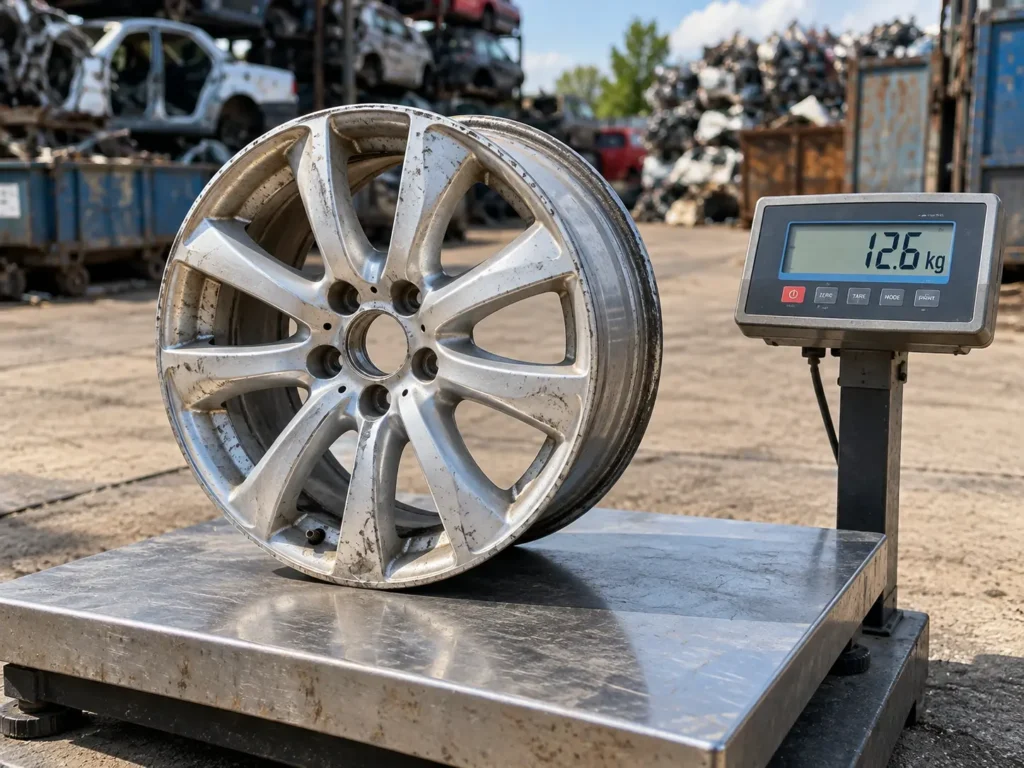
The spread between yards is wider than most people expect. Published UK averages put clean alloy wheels at roughly £1.30 to £1.40 per kg this year, but individual yards have reported anything from under 80p to around £1.90. A couple of phone calls before you load the car is time well spent.
Clean vs dirty alloys: the difference that matters most
Yards split alloy wheels into two grades, and the gap between them is big.
Clean alloys are bare aluminium wheels. The tyre is off, the stick-on or clip-on balance weights are removed, and ideally the valve has been pulled out too. These go straight into the aluminium stream and get the full wheel price.
Dirty alloys still have the tyre fitted, or steel weights, valves and sensors attached. The yard has to strip them first, so they either pay a much lower rate or grade them as mixed, “irony” aluminium. Some metal price trackers put that grade at a quarter or less of the clean wheel rate.
So if you’re selling wheels as scrap, getting the tyres off is the single biggest thing you can do for the price. A few other bits are worth removing too:
- Balance weights. These are small steel or zinc blocks clipped to the rim or stuck inside it. Prise them off with a flat screwdriver.
- Valves. Rubber valves pull out once the tyre is off. Metal ones unscrew.
- Centre caps. Usually plastic, so they don’t help the weight. Genuine caps can sell on their own, though.
- Tyre pressure sensors (TPMS). Newer cars have a sensor bolted inside each wheel. Take them out before you scrap the wheel. They’re worth far more sold as working parts than as scrap.
Getting the tyres off
Breaking a tyre bead at home without a proper machine is hard work and easy to get wrong. It’s also a good way to damage the rim or hurt yourself. Most local tyre shops will strip wheels for a small charge. They’ll usually add a disposal fee for each old tyre, because tyres have to go to a licensed recycler. Ask for the total price before they start. On a set of cheap 15 inch alloys the stripping cost can eat most of the scrap value, so it’s worth checking the numbers first.
Why alloy wheel scrap value goes up and down
Alloy wheels are mostly aluminium, and scrap aluminium tracks the price set on the London Metal Exchange. When aluminium rises, yards pay more for wheels, and when it dips, so do their rates. The swings are usually modest from month to month, so it’s rarely worth holding onto wheels to wait for a better price. It is worth checking the current rate before you go.
Scrap value vs selling alloys as wheels
This is where the real money is, if your wheels are in decent shape. A set of four scrap alloys might bring £40 or £50. The same wheels sold to someone who wants to fit them to their car can fetch much more.
From what owners report on marketplace listings and car forums, rough second-hand prices look like this:
- Standard alloys from a small car (Aygo, Corsa, Fiesta and similar): often around £75 to £150 a set.
- Common genuine wheels for popular family cars (Golf, Focus, Astra, Leon): often £150 to £400 a set, depending on size and condition.
- Sought-after performance or premium factory wheels: £400 to £600 or more for a straight, clean set.
Used tyres rarely add much. Plenty of buyers don’t want second-hand rubber at all, so price the wheels on their own merits and treat good tyres as a bonus.
When selling the wheels makes sense
Selling as wheels is worth the effort when most of these are true:
- They’re genuine manufacturer wheels (OEM), not cheap replicas.
- They’re straight and uncracked, with no serious buckles. Light kerb marks are fine, but the price drops as the damage gets worse.
- They fit a popular car, so there’s a steady pool of buyers.
- You have somewhere to keep them while they sell, and you’re happy to deal with messages and viewings.
What buyers will ask
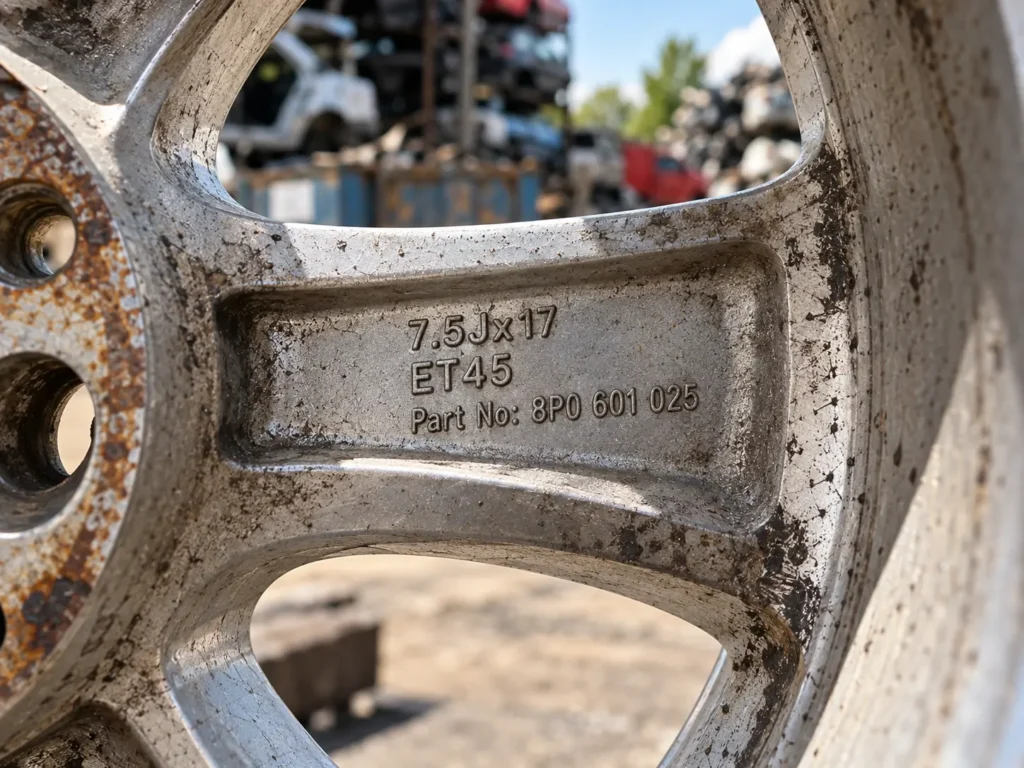
If you list them, put the key details in the advert so you’re not answering the same questions all week. Most of it is stamped on the back of the spokes.
- Size: diameter and width, for example 17 x 7J.
- Stud pattern (PCD): for example 5×112 or 4×10⁸. This decides which cars they fit.
- Offset (ET) and centre bore.
- Part number and brand, to prove they’re genuine.
- Honest condition notes: kerbing, lacquer peel, past repairs, and tread depth if the tyres are included.
Clean the backs as well as the faces before you take photos. It makes a real difference to how quickly they sell.
Should you take the alloys off before you scrap your car?
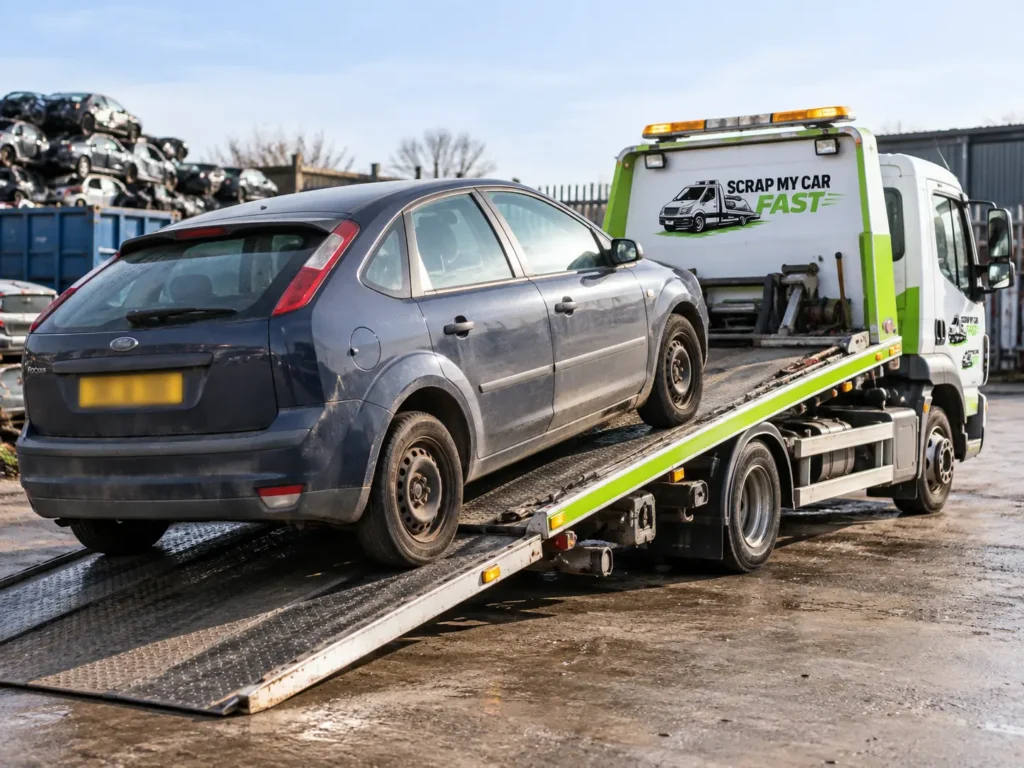
For most people, no. When we price a car for scrap, the wheels are part of it. Take them off and the quote drops by at least what they’d have been worth, because that aluminium isn’t there to recover. The car also can’t be rolled onto the truck. The driver needs skates or a forklift to shift it, so we’d need to know in advance to send the right equipment.
Here’s how the numbers usually play out. Say you have a 2012 Ford Focus on 16 inch alloys:
- Scrap the car complete. The wheels are simply part of your quote. You do nothing.
- Strip the wheels and scrap them separately. You might get £35 to £50 for the bare alloys. Take off what the tyre shop charges, the drive to the yard, and the drop in your car’s quote, and you’ve gained very little.
- Sell the wheels privately. If they’re straight genuine Ford wheels, you might get £150 to £250. That’s where it can be worth doing.
If you go down that last route, there’s a neat way to do it. Fit a set of old steel wheels before collection. Used steels with part-worn tyres don’t cost much, and they’re often free from someone upgrading. The car still rolls, your quote barely changes, and you’ve kept the valuable part to sell on.
A couple of practical points:
- Only do this on a driveway or private land. A car on a public road has to be taxed and roadworthy. One left on axle stands or bricks can be reported and removed.
- Tell us about missing or swapped wheels when you ask for your quote. That way the price you’re given is the price you’re paid.
- Leave the locking wheel nut key in the glovebox. Whether the car keeps its alloys or not, the dismantlers will need it.
If you’re weighing up other parts as well, our guide on selling a car for parts vs scrapping it covers the wider picture. The same logic applies to the most valuable part under the car, which we explain in catalytic converter scrap value. And for a general checklist of what to take out and what to leave, see what to remove from your car before scrapping.
How to sell scrap alloy wheels legally
Scrap alloys count as scrap metal, so the same rules apply as for any other metal you sell. Under the Scrap Metal Dealers Act 2013, the buyer has to hold a council licence and check and record your ID. They can’t pay you in cash, so expect a bank transfer. We explain why in why scrap yards can’t pay cash.
Take photo ID, and something showing where the wheels came from if you can. The V5C for the car they came off, or a receipt, avoids awkward questions. Alloy wheels are a common target for thieves, so reputable yards are careful about who they buy from.
To find a licensed yard near you, our round-up of scrap yards in Greater Manchester is a good place to start. Before you go, ring and ask three things: their current clean alloy price per kg, whether they’ll take wheels with tyres, and whether they charge for tyre disposal.
Frequently asked questions
How much are 4 alloy wheels worth for scrap?
A set of four clean car alloys is usually worth around £35 to £60 as scrap in 2026, depending on their size and weight. Larger SUV wheels can reach £80 or so. With the tyres still fitted, expect a lot less.
Do scrap yards take alloy wheels with tyres on?
Many do, but they pay a much lower rate, because they have to remove the tyre and dispose of it before the aluminium can be recycled. Some yards also charge a tyre disposal fee. Ring ahead and check.
Are alloy wheels worth more than steel wheels as scrap?
Yes, by a long way. Clean alloys fetch around £1.00 to £1.40 per kg, while steel wheels go as ordinary steel scrap at roughly 15p per kg. A steel wheel is usually worth only £1 or £2.
Can I scrap alloy wheels that are cracked or buckled?
Yes. Damage doesn’t matter for scrap, because the yard is buying the aluminium, not the wheel. Cracked or buckled wheels shouldn’t go back on a car, so scrap is often the right place for them.
Should I take the alloys off my car before scrapping it?
Usually not. The wheels are already part of your scrap quote, and removing them lowers the price and makes the car harder to collect. It’s only worth it if the wheels are in good enough condition to sell privately for much more than their metal value. Even then, swap a set of steel wheels on first.
Do I need ID to sell scrap alloy wheels?
Yes. Licensed scrap metal dealers in England and Wales have to check and record your ID, and they can’t pay cash. Take photo ID and, ideally, something that shows the wheels are yours.
What happens to the wheels when you scrap a car with us?
They stay on the car for collection. At the treatment facility the tyres are removed and sent for recycling, and the aluminium wheels go into the non-ferrous metal stream to be melted down and reused.
Scrap your car, wheels and all, across Greater Manchester
If you’d rather not deal with tyre shops, yards and buyers, you don’t have to. Get an instant scrap car quote with the wheels on, and that’s it. We collect for free from Manchester, Salford, Stockport, Oldham and across the rest of Greater Manchester, pay straight to your bank, and deal with the DVLA for you. If you’ve already sold the alloys or swapped them for steels, just tell us when you get your quote.