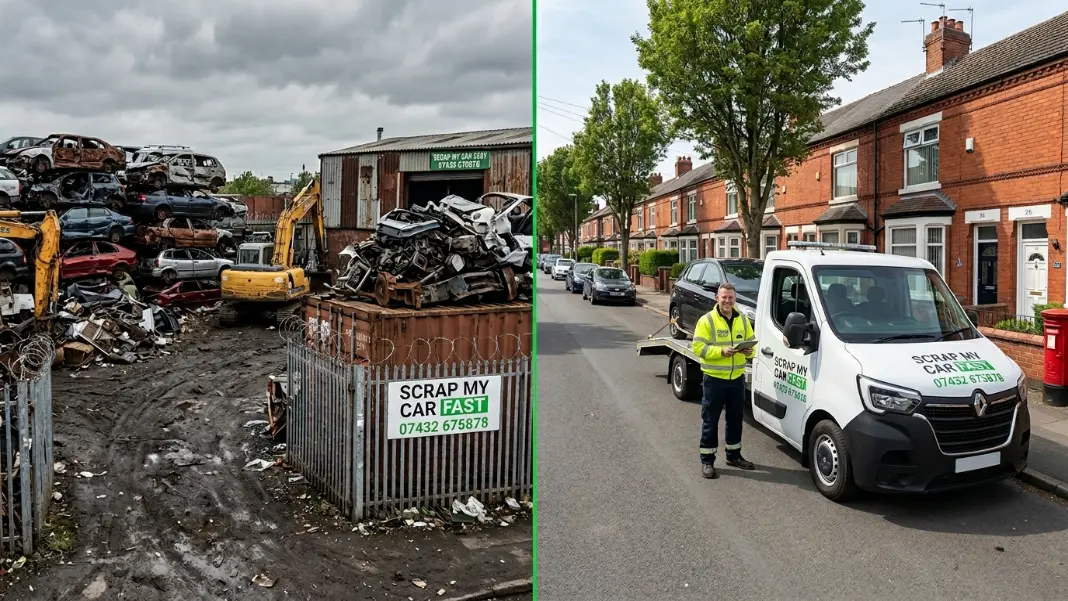
If you search for a scrap yard in Greater Manchester, you will find a handful of results scattered across Bolton, Bury, Oldham, Salford and the surrounding areas. Most people assume that getting rid of an old car means loading it onto a trailer, driving to a yard somewhere on an industrial estate and handing it over in exchange for whatever cash they offer on the day.
That was the reality for a long time. It is not anymore.
This guide explains how scrap yards in Greater Manchester work, what they actually pay, the practical problems with visiting one yourself and why the majority of car owners in the region now get a better price and a much simpler experience by using a doorstep collection service instead.
What Is a Scrap Yard?
A scrap yard, also called a vehicle breakers yard or car dismantler, is a site where end-of-life vehicles are received, processed and recycled. In the UK, any site that accepts and destroys vehicles must be registered as an Authorised Treatment Facility (ATF) with the Environment Agency.
An ATF is the only type of business that can legally issue a Certificate of Destruction when your car is scrapped. That certificate is important because it is the document that removes the vehicle from your name in the DVLA register, ending your liability for road tax, penalties and anything else connected to the car. Any scrap business that cannot issue a Certificate of Destruction is operating outside the law, and using one puts you at risk.
You can read more about what an Authorised Treatment Facility is and why it matters if you want the full picture before handing over any vehicle.
Scrap Yards Across Greater Manchester
Greater Manchester has a number of licensed scrap yards spread across its ten boroughs. Here is a brief picture of what the landscape looks like in each area and what it means for car owners trying to get rid of a vehicle.
Scrap Yards in Bolton
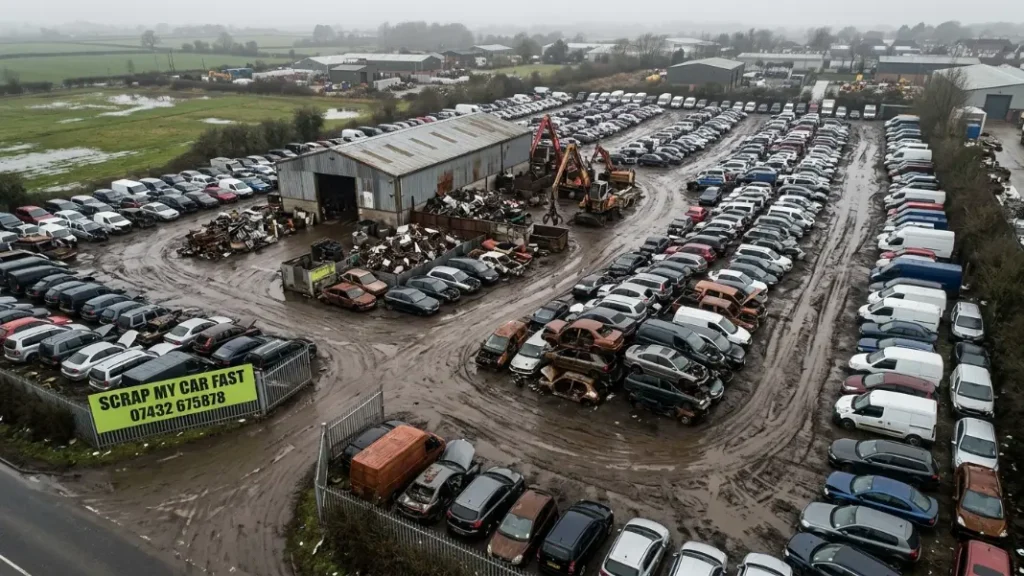
Bolton has historically been one of the most active areas for scrap metal in Greater Manchester, partly due to its industrial heritage. There are several breakers yards operating in and around Bolton, mostly located on industrial estates away from residential areas. Getting a car to a scrap yard in Bolton typically means arranging your own transport, which for a non-running vehicle involves hiring a recovery truck or flatbed at your own cost.
Scrap Yards in Bury
Bury has a smaller number of licensed sites. The scrap yard in Bury serves the town and the surrounding villages including Ramsbottom, Radcliffe and Whitefield. For anyone without access to a tow bar or trailer, getting a car to a Bury scrap yard requires organising and paying for recovery on top of the transaction.
Scrap Yards in Oldham
Scrap yards in Oldham tend to cluster around the trading estate areas of the borough. Chadderton, Failsworth and the outskirts of Shaw all have light industrial land where some of these businesses operate. The Oldham area scrap yards serve the borough and parts of Tameside and Rochdale, but access and transport logistics are the same issue as everywhere else.
Scrap Yards in Manchester and Salford
Manchester city centre itself has very limited scrap yard provision due to the density of development. Most scrap operations serving the city are based in Salford, Trafford and the outer ring. The scrap yard in Salford serves a wide area including MediaCityUK, Eccles, Pendleton and Ordsall. Salford has historically had strong scrap metal infrastructure given its manufacturing past.
Scrap Yards in Wigan, Rochdale and Tameside
Each of these boroughs has at least one or two registered ATF sites, though coverage can be patchy in more rural parts like the Pennine fringe of Rochdale or the outlying areas of Wigan towards Leigh and Golborne. For car owners in those areas, a trip to the nearest scrap yard can involve a significant journey.
What Scrap Yards Actually Pay
This is where many people get a surprise. The price a scrap yard pays for a vehicle is calculated the same way regardless of whether you visit the yard yourself or use a collection service: it is based on the vehicle’s weight and the current scrap metal rate. That rate changes daily based on the steel and iron markets.
A typical private car in Greater Manchester currently yields between £130 and £400 depending on its size and weight. A small city car like a Volkswagen Polo or Ford Fiesta sits at the lower end. A large family SUV or van will be at the higher end.
What scrap yards do not always tell you upfront is that their quoted price is often before deductions. Some yards apply a handling fee, weigh the car on their own scales and then present a revised figure after the vehicle is already on their site. You are in a weak negotiating position at that point.
A reputable doorstep collection service gives you a firm price before collection based on your registration number, and that price does not change on the day unless your car is materially different from what you described. You can find out what affects the scrap value of your car before you request any quote, so you already know roughly what to expect.
The Practical Problems with Visiting a Scrap Yard Yourself
Even if you find a licensed scrap yard in Greater Manchester that offers a fair price, getting your car there involves a set of logistical problems that most people underestimate.
Getting a Non-Runner to a Scrap Yard
If your car does not run, you cannot simply drive it to a yard. You need to arrange a recovery vehicle. Private recovery in Greater Manchester typically costs between £60 and £150 depending on the distance and the type of vehicle. That cost comes straight off whatever the yard is going to pay you.
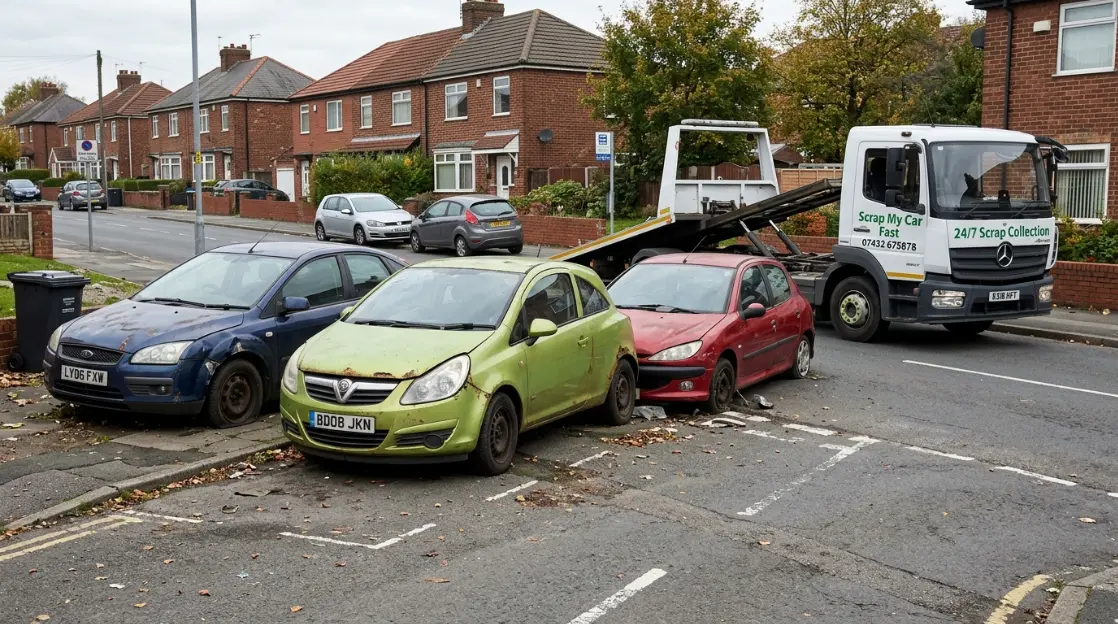
If your car has flat tyres, seized brakes or has been sitting on a driveway for two years, the recovery is more involved and potentially more expensive. A specialist flatbed with winching equipment is needed, and not all recovery companies carry that.
With doorstep collection for a non-runner, the collection vehicle comes to you with the right equipment at no charge. The cost of getting the car off your property is not your problem.
The Time Investment
Visiting a scrap yard is not a quick errand. You need to arrange transport, accompany the vehicle, wait at the yard for it to be weighed and processed, handle the paperwork on site, and then arrange your own way home since the car is no longer yours. For a running vehicle that might take two to three hours. For a non-runner requiring recovery, it can take most of a day.
Paperwork and DVLA Notification
When you sell a car to a scrap yard, you need to make sure the DVLA notification is handled correctly on the day. If the yard does not complete the paperwork properly, you remain the registered keeper and continue to receive road tax reminders and potentially fixed penalty notices.
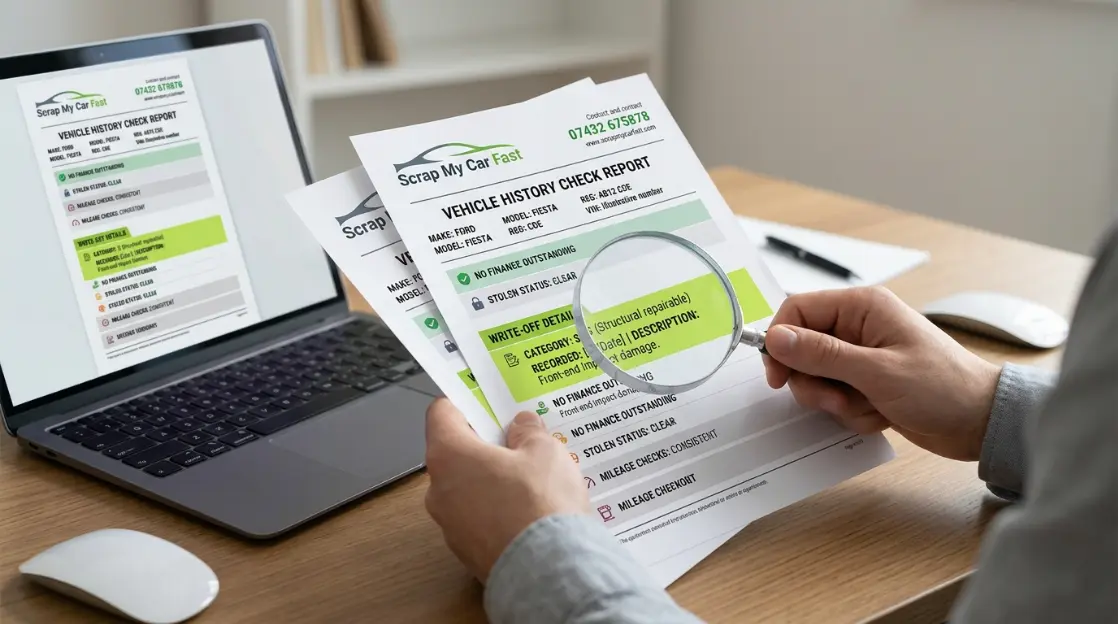
A licensed doorstep collection service handles the DVLA notification on your behalf and issues a Certificate of Destruction at the point of collection, before the car leaves your property. The process of notifying the DVLA when scrapping a car is taken off your plate entirely.
Payment on the Day
Many scrap yards pay by cash or cheque. Cash transactions for scrap metal are actually illegal in the UK under the Scrap Metal Dealers Act 2013, which requires all scrap metal transactions to be paid by bank transfer or cheque. If a yard offers cash, it is operating illegally and that is a red flag about how the rest of the process is being handled.
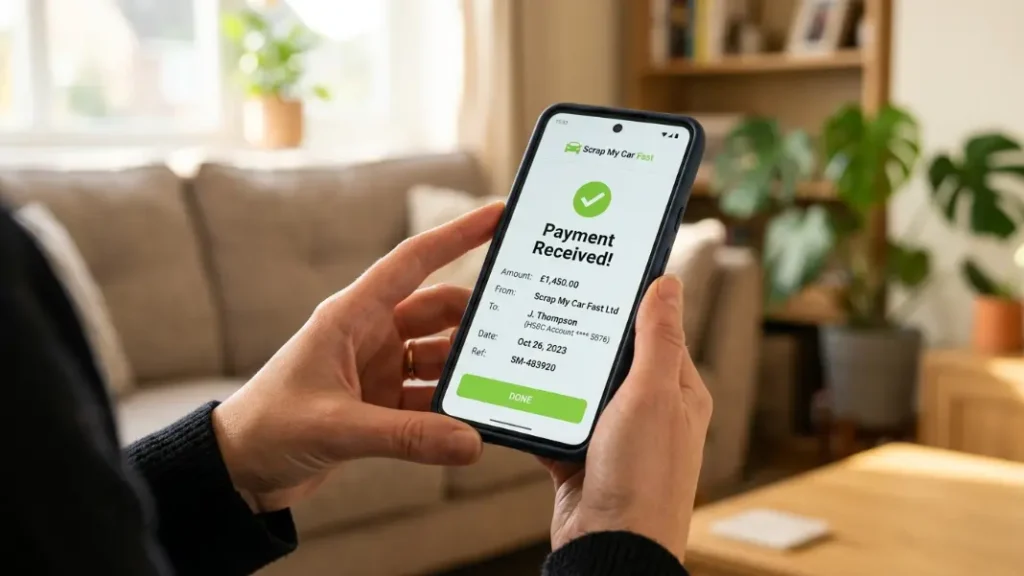
A reputable collection service pays by same-day bank transfer directly to your account at the point of collection.
How Doorstep Scrap Car Collection Works in Greater Manchester
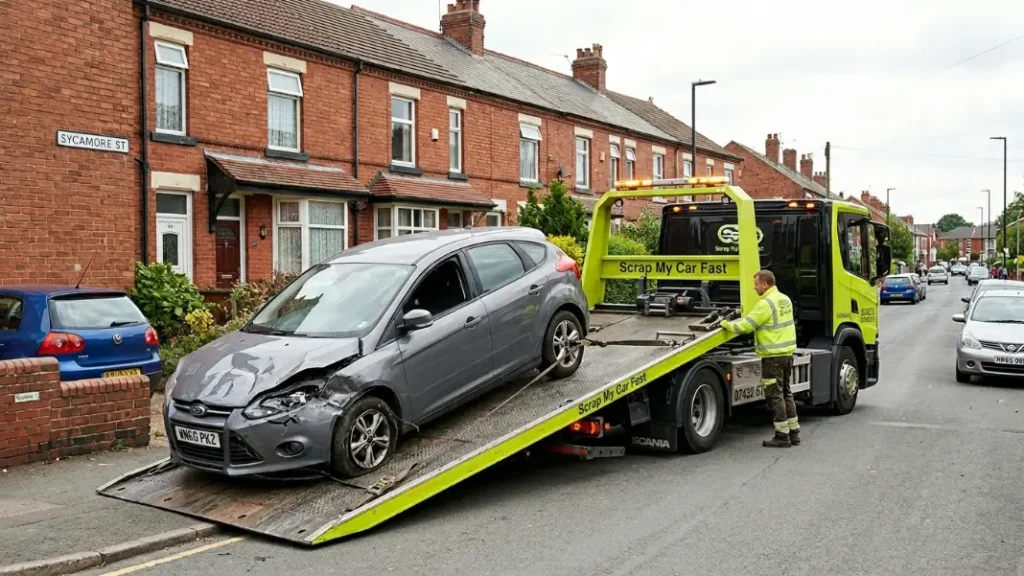
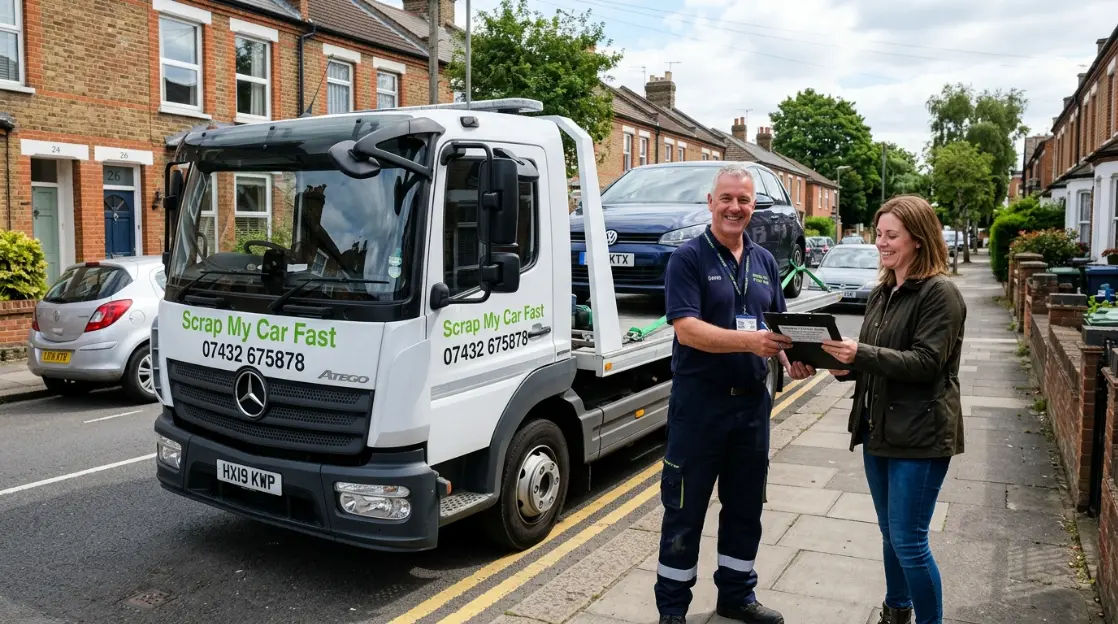
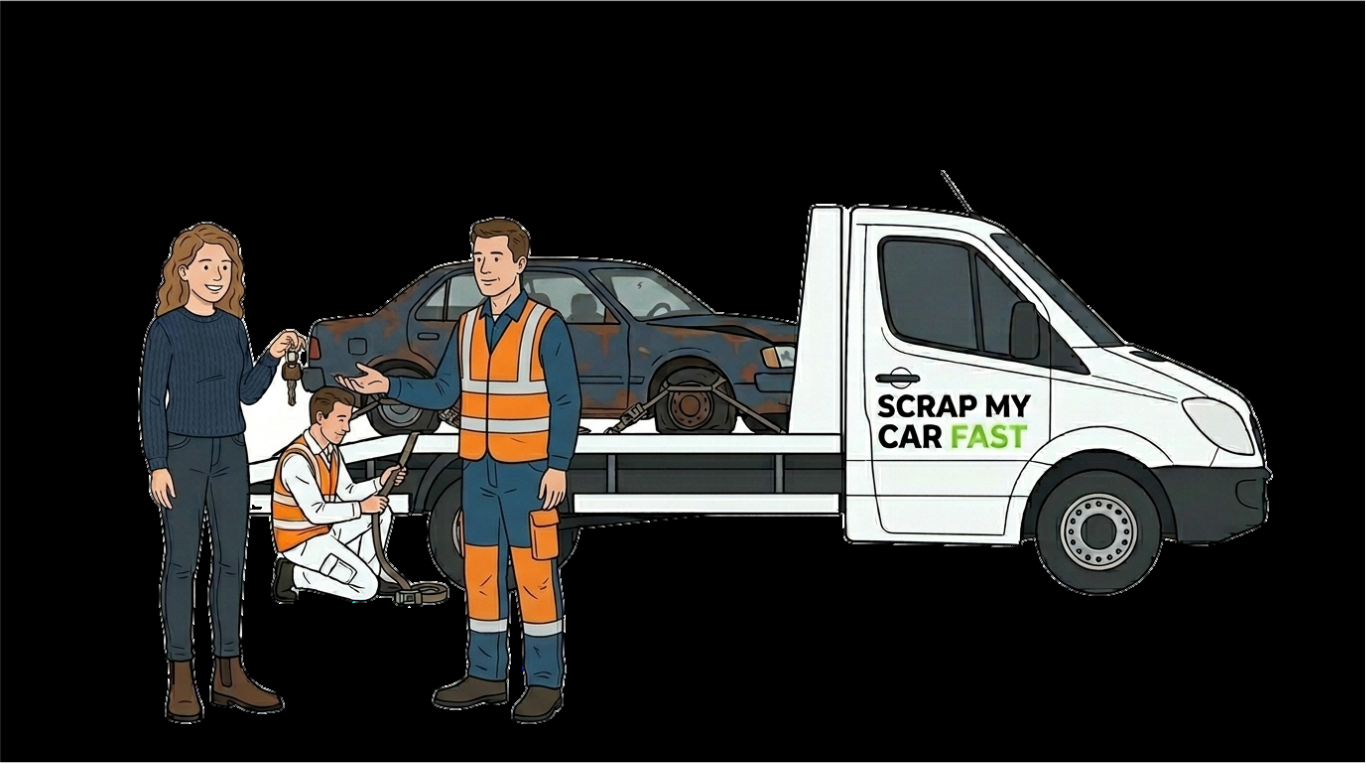
The alternative to visiting a scrap yard is having a licensed buyer come to you. The process takes about ten minutes of your time and removes every friction point that comes with visiting a yard in person.
- Enter your registration at scrapmycarfast.com/instant-quote to get a firm price based on your vehicle and the current metal rate
- Accept the quote and book a collection slot. Same-day and next-day availability across most Greater Manchester postcodes
- A specialist driver arrives at your door with a flatbed truck and all necessary paperwork
- The DVLA notification is completed, the Certificate of Destruction is issued, and payment is sent to your bank account on the same day
There is no travel, no recovery cost, no waiting at a yard and no uncertainty about the price changing after the car has already been loaded.
The service covers every postcode across all ten Greater Manchester boroughs. Whether you are in Bolton, Bury, Oldham, Manchester, Salford, Stockport, Rochdale, Wigan, Tameside or Trafford, collection is free and same-day payment applies equally.
Do You Get the Same Price Either Way?
This is a fair question. If scrap price is based on weight and the metal rate, does it matter who you use?
In theory the base calculation is the same. In practice, the net amount you receive can differ significantly. Here is why:
Visiting a scrap yard yourself:
- Base scrap price based on weight
- Minus recovery cost if car is a non-runner (typically £60 to £150)
- Minus any handling fee the yard applies
- Potential price revision after the car is weighed on their scales
- Your time: several hours
Using a doorstep collection service:
- Firm price given upfront based on your registration
- No recovery cost (collection is free)
- No handling fees or deductions on the day
- Price does not change unless you misrepresented the vehicle
- Your time: ten minutes
For a running vehicle, the net difference might be smaller. For a non-runner or a vehicle in a location with limited nearby yards, the doorstep route almost always puts more money in your pocket after everything is accounted for.
You can check current scrap car prices in Manchester to see what your vehicle is worth right now before making any decision.
What to Check Before Using Any Scrap Service
Whether you visit a scrap yard or use a collection service, these are the things to verify before handing over any vehicle:
Environment Agency registration: The business must be a registered Authorised Treatment Facility. You can check the public register on the Environment Agency website using the business name or postcode.
Certificate of Destruction: They must issue one on the day. If they say it will come later by post, that is not compliant with the process. The CoD should be in your hand before the car leaves.
DVLA notification: Confirm they notify the DVLA as part of the process. If you are left to do this yourself, you remain the registered keeper until you do.
Bank transfer payment: The Scrap Metal Dealers Act 2013 bans cash payments for scrap metal. Any business paying cash is breaking the law.
No V5C: If you have lost your logbook, you can still scrap the car. A licensed service will guide you through the alternative DVLA process. You do not need the V5C to proceed. You can read about scrapping a car without a logbook if that applies to your situation.
Frequently Asked Questions
Is there a scrap yard near me in Greater Manchester? Licensed scrap yards exist across Greater Manchester in Bolton, Bury, Oldham, Salford and other areas. However, most car owners in the region find that a free doorstep collection service is more practical, particularly for non-runners, since it removes the need to arrange transport to the yard yourself.
Do scrap yards in Greater Manchester pay cash? They should not. The Scrap Metal Dealers Act 2013 requires all scrap metal transactions to be paid by bank transfer or cheque. Any yard offering cash payment is operating outside the law.
How much will a scrap yard in Greater Manchester pay for my car? Prices are based on the vehicle’s weight and the current scrap metal rate, which changes daily. Most cars currently yield between £130 and £400. A free doorstep collection service offers the same pricing without the transport cost to get the car there.
Can I take a non-running car to a scrap yard? You can, but you need to arrange and pay for recovery to get it there. This typically costs £60 to £150 in Greater Manchester and reduces your net payment. A collection service brings the right vehicle to you at no charge.
Do I need a V5C logbook to use a scrap yard or collection service? No. A V5C is helpful but not essential. A licensed collector will guide you through the alternative DVLA notification steps. You will need valid photo ID to confirm ownership.
How long does the collection process take? From booking to payment, most collections across Greater Manchester are completed within 24 hours. The physical collection itself typically takes under 30 minutes from the driver arriving at your door to the car being loaded and payment initiated.
What is the difference between a scrap yard and a breakers yard? A breakers yard or dismantler tends to focus on recovering and reselling usable parts before the shell is sent for metal recycling. A scrap yard or ATF may do this too, but the defining feature is the Environment Agency registration that allows them to legally destroy vehicles and issue a Certificate of Destruction. Both types of site exist across Greater Manchester, but only licensed ATFs can legally complete the scrapping process end to end.
The Straightforward Option for Greater Manchester Car Owners
Scrap yards serve a purpose and the licensed ones are a legitimate part of the vehicle recycling chain in Greater Manchester. But for most car owners, the combination of transport logistics, uncertain pricing and the time involved makes visiting a yard in person the harder route rather than the easier one.
A free doorstep collection service removes every step that makes scrapping feel complicated. The price is confirmed upfront, the collection is free, the paperwork is handled on the day and the payment arrives in your account before the driver has left the street.
If you want to see what your car is worth right now, get an instant quote in under a minute. No obligation and no need to go anywhere.