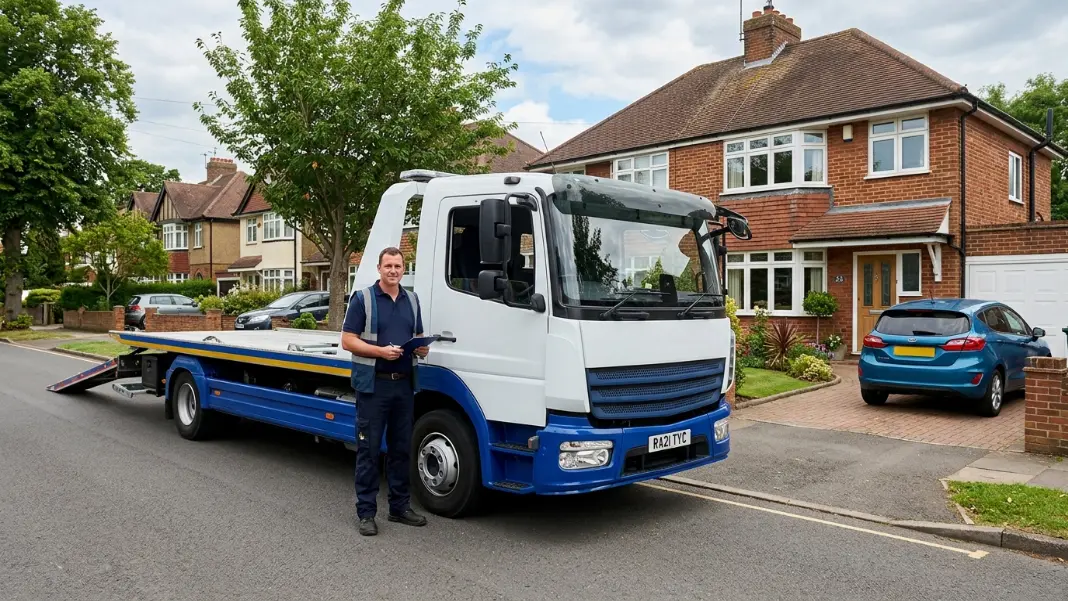
Scrapping a car should be one of the most straightforward transactions you do. You call a service, they give you a price, they collect the car, you get paid. Done.
But it does not always work out that way. There are dealers operating in Greater Manchester and across the UK who take cars without issuing the correct paperwork, pay in cash when that is actually illegal, drop their quote on arrival when you have no one else lined up, and leave you legally responsible for a vehicle you thought had been scrapped months ago. Working with a reliable scrap car service from the outset avoids all of this.
The consequences of using the wrong service range from minor frustration to serious legal problems. If the dealer does not notify the DVLA that the car has been scrapped, you can still receive penalty charge notices, road tax demands and even speeding fines for a vehicle you no longer own. If they do not issue a Certificate of Destruction, you have no proof the car was processed legally.
This guide covers how to tell a legitimate scrap car service from a rogue one, what checks to run before you book, and what a proper service does on every single job.
Why This Problem Exists
Scrap metal dealing has historically attracted operators who work informally, without licences, without proper record keeping and without legal paperwork. The Scrap Metal Dealers Act 2013 tightened the rules significantly, banning cash payments and requiring all dealers to hold a licence, but non-compliant operators still exist.
The issue is that to a first-time caller, a dodgy scrappy and a legitimate one can sound identical on the phone. Both will quote you a price. Both will offer free collection. Both will sound perfectly confident. The differences only become visible when you know what to look for.
What an Authorised Treatment Facility Actually Is
Before we get into red flags, it helps to understand what you are actually looking for when you check a dealer’s credentials.
An authorised treatment facility, or ATF, is a vehicle dismantling and recycling site that has been granted a permit by the Environment Agency (or SEPA in Scotland). The permit confirms the site meets strict environmental standards for handling end-of-life vehicles, including safe removal of fluids, tyres, batteries and other hazardous materials.
Only an ATF can legally issue a Certificate of Destruction for a scrapped vehicle. If the company you are dealing with is not an ATF, they cannot give you a CoD, which means the car cannot be officially deregistered from the DVLA records and it remains linked to you as the last registered keeper.
Not every scrap collection service operates their own ATF site. Some legitimate services collect vehicles and transport them to a partner ATF for processing. This is fine, provided the end paperwork still comes through and you still receive a Certificate of Destruction.
Red Flags: Signs You Are Dealing With the Wrong Company
They Offer to Pay in Cash
This is the single clearest warning sign. Under the Scrap Metal Dealers Act 2013, it is illegal for a scrap metal dealer to pay for a vehicle in cash. All payments must be made by bank transfer or cheque, with a record kept of the transaction.
If a company quotes you a price and then mentions cash on the doorstep, walk away. They are operating outside the law, which almost certainly means other parts of their operation are too, including the paperwork side that protects you.
The Quote Drops Significantly When They Arrive
A legitimate scrap service gives you a quote based on the vehicle’s make, model, year, rough condition and whether it is running. If your car matches what you told them, the quote should hold.
Rogue operators give an inflated quote to win the booking, then reduce it sharply on arrival, counting on the fact that you have already arranged collection and will find it inconvenient to cancel and rebook elsewhere. A small adjustment for a condition issue you did not mention is reasonable. A drop of 30 to 50 percent is a tactic.
They Cannot Tell You Which ATF They Use
Ask directly. A legitimate collection service either operates their own ATF or has a named facility they partner with. If they cannot or will not tell you where the vehicle will be processed, that is a problem. You need to know the car is going to a licensed facility.
No Certificate of Destruction Is Mentioned
A trustworthy scrap service will mention the Certificate of Destruction upfront, or at the very least confirm it when you ask. If you raise it and they seem unsure what it is, or tell you it is not necessary, end the call. It is legally required for any end-of-life vehicle processed in the UK.
They Have No Traceable Business Presence
A legitimate scrap car service has a verifiable business name, a website, a registered company or sole trader status, and contact details beyond a single mobile number. If you cannot find the company anywhere online, cannot find a company registration, and the only way to reach them is via WhatsApp, treat that as a serious concern.
This does not mean every reputable scrappy has a polished website. But you should be able to find something, whether that is a Google Business profile, a directory listing, a Companies House registration or reviews from real customers.
They Are Not Licensed Under the Scrap Metal Dealers Act 2013
Every scrap metal dealer operating legally in the UK must hold either a site licence (if they have a fixed premises) or a collector’s licence (if they collect from addresses). These are issued by the local council and are publicly searchable.
You can check whether a dealer holds a licence by searching your local council’s public register. In Greater Manchester, each borough council, including Manchester, Salford, Bolton, Stockport and others, maintains its own register of licensed dealers. If a dealer is not on the register, they should not be collecting scrap vehicles in that area.
How to Check Whether a Scrap Dealer Is Authorised
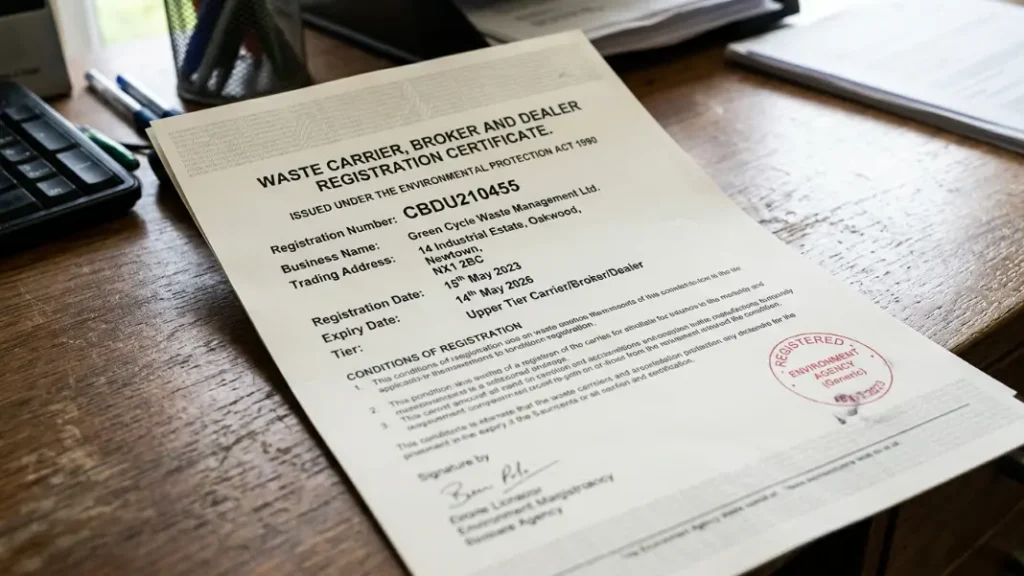
There are two checks worth running before you confirm any booking.
Check 1: The Environment Agency Public Register
The Environment Agency maintains a public register of permitted waste operations, which includes ATF sites. You can search it at environment.data.gov.uk. Search by company name or postcode. If a company claims to operate an ATF and they are not on the register, they do not have the permit they are claiming.
Check 2: The Local Council Scrap Metal Dealer Register
Search your borough council’s website for their scrap metal dealer licence register. These are public documents. For example, Manchester City Council, Salford City Council, Bolton Council and Stockport Council all hold public lists of licensed dealers in their area. If the company you are speaking to is collecting in that borough, they should appear on the relevant council’s list.
Neither check takes more than a few minutes and both give you concrete, verifiable information rather than relying on the company’s own claims.
The No-Cash Rule: Why It Matters More Than You Might Think
The Scrap Metal Dealers Act 2013 banned cash payments for scrap metal and scrap vehicles specifically because cash transactions made it almost impossible to trace stolen vehicles moving through the scrap trade.
For you as a seller, the ban matters for a different reason. If a dealer pays you in cash, there is no paper trail of the transaction from their end. That makes it much harder to prove when the vehicle changed hands, who took it, and whether the subsequent paperwork (including the DVLA notification and CoD) was completed correctly.
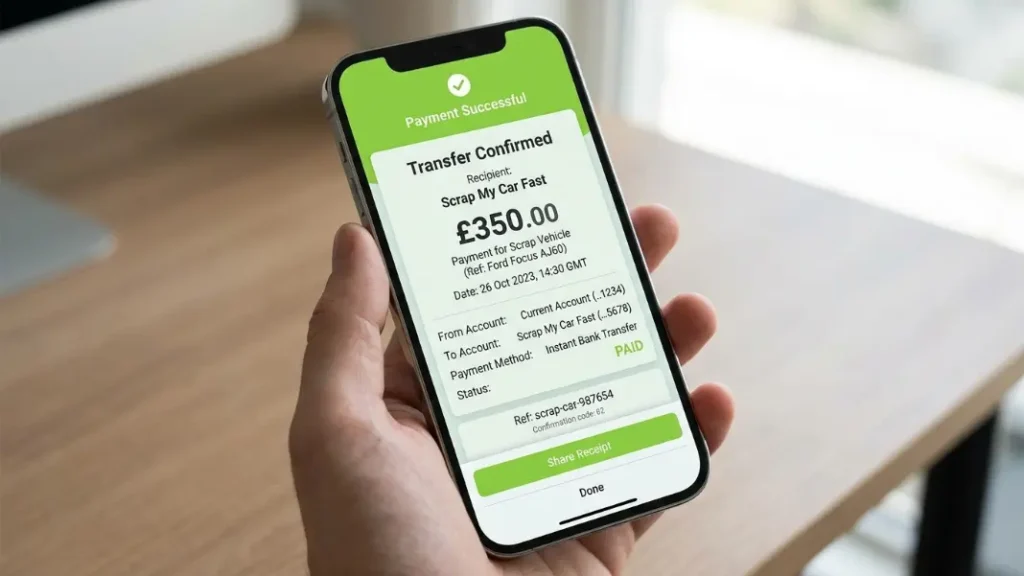
Bank transfer payments create a record. You have confirmation in your account. The dealer has a record of the payment. If anything goes wrong with the paperwork and you need to demonstrate that the vehicle was legitimately collected on a specific date by a specific company, that bank transfer record is your evidence.
If a company insists on cash, refuse. There is no legitimate reason for a compliant dealer to pay in cash. It has been illegal since October 2013.
Quote Manipulation: The Most Common Tactic to Watch For
Beyond the cash issue, the most frequent complaint from people who have had a bad experience with a scrap service is the arrival-day quote drop.
Here is how it typically plays out. You call and describe the car honestly. They quote you, say, £200. You agree. They arrive the next day. The driver looks at the car for a minute and then tells you there is a problem: the catalytic converter is missing, or the engine has seized worse than they expected, or the quote was based on current metal prices but those have changed overnight. The revised offer is £120.
Some of these justifications are genuine. If you did not mention that the engine was seized or that the cat had been stolen, that information does affect value. But legitimate services factor common issues into their initial quotes or ask the right questions before arriving. If you gave accurate information and the drop is large and unexplained, you are being worked.
Your best protection is to get the quote confirmed in a way that creates a record before you confirm the booking. An email confirmation or a written message on WhatsApp before the collection date gives you something to refer back to if the number changes at the door.
Our guide on how scrap car quotes actually work explains in detail what affects your quote, what is reasonable to expect, and how to compare prices across services without getting caught out.
Questions to Ask Before You Confirm a Booking
Use these before you commit to any scrap car service:
“Which ATF do you use or do you operate your own?” A legitimate service can answer this immediately. Note the name and look it up on the Environment Agency register.
“Will I receive a Certificate of Destruction?” The answer should be yes, automatically, on the day of collection or shortly after. Hesitation on this question is a warning sign.
“How do you pay?” Bank transfer or cheque are the only legal answers. Cash is not acceptable under any circumstances.
“Can you confirm the quote in writing before you come?” A professional service will have no objection to confirming the agreed price by email or message before the collection date.
“Are you licensed under the Scrap Metal Dealers Act?” Any legitimate dealer will be able to confirm their licence without hesitation. If they are evasive or tell you it is not required, end the conversation.
What You Need to Have Ready Before Collection
When a legitimate scrap service arrives to collect your vehicle, they will need to verify your identity and record certain details. Having the following ready makes the process faster and avoids any complications.
You will need to produce valid photo ID (a driving licence or passport). The dealer is legally required to record your ID details and confirm your address before completing the transaction. This is not optional for them.
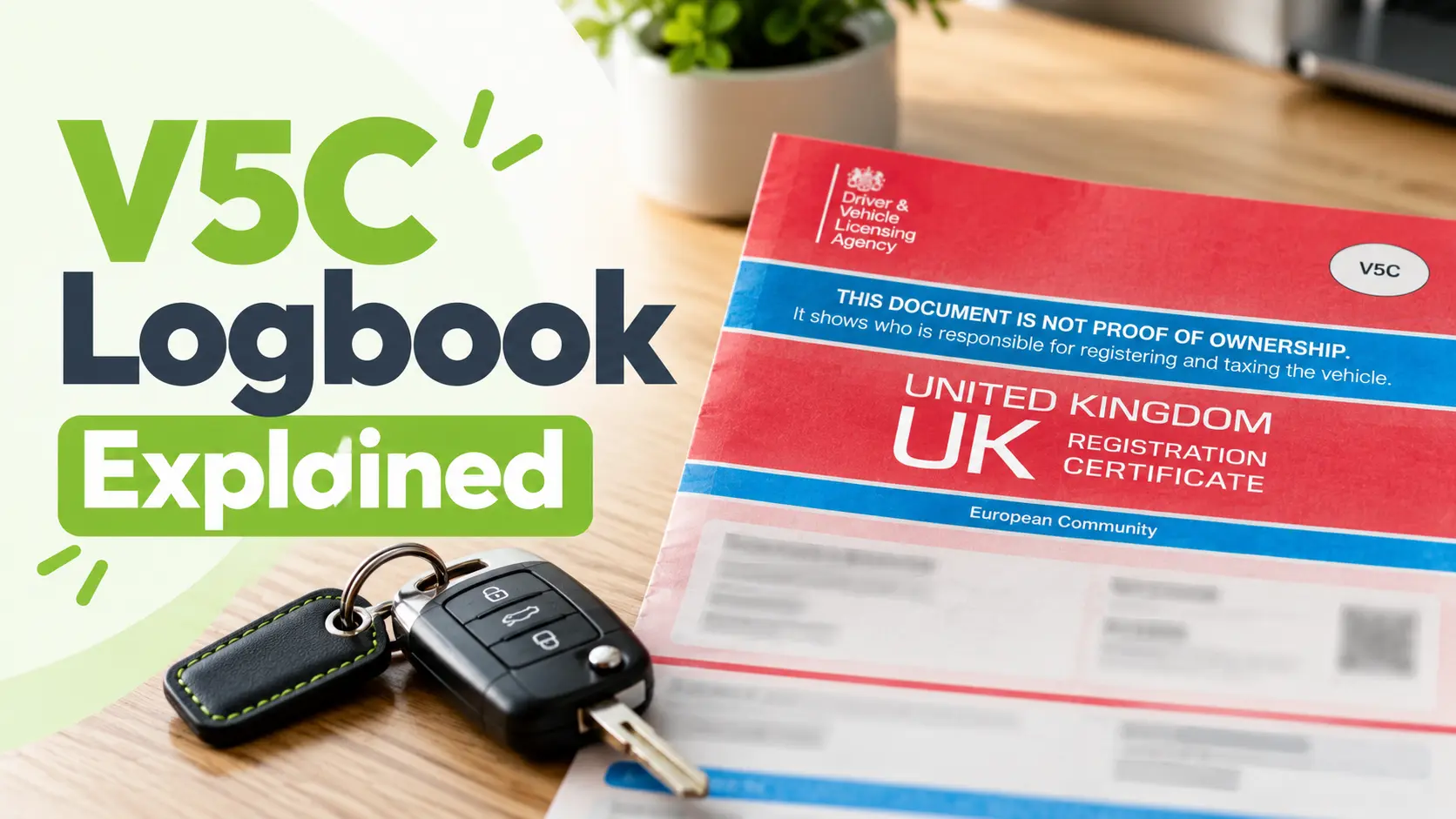
If you have the V5C logbook, have it ready. You will need to complete the relevant section to notify the DVLA that the vehicle has been sold for scrap. Our guide on what documents you need to scrap a car covers exactly what is required and what happens if you do not have all the paperwork.
If you do not have the V5C, that does not mean the car cannot be collected by a legitimate ATF. Our guide on scrapping a car without a V5 logbook explains the process in full.
After the Collection: What Should Happen Next
Once the vehicle has been collected, there are two things that should happen within a short timeframe.
First, the dealer or ATF should notify the DVLA that the vehicle has been scrapped. This removes the car from active registered keeper records and means you will no longer receive tax renewal reminders, penalty notices or any other correspondence relating to the vehicle. Our full guide on notifying the DVLA when a car is scrapped explains what this process looks like and how to confirm it has been done.
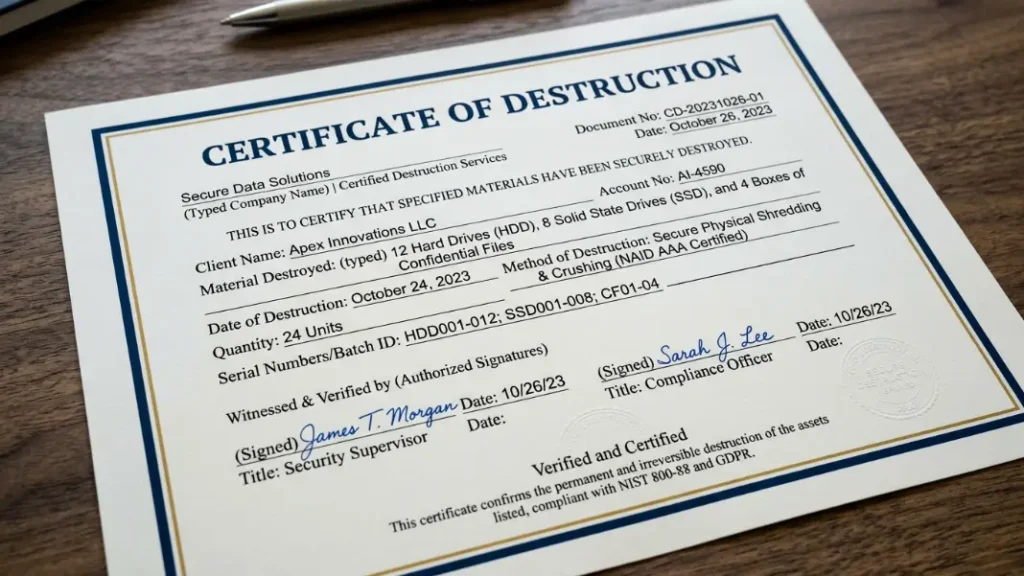
Second, you should receive a Certificate of Destruction. This is the official document issued by the ATF confirming the vehicle has been processed as an end-of-life vehicle. Keep it permanently. It is your proof that the vehicle was handled correctly and that you are no longer liable for it in any way.
If two to three weeks pass after collection and you have not received a CoD, contact the company directly and request it. If they cannot produce one, that tells you the vehicle may not have been processed through a licensed facility.
The Manchester Context: Why This Matters Locally
Greater Manchester is one of the busiest areas in the country for scrap vehicle collection, which means there is a significant spread in the quality of operators. The legitimate licensed services cover the full region. But there are also unlicensed collectors operating across Manchester, Salford, Bolton, Stockport and the surrounding boroughs who collect vehicles with no intention of processing them correctly.
The unlicensed market is not always obvious. Some of these operators have professional-looking social media accounts and sound completely credible on the phone. The checks described in this guide are the only reliable way to separate them from the legitimate services.
If you are based in Manchester or anywhere across Greater Manchester and are looking for a scrap car price you can trust, we cover the full region including Bolton, Salford, Stockport, Oldham, Rochdale, Bury, Wigan, Tameside and Trafford.
Frequently Asked Questions
How do I know if a scrap car dealer is legitimate?
Check three things: their scrap metal dealer licence on the relevant borough council’s public register, their ATF status on the Environment Agency public register, and whether they pay by bank transfer rather than cash. A legitimate dealer passes all three checks without hesitation.
Can a scrap car dealer legally pay me in cash?
No. Cash payments for scrap metal and scrap vehicles have been illegal since the Scrap Metal Dealers Act 2013 came into force in October 2013. Any dealer offering cash is operating outside the law.
What is a Certificate of Destruction and why do I need it?
A Certificate of Destruction is the official document issued when a vehicle is processed as an end-of-life vehicle at a licensed ATF. It deregisters the car from DVLA records and confirms you are no longer the responsible keeper. Without it, the vehicle remains on your name. Keep every CoD you receive, permanently.
What if a scrap dealer drops their quote when they arrive?
A small adjustment for a condition issue you did not mention is reasonable. A large unexplained drop is a pressure tactic. If you confirmed a quote in writing beforehand, refer back to it. If you are not comfortable with the revised price, you are entitled to refuse the collection. A legitimate service will not pressure you.
How much should I expect to get for scrapping my car?
Scrap values vary based on vehicle weight, current metal prices and whether parts like the catalytic converter are present. Our guide on how much you will get for scrapping your car gives a realistic breakdown of current values and what factors move the price up or down.
Is it safe to scrap a car without the V5 logbook?
Yes, through a legitimate ATF that follows the correct process. The V5C is preferable but its absence does not prevent a lawful scrap. What matters is that the ATF records your ID correctly and the vehicle is processed through their licensed facility.
Get a Quote From a Fully Licensed Service in Greater Manchester
We are a fully licensed scrap car collection service operating across Greater Manchester and hold all required authorisations under the Scrap Metal Dealers Act 2013. We pay by bank transfer on the day of collection, issue a Certificate of Destruction for every vehicle, and notify the DVLA on your behalf.
No cash. No quote drops on arrival. No paperwork left outstanding. Get your free instant quote here and see exactly what your car is worth before we come out.