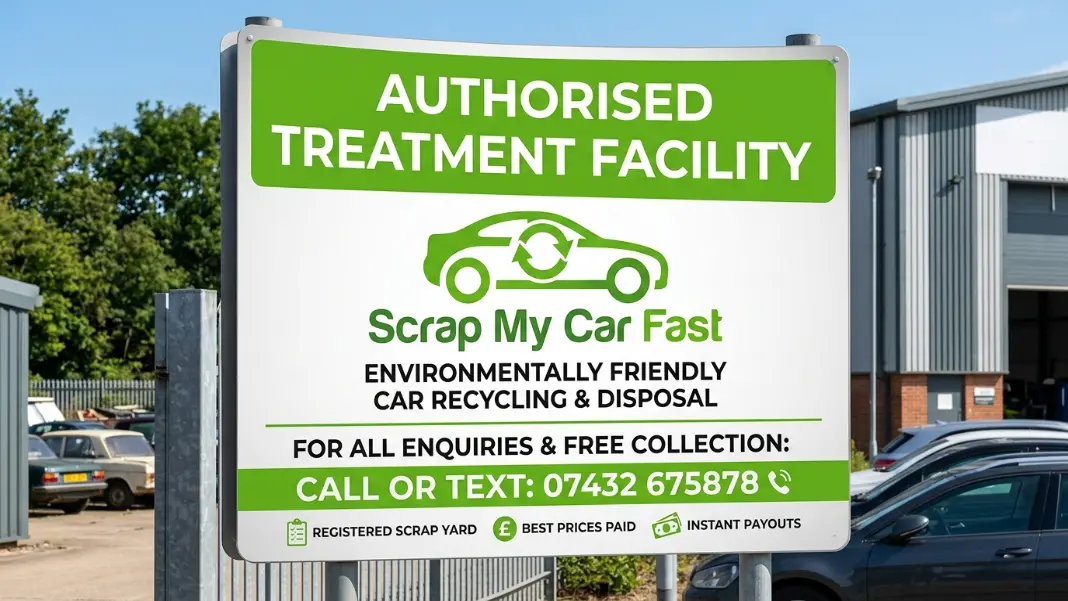
An Authorised Treatment Facility, or ATF, is a vehicle recycling site that holds an environmental permit issued by the Environment Agency. Only ATFs can legally issue a Certificate of Destruction when a car is scrapped. If you hand your car to an operator who is not a registered ATF, the vehicle remains in your name even after it leaves your driveway.
What ATF Stands For and Where the Term Comes From
ATF stands for Authorised Treatment Facility. The term was introduced by the End-of-Life Vehicles (ELV) Regulations 2003, which brought a European directive into UK law. The directive established that vehicles reaching the end of their working life must be recycled in a controlled, environmentally managed way rather than simply crushed and abandoned.
The regulations created a two-tier system. Any site can store or break vehicles for parts. But only a site that holds the correct environmental permit, and is therefore an ATF, can issue the Certificate of Destruction that legally confirms a vehicle has been destroyed.
That distinction matters for you as a vehicle owner. Without a Certificate of Destruction, the DVLA will not update its records. The car stays registered in your name, you remain liable for any outstanding road tax, and if the vehicle is abandoned or used in a crime after leaving your hands, you may still be contacted as the registered keeper.
How ATFs Are Regulated and Who Issues the Permits
In England and Wales, ATF environmental permits are issued by the Environment Agency under the Environmental Permitting (England and Wales) Regulations 2016. In Scotland the equivalent body is the Scottish Environment Protection Agency (SEPA). In Wales, Natural Resources Wales issues permits. In Northern Ireland, the Northern Ireland Environment Agency oversees the process.
To obtain and keep an ATF permit, a site must demonstrate that it can handle all hazardous materials found in end-of-life vehicles safely and in compliance with waste management legislation. The Environment Agency carries out site inspections and can revoke permits where standards are not maintained.
ATF operators must also hold a Scrap Metal Dealer licence issued by their local council under the Scrap Metal Dealers Act 2013. This is a separate requirement from the environmental permit. A fully compliant scrap car operator will hold both.
What Hazardous Materials an ATF Must Remove
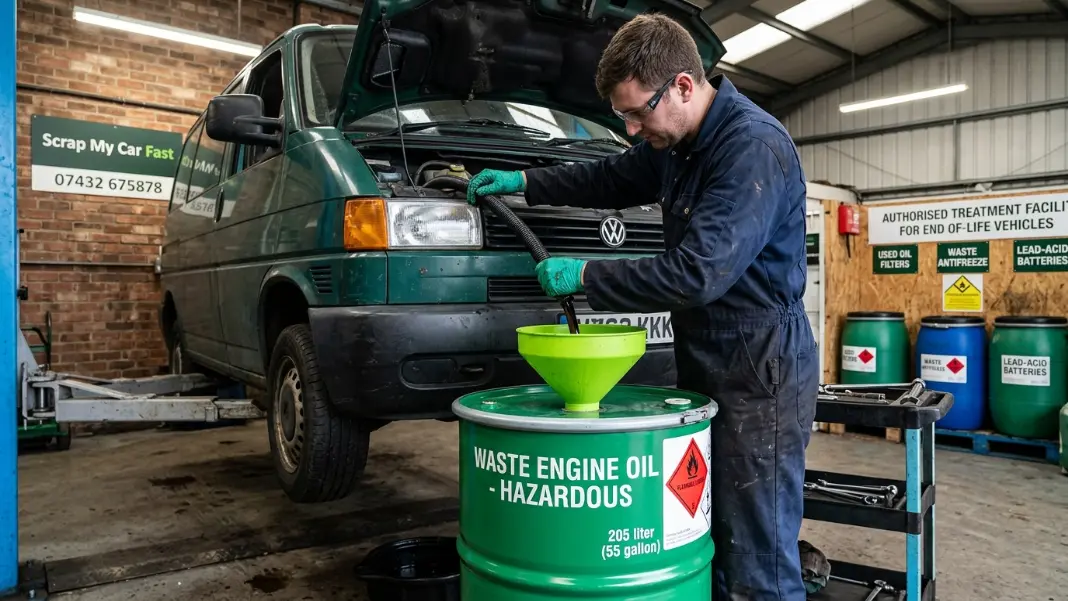
Before any vehicle can be crushed or shredded, an ATF must carry out depollution. This is a mandatory process that removes all hazardous substances from the vehicle. The materials covered include:
- Engine oil, gearbox oil and differential fluid
- Brake fluid and power steering fluid
- Coolant and antifreeze
- Petrol and diesel fuel
- Airbag and seatbelt pre-tensioner pyrotechnic charges
- Refrigerant gases from air conditioning systems
- Lead-acid battery acid
- Catalytic converter materials containing platinum group metals
Each of these materials is hazardous if allowed to enter the environment. A single litre of engine oil can contaminate up to one million litres of groundwater if it drains into unprotected soil or drainage channels. The ELV Regulations exist precisely to prevent this type of contamination at scale, given that hundreds of thousands of vehicles are scrapped in the UK every year.
Non-ATF operators who crush vehicles without carrying out depollution are committing an environmental offence under waste management legislation.
How to Check Whether a Site Is a Registered ATF
The Environment Agency maintains a public register of all licensed waste management sites in England. You can search this register to confirm whether a scrap dealer or vehicle recycler holds a current ATF permit before handing over your vehicle.
Go to the Environment Agency public register of waste operations and search by site name or postcode. The result will show the permit number, the site address, the permit type and whether it is currently active or has been suspended or revoked.
You can also ask the operator directly. Any legitimate ATF will provide their permit number without hesitation. If an operator declines to give you their permit number, or cannot locate it, that is a strong signal that they are not operating as a licensed ATF.
For scrap metal dealer licences, your local council maintains a public register. You can check whether a collector or dealer holds a valid licence by contacting the licensing department of the council in whose area the business operates.
What Happens Inside an ATF Step by Step
The process inside a licensed ATF follows a defined sequence set out in the ELV Regulations. Here is what happens from the moment your vehicle arrives:
Vehicle Receipt
When the car arrives at the ATF, staff record the vehicle identification number (VIN), registration plate, make, model and the identity of the person surrendering it. This creates the record that will be used to generate the Certificate of Destruction.
Depollution
All hazardous fluids are drained and collected into segregated, sealed containers for specialist disposal. Airbag units may be deployed in a controlled environment or stored in specialist containers. The fuel tank is drained and purged. Refrigerant gases are recovered using certified equipment. The lead-acid battery is removed and sent for separate recycling.
This stage is the most environmentally significant part of the ATF process and is what distinguishes a licensed facility from an unregulated crusher.
Component Recovery
After depollution, the ATF removes and catalogues components with resale value. This includes catalytic converters (which contain platinum, palladium and rhodium that are recovered by specialist smelters), alloy wheels, usable mechanical components, electronic control units and tyres. Recovering these components increases the economic return from the vehicle and reduces the volume of material that goes to the shredder.
Crushing and Shredding
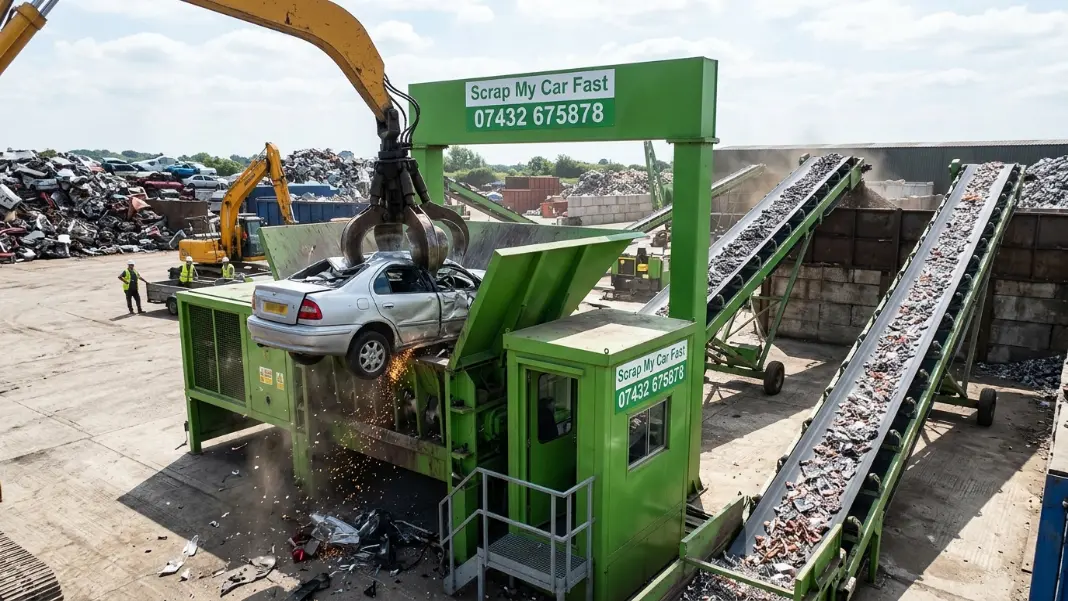
The depolluted, stripped shell is compressed into a block or fed into a vehicle shredder. The output is separated into ferrous metal, non-ferrous metal and shredder residue. The ferrous and non-ferrous metals go to steel mills and metal smelters. An increasing proportion of the residue fraction is now processed for energy recovery rather than sent to landfill, helping ATFs meet the recycling targets set by the ELV Regulations.
Recycling Targets
Since 2015, the ELV Regulations require that at least 95% of a vehicle’s weight must be recovered, with a minimum of 85% going to material recycling rather than energy recovery. Licensed ATFs must demonstrate they are meeting these targets as a condition of their permit.
The Certificate of Destruction Explained
The Certificate of Destruction is the key document produced by an ATF at the end of the process. Here is what it contains and why each field matters:
| Field | What It Contains | Why It Matters |
|---|---|---|
| Vehicle registration number | The number plate as recorded by DVLA | Links the document to the specific vehicle in DVLA records |
| VIN / Chassis number | The 17-digit unique identifier | Confirms the correct vehicle has been destroyed |
| Make and model | Manufacturer and model name | Cross-references with DVLA vehicle record |
| ATF permit number | The Environment Agency permit reference | Proves the site issuing the CoD is a licensed facility |
| Date of issue | The date the vehicle was accepted for destruction | Sets the date from which DVLA records are updated |
| Last keeper details | Name of the person who surrendered the vehicle | Closes the legal chain of ownership |
| ATF declaration | Confirmation that the vehicle will be depolluted and recycled | Legal statement of compliance with ELV Regulations |
The ATF submits the CoD electronically to the DVLA. The DVLA then removes the vehicle from the registered keeper’s record, cancels any outstanding Vehicle Excise Duty, and issues a refund for any complete calendar months of road tax that were paid but not yet used.
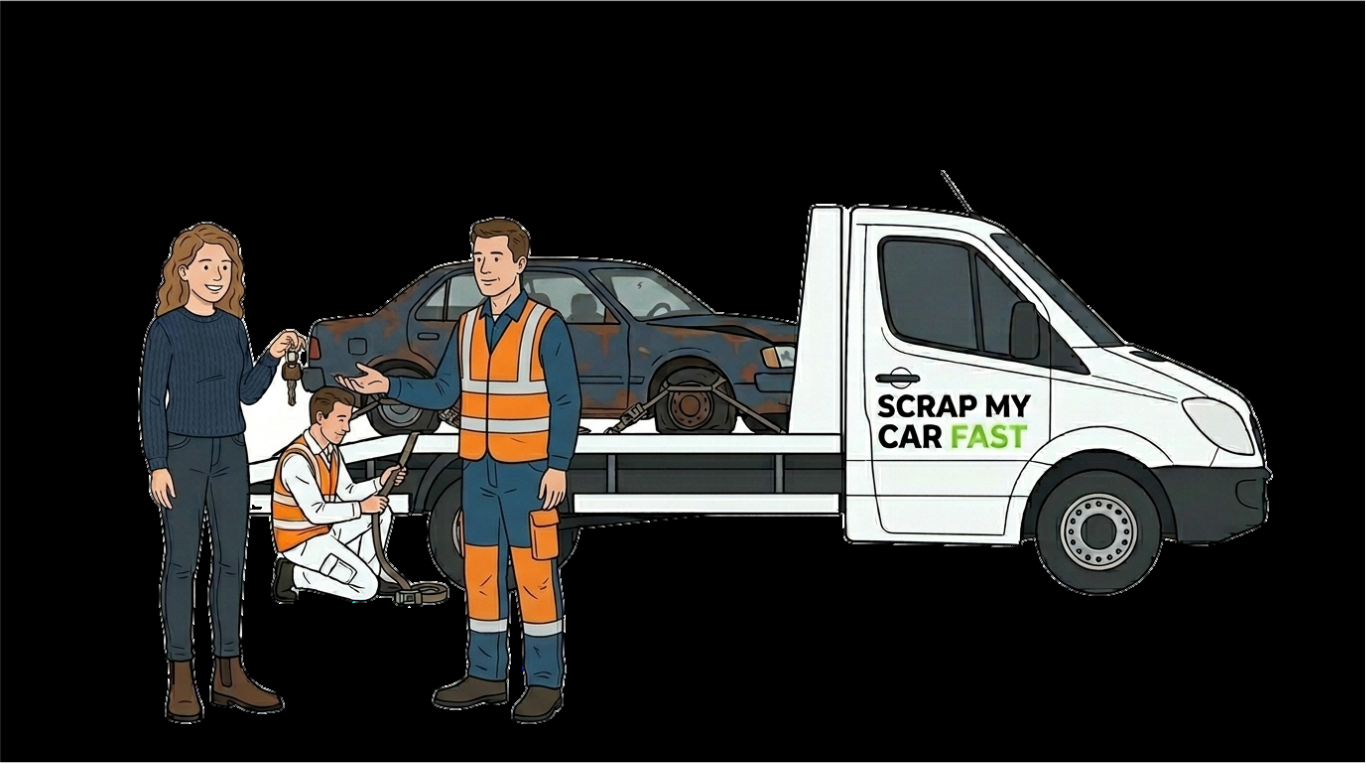
You receive a physical copy of the CoD on the day of collection. Keep it permanently as proof that you surrendered the vehicle to a licensed facility on a specific date.
ATF vs Scrap Metal Dealer: What Is the Difference
Not every scrap metal dealer is an ATF. A scrap metal dealer licence permits a business to buy, sell and process scrap metal, including metal that comes from vehicles. But to legally destroy a vehicle and issue a Certificate of Destruction, the site must also hold the environmental permit that qualifies it as an ATF.
Many larger operators hold both. They operate as scrap metal dealers for their day-to-day metal trading and as an ATF for vehicle destruction. Smaller operators may be scrap metal dealers only. They buy vehicles, strip them for parts, and sell the shell on to an ATF for destruction. In this arrangement, you should eventually receive a CoD, but the process is indirect and delays are possible.
If you want certainty about the chain of custody for your vehicle, deal directly with an ATF. Ask before booking whether the operator runs their own ATF or passes vehicles to a third-party site for destruction. The answer tells you whether you are dealing with a single regulated entity or a chain of intermediaries.
ATF Coverage in Greater Manchester
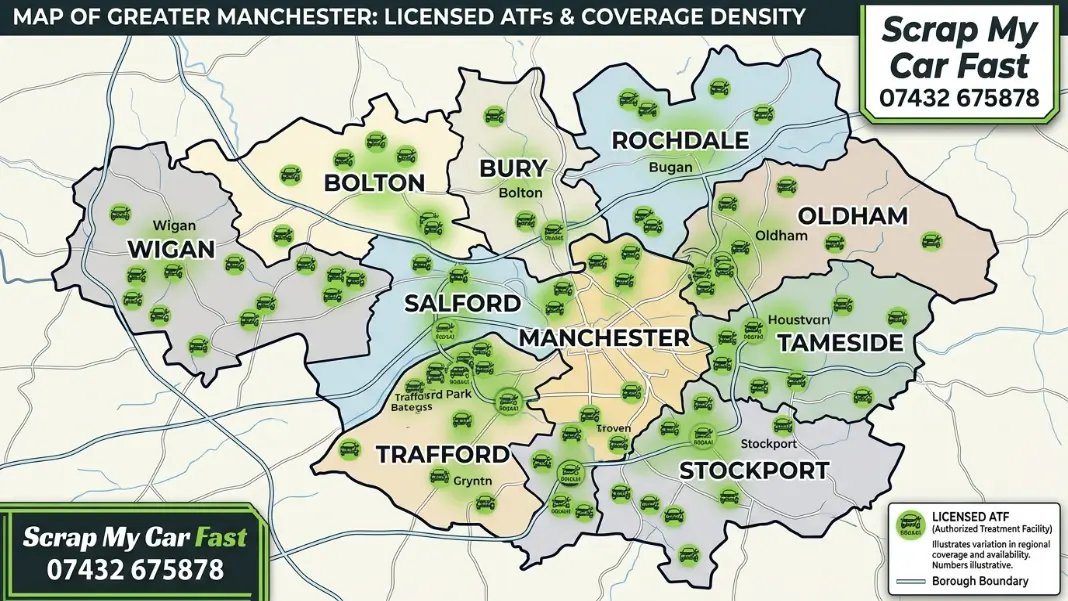
Greater Manchester has a relatively dense concentration of licensed ATFs compared to more rural parts of the UK. This reflects the region’s industrial history and the volume of end-of-life vehicles generated across the ten boroughs: Manchester, Salford, Stockport, Oldham, Bolton, Rochdale, Bury, Wigan, Tameside and Trafford.
Higher ATF density matters for pricing. When the distance from a vehicle’s collection point to a licensed processing site is short, transport costs are lower and metal can be sold to markets more quickly. Both factors contribute to better prices for vehicle owners in the region compared to areas with fewer ATFs in range.
We work exclusively with licensed ATF operators across Greater Manchester. Every vehicle we collect is delivered to a permitted site and a Certificate of Destruction is issued on the collection day or within 24 hours.
Electric and Hybrid Vehicles at ATFs
The increasing number of electric and plug-in hybrid vehicles reaching end of life is changing how ATFs operate. High-voltage battery packs require specialist handling that standard depollution procedures were not designed for. An ATF accepting electric vehicles must have trained technicians who can safely isolate, remove and store high-voltage battery systems before the vehicle enters the normal depollution process.
Lithium-ion battery packs from electric vehicles are classified as hazardous waste under the Waste Batteries and Accumulators Regulations 2009. They must be sent to specialist battery recycling facilities rather than processed through the normal shredding chain. Some ATFs have direct partnerships with battery recyclers; others pass batteries back to manufacturers operating take-back schemes under producer responsibility legislation.
If you are scrapping an electric or hybrid vehicle, confirm before booking that the ATF has the capability and certification to handle high-voltage systems. Not every ATF is equipped for this work, and accepting an EV without appropriate training creates both a safety risk and a regulatory compliance issue for the operator.
What Using an Unlicensed Site Costs You
Handing your car to an operator who is not an ATF creates a set of problems that begin immediately and can continue for years.
Without a Certificate of Destruction, the DVLA does not update its records. The vehicle remains registered in your name. You continue to receive demands for road tax. If the vehicle is found abandoned, used in an accident, or becomes subject to a parking or environmental enforcement action, you will be contacted as the registered keeper and may face costs and administrative burden to prove you no longer own it.
You also cannot claim the road tax refund for remaining months of VED, because the refund is triggered by the DVLA processing the CoD. Without a CoD, the refund does not happen automatically.
The environmental consequences are also significant. Unlicensed operators who crush vehicles without depolluting them release hazardous materials into the environment. These are not abstract risks. Soil and groundwater contamination from illegally crushed vehicles at unregulated sites has resulted in costly clean-up operations paid for by local authorities and the Environment Agency, which means by taxpayers.
The price difference between a licensed ATF and an unlicensed operator is rarely substantial. ATF operating costs are higher due to permit compliance, specialist waste disposal contracts and trained staff, but the scrap metal market is competitive and licensed operators price accordingly. Choose a licensed ATF. The alternative creates legal exposure that no small price difference justifies.
Frequently Asked Questions About Authorised Treatment Facilities
Do I have to use an ATF to scrap my car?
Not directly. You do not need to deliver your car to an ATF yourself. But the vehicle must ultimately be destroyed by an ATF for a Certificate of Destruction to be issued. Any collection service you use should be working with a licensed ATF at the end of the chain. If they cannot confirm this, use a different operator.
How do I find a licensed ATF near me?
Search the Environment Agency public register at environment.data.gov.uk using your postcode or the site name. The register shows all licensed waste sites including ATFs, their permit numbers and whether their permits are current. You can also ask any scrap operator directly for their ATF permit number before booking.
What is the difference between an ATF and a scrap yard?
A scrap yard is a general term for any site that buys and processes scrap metal. An ATF is a specific regulated category of site that holds an environmental permit to depollute and destroy end-of-life vehicles. Many scrap yards are also ATFs, but not all. The environmental permit is what matters, not the name a business uses to describe itself.
Can an ATF refuse to give me a Certificate of Destruction?
No. If a vehicle has been accepted and destroyed by an ATF, a Certificate of Destruction must be issued. If you have not received one and cannot get a response from the operator, you can contact the Environment Agency or notify the DVLA directly using your vehicle registration number to report that a CoD was not issued.
Does using an ATF guarantee my car is recycled responsibly?
Yes. ATFs must meet minimum recycling targets under the ELV Regulations: at least 95% of a vehicle’s weight must be recovered, with 85% going to material recycling. Permit holders are inspected by the Environment Agency and can have their permits revoked if they fail to comply. Vehicles processed at licensed ATFs are recycled in accordance with these legally binding targets.
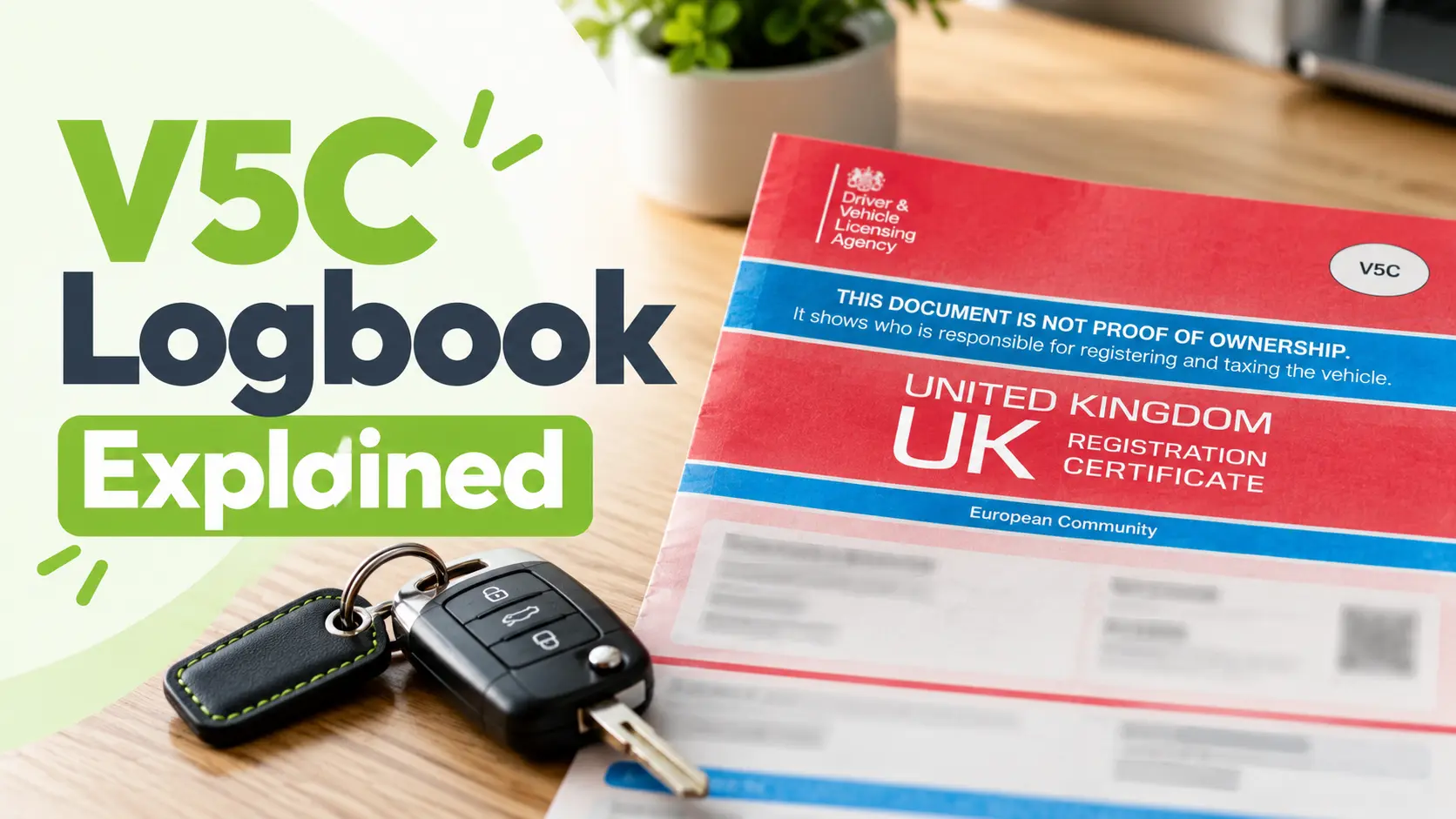
Will an ATF take my car if it has no MOT or V5C?
Yes. ATFs do not require a current MOT to accept a vehicle for destruction. A V5C logbook is the preferred form of ownership documentation but is not always essential. You will need valid photo ID in all cases. If you do not have the V5C, the ATF will guide you through the alternative DVLA notification process as part of the collection.