Why Notifying the DVLA Matters When You Scrap a Car
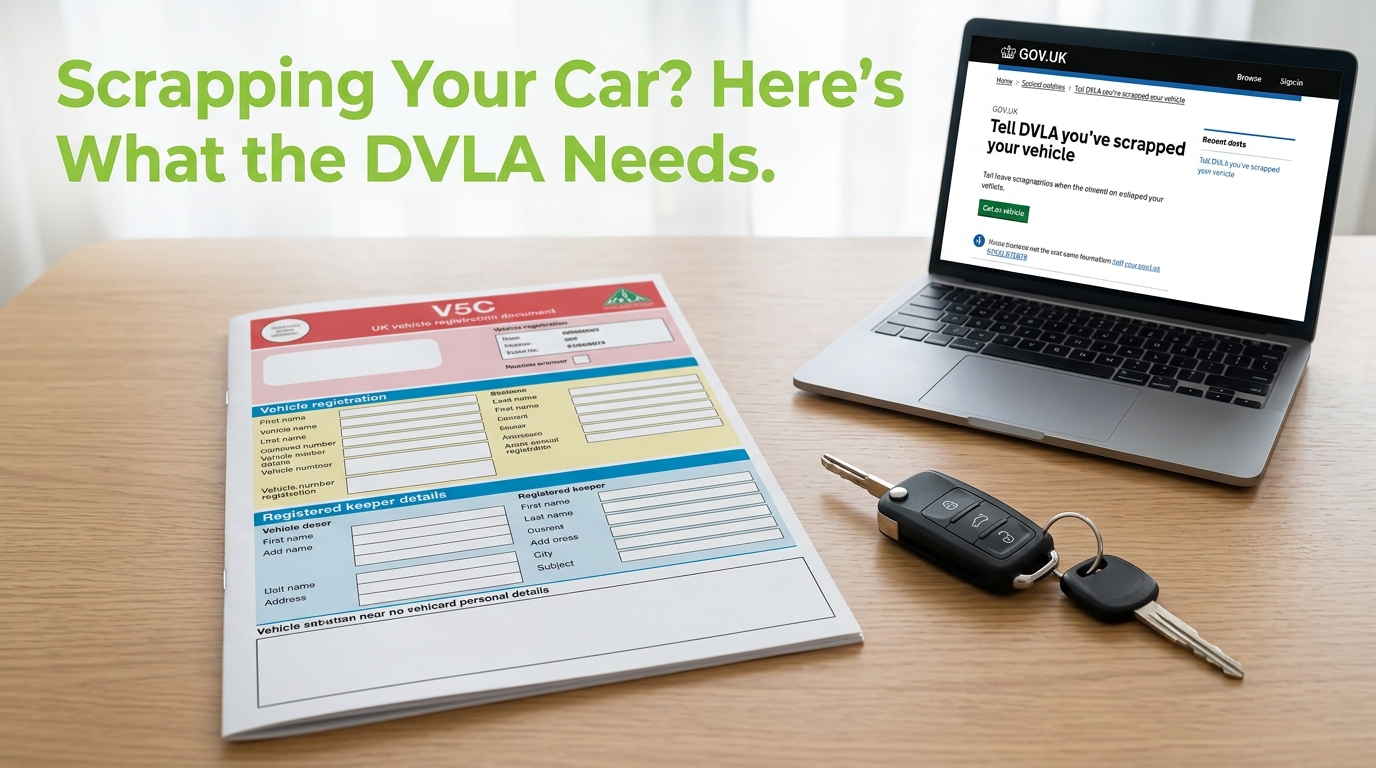
Scrapping a car involves more than just handing over the keys. Once the vehicle leaves your possession, you have a legal obligation to inform the Driver and Vehicle Licensing Agency (DVLA) that it has been scrapped. Failing to do this can leave you liable for anything connected to that vehicle, including road tax obligations and, in a worst-case scenario, fines linked to the vehicle’s use on public roads.
The good news is that the process is straightforward, and much of it can be done online. This guide walks you through every step, from what you need before you start to how the DVLA confirmation works.
What You Need Before Notifying the DVLA
Before you go through the notification process, make sure you have the following to hand:
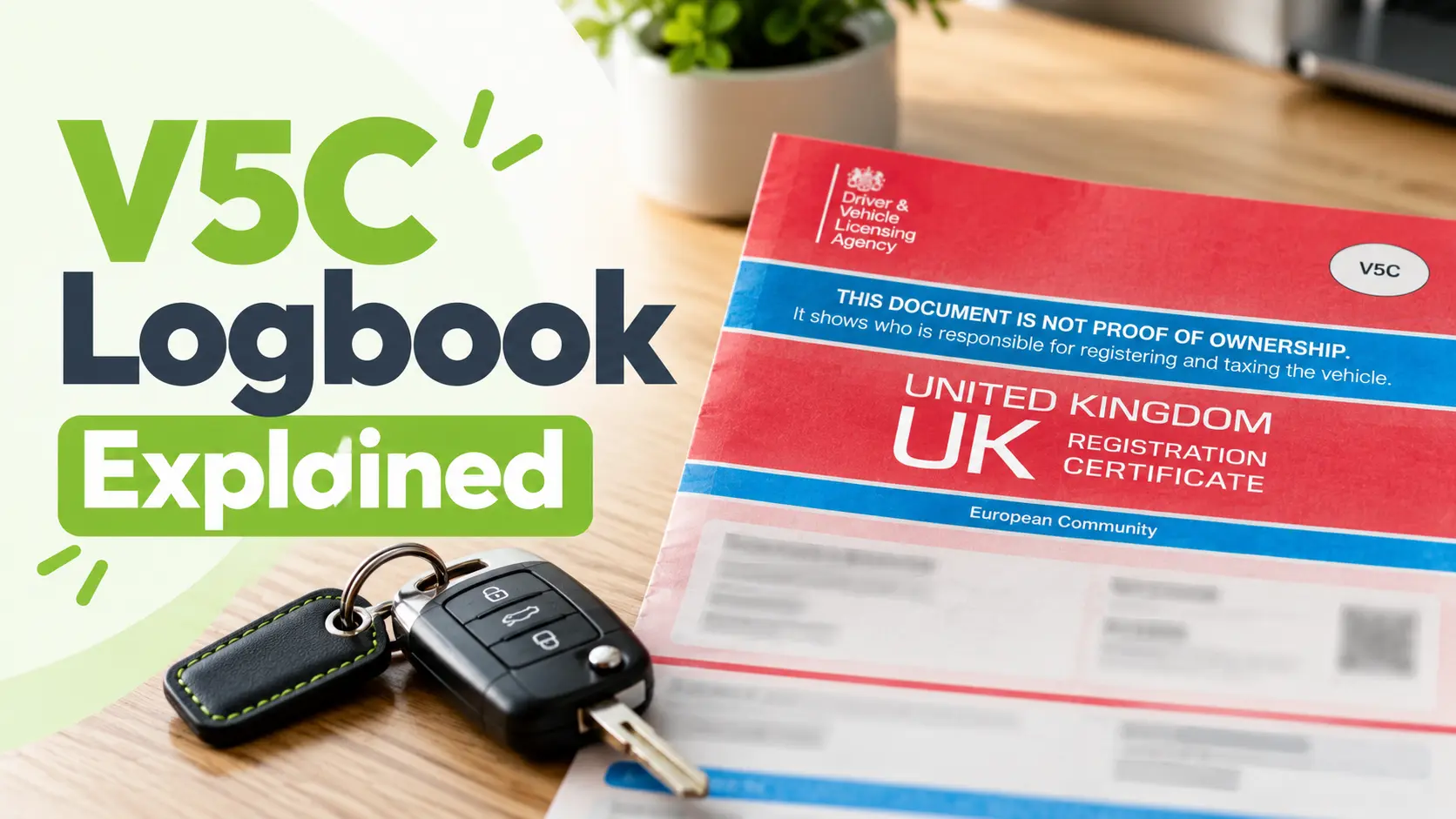
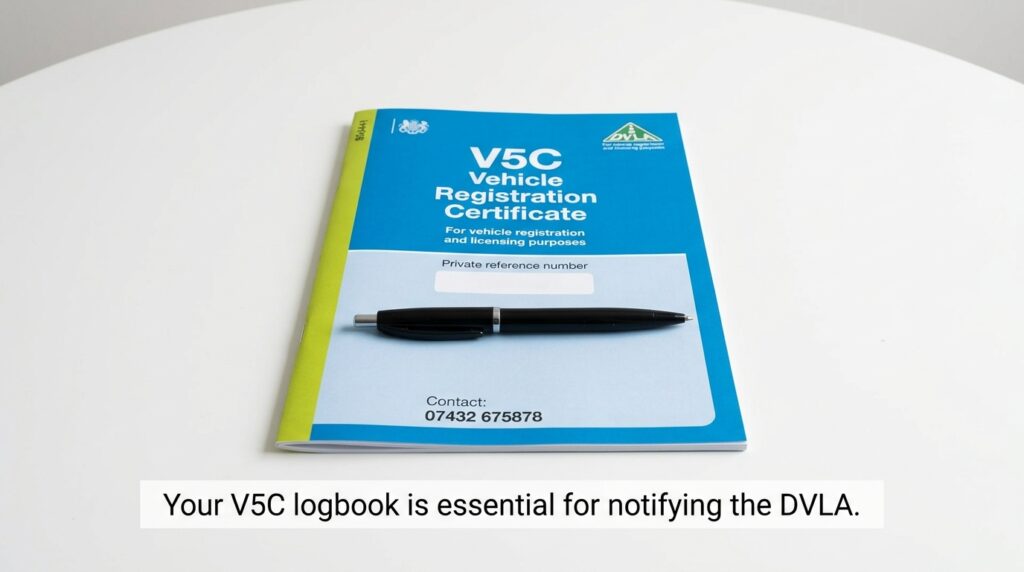
Your V5C logbook. This is the primary document you need. The V5C contains your vehicle’s registration details and the 11-digit document reference number you will need for the online process.
Your vehicle registration number. This is the number plate reference, not to be confused with the V5C reference number. You will need both.
The name and address of the authorised treatment facility (ATF). If the scrap company you are using is fully licensed, they should be able to provide this. Scrap My Car Fast works with licensed ATFs across the Greater Manchester area and can provide all relevant details.
What Happens to Your V5C at the Point of Scrapping?
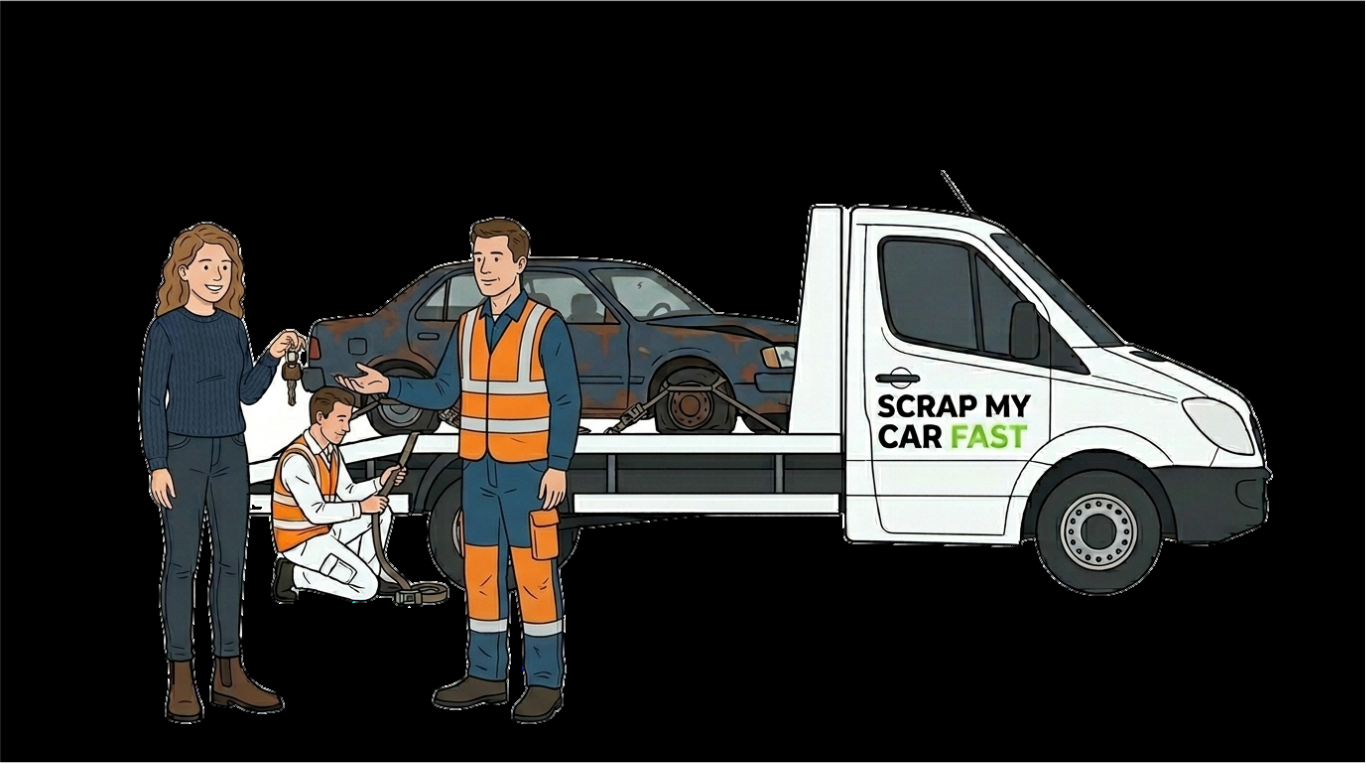
When the scrap collection driver arrives, there are two scenarios depending on whether you have your V5C.
If you have your V5C: You tear out section 9, which is the yellow slip at the back of the document labelled “Sell, transfer or part-exchange your vehicle to the motor trade.” You complete this slip with the date and hand the main body of the logbook (the green and white pages) to the driver. The driver then takes the V5C to the ATF, which notifies the DVLA directly. If you’re not sure which section that is on your logbook, see which V5C section to use when you scrap.
If you do not have your V5C: The ATF can still scrap the vehicle, but the notification process is slightly different. You will need to inform the DVLA yourself using the online service, or apply for a replacement V5C before proceeding.
In both cases, the DVLA should be notified. Do not assume the ATF has done it without confirming. Ask for written confirmation or check online using the vehicle registration number after a few days.
How to Notify the DVLA Online That Your Car Has Been Scrapped
The DVLA’s online service for notifying them of a scrapped vehicle is available at gov.uk. Here is the step-by-step process:
Step 1. Go to the official DVLA online service. Search “tell DVLA you’ve sold or transferred a vehicle” on gov.uk. Do not use third-party sites that charge a fee for this, as the government service is free.
Step 2. Select the option for “sold it to the motor trade, including selling or scrapping.”
Step 3. Enter your 11-digit V5C document reference number and your vehicle registration number.
Step 4. Enter the name and address of the ATF where the car was taken. If Scrap My Car Fast is handling your vehicle, we will provide you with this information.
Step 5. Submit the form. The DVLA will process your notification and send a confirmation.
The whole online process takes less than five minutes if you have your documents ready.
What If You Cannot Do It Online?
There is an alternative if you do not have access to the internet or prefer not to use the online service. You can use the yellow section 9 slip from the V5C and post it to the DVLA directly. The address is printed on the slip.
If you have already handed your full V5C to the scrap company, you will need to write to the DVLA explaining the situation and providing your vehicle registration number, your name and address as the registered keeper, and the date the car was scrapped.
Road Tax Refund: What You Are Entitled To
One benefit of correctly notifying the DVLA that your car has been scrapped is the automatic cancellation of your vehicle’s road tax (Vehicle Excise Duty). You are entitled to a refund on any full months of tax remaining.
For example, if your road tax runs until the end of the year and you scrap your car in March, you should receive a refund for the remaining full months (April through December, in this example).
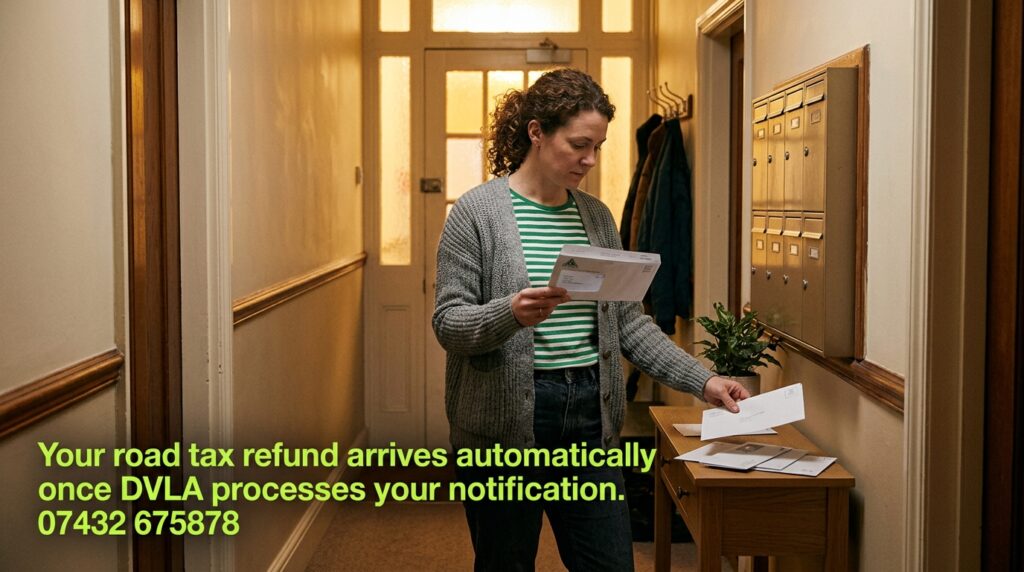
The refund is issued automatically by the DVLA once the notification is processed. It comes as a cheque sent to your registered address. You do not need to apply separately.
Important note: the refund covers full calendar months only. Partial months are not refunded. This is worth bearing in mind if you are close to the end of a tax month.
What Happens If You Do Not Notify the DVLA?
If you fail to notify the DVLA that your car has been scrapped, you may continue to receive reminders about road tax. More importantly, you remain legally responsible for the vehicle until the DVLA records are updated.
In practice, the ATF you use should notify the DVLA on your behalf when they receive the V5C. But mistakes happen. If the notification does not go through, you could receive a fine for failing to have valid road tax on a vehicle that no longer even exists.
Checking online that the vehicle’s status has been updated is a simple step worth taking a few days after the car is collected. Use the government’s vehicle enquiry service at gov.uk, enter the registration number, and confirm the vehicle shows as SORN (Statutory Off Road Notification) or “scrapped.”
What Is a Certificate of Destruction and Why Does It Matter?
The Certificate of Destruction (CoD) is the document issued by the ATF confirming that your vehicle has been properly scrapped. It is a legal requirement under the End of Life Vehicles Regulations 2003 for any vehicle scrapped in the UK.
The CoD does several important things:
- It provides legal proof that the car was scrapped at a licensed facility
- It protects you from any future liability connected to the vehicle
- It confirms that the car was disposed of in an environmentally compliant manner
You should receive your CoD within a few days of the car being scrapped. It may arrive by post or email depending on the ATF. If you have not received it within a week, chase the scrap company.
Scrap My Car Fast works exclusively with licensed ATFs across Greater Manchester, so every vehicle we collect comes with a valid Certificate of Destruction as standard.
DVLA SORN: Is It Relevant When Scrapping?
You may have heard of SORN, or Statutory Off Road Notification. This is a declaration to the DVLA that a vehicle is not being used on public roads. People sometimes wonder whether they need to declare SORN before scrapping.
The short answer is: not necessarily, but it depends on your situation.
If your car is parked on public roads without road tax, you could be fined even if you plan to scrap it imminently. In that case, it may make sense to declare SORN first if you are waiting for a collection date.
If the car is on your private driveway or in a garage, SORN is not required before scrapping. You simply proceed with the scrap process and the DVLA is notified as part of that.
Note that once a car is scrapped and the DVLA is notified, any SORN status becomes irrelevant. The vehicle is removed from the records entirely.
What If Someone Else Scrapped Your Car Without Telling the DVLA?
This situation occasionally arises with older cars sold through informal channels. If you sold a car to someone who then scrapped it without notifying the DVLA, you may still appear as the registered keeper in DVLA records.
To resolve this, you should write to the DVLA with the vehicle registration number, the date you sold the vehicle, the name and address of the person you sold it to (if you have it), and any sale documentation.
If you used a legitimate scrap company through Scrap My Car Fast and the DVLA has not been updated within two weeks, contact us and we can assist in resolving the issue with the ATF.
Frequently Asked Questions About DVLA and Scrapping
Can I notify the DVLA before the car is collected?
No. You should notify the DVLA on or after the date the car is handed over to the scrap company, not before. Notifying too early can cause issues with your road tax refund dates.
How long does DVLA processing take?
The DVLA typically processes vehicle disposal notifications within four weeks, though it is often faster. Your road tax refund cheque may take up to six weeks from the date of notification.
What if I have a private plate on the car?
If you want to retain a personalised number plate, you must transfer it to another vehicle or put it on retention with the DVLA before the car is scrapped. Once the car is listed as scrapped in DVLA records, the plate may no longer be transferable. Do this before arranging collection.
Can I scrap a car that is still registered to someone else?
No. Only the registered keeper can legally authorise a vehicle to be scrapped. If the car is registered to a deceased family member, you will need to go through the estate and probate process before the vehicle can be scrapped.
What if the car was written off by an insurance company?
If your insurer wrote the car off and paid you out, they may have retained ownership of the vehicle. In that case, the insurer is responsible for the disposal and DVLA notification. Check with your insurer before contacting a scrap company.
How long does it take to get paid when you scrap a car?
Payment is sent by bank transfer on the same day the car is collected, typically within 2 to 4 hours of the vehicle being loaded. There is no cheque, no delay and no waiting period. The money reaches your account before the end of collection day in almost all cases.
Scrap Your Car in Greater Manchester with Full DVLA Compliance
Scrap My Car Fast handles the full process across Manchester and Greater Manchester, including working with licensed ATFs that meet all DVLA and End of Life Vehicles regulations. When you use our service, you receive a Certificate of Destruction and we ensure all notifications are properly handled.
Get your free quote today and scrap your car the right way.