There is a specific moment most people have when they decide to scrap their car. The MOT estimate comes back with a repair bill that is more than the car is worth. Or the insurance renewal arrives and suddenly it makes no sense to keep it. Or it simply stops starting one morning and the cost of fixing it outweighs anything you would realistically get selling it.
The decision to scrap is usually clear. The process, if you have never done it before, is less so.
This post works through the questions we hear most often from drivers across Greater Manchester. Some are about money. Some are about paperwork. Some are practical questions about collection and timing. All of them are worth knowing the answer to before you commit to anything.
How does scrapping a car in Greater Manchester actually work?
The process has four stages.
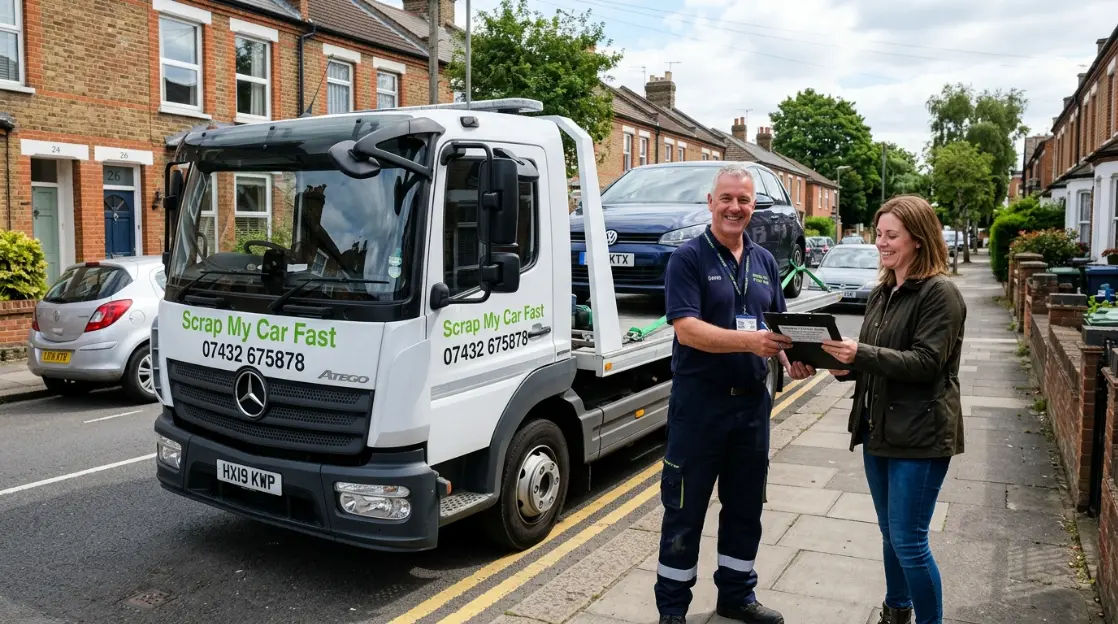
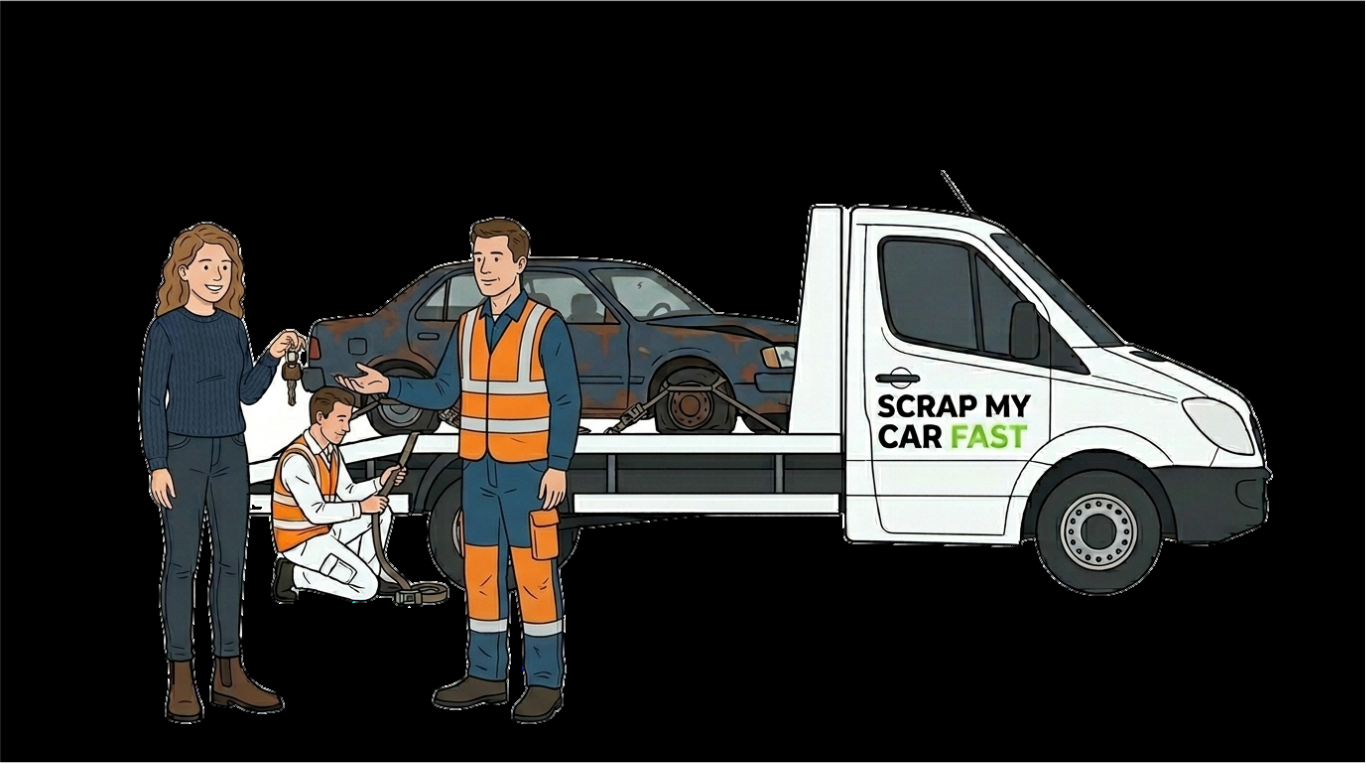
You get a quote online by entering your registration number and postcode. The system checks the vehicle’s recorded details and the current scrap metal rate and returns a firm price. You accept or walk away. If you accept, you book a collection slot. The driver arrives at the agreed time, brings all the paperwork, loads the car, and payment is sent to your bank account the same day.
From first quote to money in your account, most drivers across Greater Manchester complete the whole process within 24 to 48 hours. Same-day collection is available in many areas when you book before midday.
If you want to understand each stage before committing, our how scrapping your car works page covers the process in full, including what the driver brings, what you sign, and how the DVLA is notified on your behalf.
Are there hidden fees when using scrap car services in Greater Manchester?
With a licensed buyer, there should be none. The price quoted before collection is the price paid on collection day. No fuel surcharges, no call-out fees, no deductions made after the driver sees the car in person.
Where hidden fees become a problem is with unlicensed operators and certain comparison sites that quote an inflated price to attract enquiries, then reduce the offer on arrival. The driver may claim the car weighs less than the registration suggests, or flag damage as a reason to pay less. This is called a price drop and it is a known issue in the scrapping industry.
To protect yourself, check that the buyer is registered under the Scrap Metal Dealers Act 2013. Every legitimate scrap car buyer holds a Scrap Metal Dealer licence issued by their local authority. You can verify any dealer on the GOV.UK scrap metal dealer licence check before you accept a quote. A licensed operator trading legitimately has no reason to drop the price on arrival.
The other thing to check is whether the buyer is operating an Authorised Treatment Facility. ATFs are regulated by the Environment Agency and are the only facilities legally permitted to issue a Certificate of Destruction. If a buyer cannot issue a Certificate of Destruction, they are not operating legally.
If you want to know what to look for before choosing a service, our why customers choose us page outlines the specific checks worth making.
Can I get an instant quote online without calling anyone?
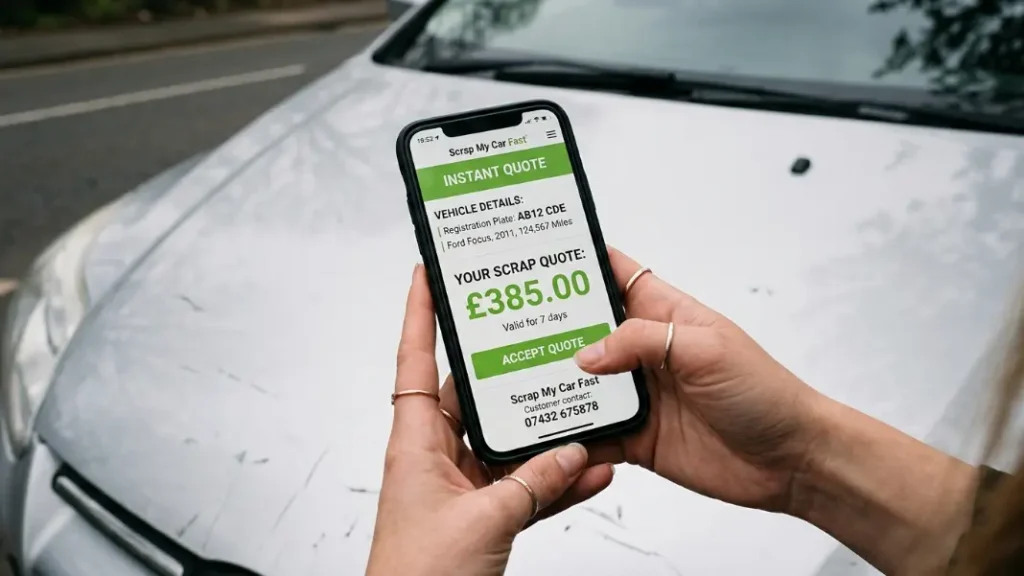
Yes. You enter your car’s registration and your postcode and the price comes back in seconds. No phone call required, no waiting for someone to email you back, no long form to fill in.
The quote is based on your car’s recorded kerb weight and the current scrap metal rate for steel. These are objective figures that do not depend on how clean the car is or how many miles it has covered. The quote is a firm offer, not an estimate, and comes with no obligation to proceed.
You can see what your car is worth right now on our instant quote page. If you want to understand the rate behind the price, our scrap car prices page shows the current per-tonne rate for scrap steel, updated regularly.
Can I scrap a car that no longer runs in Greater Manchester?
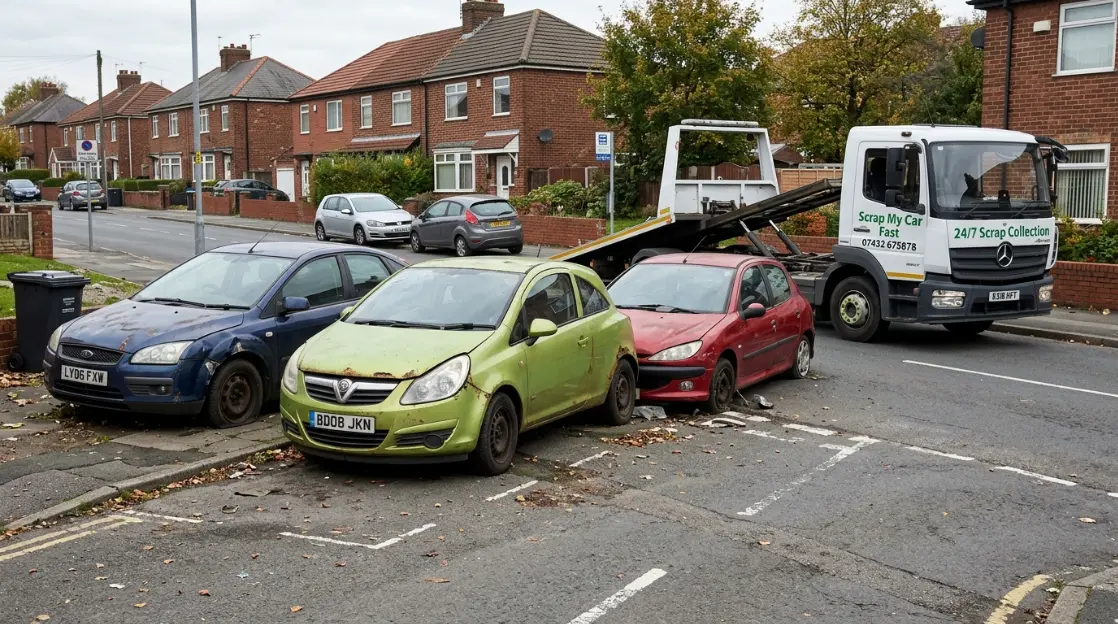
Yes. A non-running car has the same scrap value as a running one because the price is based on weight, not the car’s ability to move. A car with a seized engine, blown head gasket, snapped timing belt, or any other mechanical failure that stops it moving is still worth collecting.
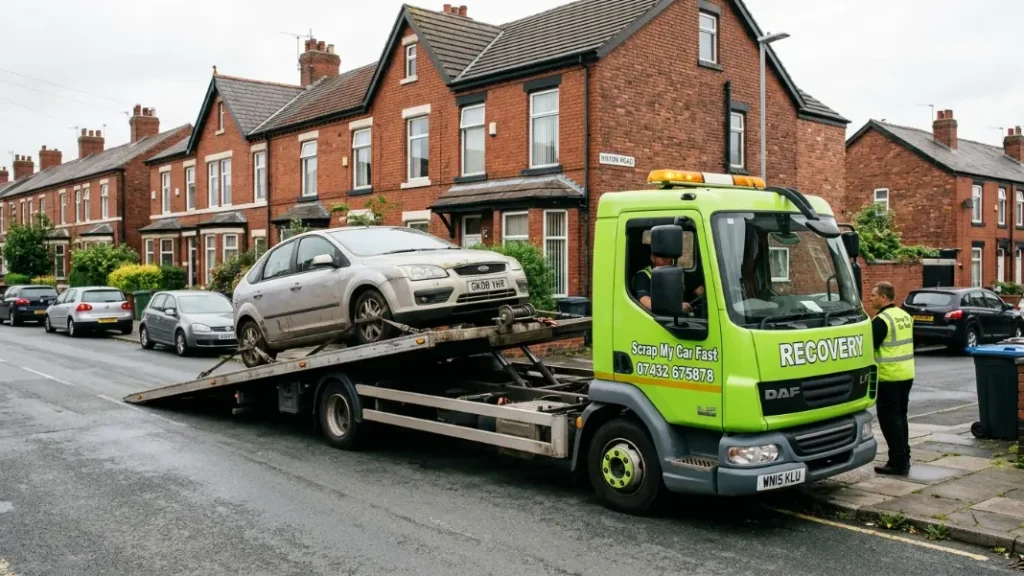
The difference is in how it is collected. A running car drives onto a low-loader or is towed easily. A non-runner needs a flatbed truck or a winch. Most licensed collectors operating across Greater Manchester carry this equipment as standard.
The key is to mention that the car does not run when you book. This ensures the right vehicle is sent. It also helps the driver plan the collection correctly, particularly if the car is in a garage, behind another vehicle, or in a position that requires extra equipment.
A car in an unusual location, a flooded pit, a barn, or deep in a narrow driveway, takes more planning but is often still collectible. Describe the situation when booking and the team can advise what is possible before committing to a slot.
More detail on how we collect broken and non-running vehicles is on our scrap my non-runner page.
How long does it take to get paid when you scrap your car in Manchester?
Payment is processed at the moment your car is loaded onto the transporter on collection day. Bank transfers for scrap cars typically arrive in your account within two to four hours of the collection being completed. In some cases, depending on your bank’s processing schedule, the payment may show the following morning, but this is uncommon.
One thing worth knowing: cash payment for scrap cars is illegal under the Scrap Metal Dealers Act 2013. Any buyer offering cash in hand should be a red flag. The law requires all payments for scrap cars to be made by bank transfer or cheque so the transaction can be traced. A legitimate buyer will not offer cash, and accepting it gives you no legal protection if a dispute arises.
When you accept a quote, the amount is fixed. The price does not change between acceptance and payment.
How quickly can you collect a car across Greater Manchester?
Same-day collection is available across a significant portion of Greater Manchester when you book before midday. For most of the core areas, a slot within 24 hours of booking is standard.
We collect from all ten Greater Manchester boroughs: Manchester, Salford, Stockport, Oldham, Bolton, Rochdale, Bury, Wigan, Tameside, and Trafford.
Within those boroughs, drivers regularly collect from towns and areas including Prestwich, Urmston, Stretford, Wythenshawe, Eccles, Farnworth, Walkden, Middleton, Heywood, Chadderton, Droylsden, Tyldesley, Stalybridge, Ashton-under-Lyne, Leigh, Horwich, Worsley, Cheadle, Altrincham, Whitefield, Failsworth, Hyde, Ramsbottom, Royton, Denton, Kearsley, and many other areas throughout the region.
If you are unsure whether your postcode is covered, the quickest way to check is to enter it on the instant quote page. If we collect from your area, a price and booking option will appear immediately.
Do I need my V5 logbook to scrap my car?
You do not always need it. A licensed Authorised Treatment Facility can process a vehicle without a V5C in certain circumstances, particularly when you have photo ID and other evidence that you are the registered keeper.
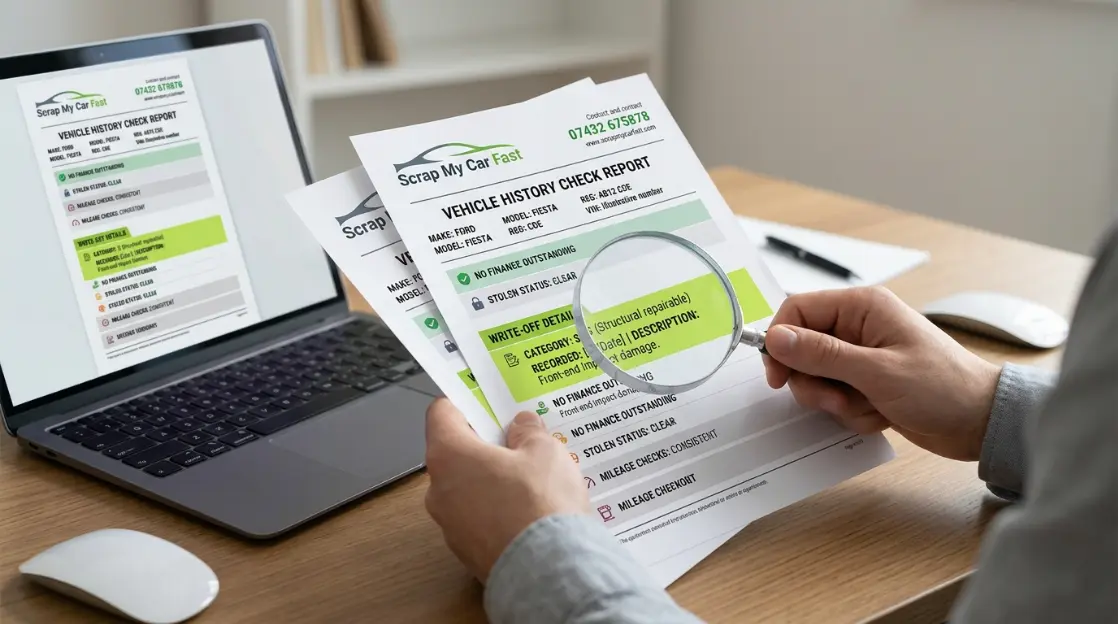
That said, having the V5C genuinely helps. It confirms ownership clearly, speeds up the DVLA notification process, and reduces the amount of alternative documentation needed on collection day.
If you have lost your V5C, you can apply for a replacement using a V62 form through the DVLA. This takes around five days by post. If you do not want to wait, scrapping without the logbook is possible in many cases.
Our full guide to scrapping a car without a V5 logbook covers what alternative documents are acceptable, how the process differs, and what happens at the DVLA stage when no V5C is present.
What should I remove from my car before collection?
Remove your personal belongings. Sunglasses, documents, charging cables, child seats, anything stored in the boot, anything in the door pockets. It sounds obvious but it is easy to forget items that have lived in the car for years.
If you have added accessories to the car, a dashcam, a custom stereo, a towbar you paid for separately, and you want to keep them, remove them before the driver arrives.
What you should not do is strip parts that were original to the car. Removing the battery, catalytic converter, seats, or engine components reduces the vehicle’s weight, which directly reduces the scrap value you receive. The quoted price is based on the car’s recorded weight with standard components in place.
How do I know I am being offered a fair price?
The scrap price of a car comes down to two numbers: its weight and the current scrap metal rate. A car’s condition beyond a certain point, its mileage, its service history, whether it drives or not, makes very little difference to the scrap price because none of those things change what the metal is worth.
You can check roughly what your car should be worth by multiplying its kerb weight (found on the V5C or DVLA vehicle enquiry) by the current per-tonne rate for scrap steel. Our scrap car prices page shows the current rate, so you can sense-check any quote you receive before accepting.
A legitimate quote from a licensed buyer will reflect the kerb weight of the vehicle at the current market rate, minus a reasonable margin for the collection and processing. If the number you are offered is significantly below what the weight calculation would suggest, it is worth asking why before proceeding.
What happens to my car after you collect it?
After collection, the car goes to an Authorised Treatment Facility. This is a licensed recycling site regulated by the Environment Agency. Every step that follows is governed by the End of Life Vehicles Regulations 2003.
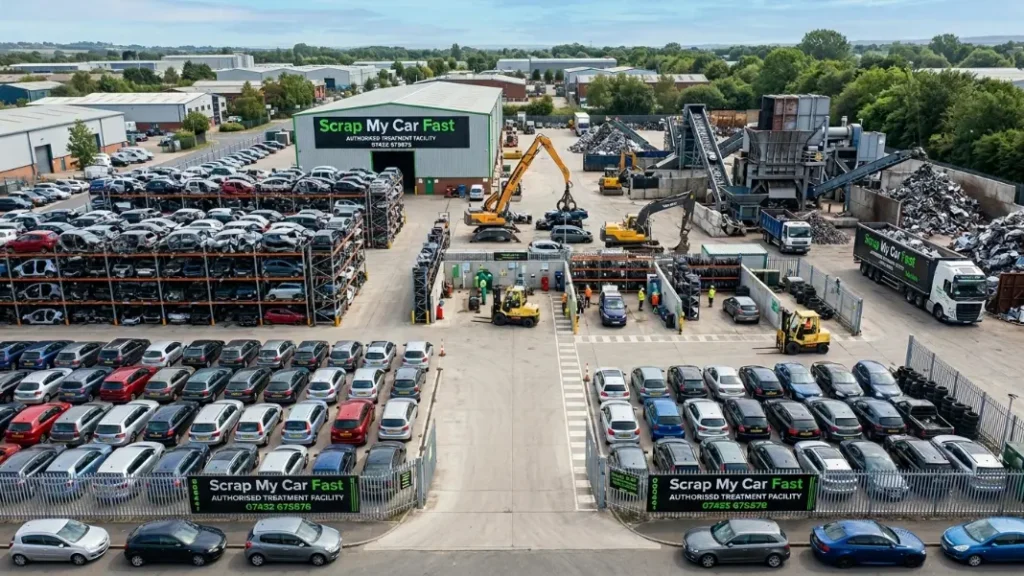
The car goes through depollution first. Fluids are drained, including engine oil, coolant, fuel, and brake fluid. The battery is removed and sent for specialist battery recycling. The catalytic converter is extracted. Tyres, glass, and plastic panels are separated for their respective recycling streams.
What remains after depollution is the steel structure of the car. This goes into an industrial shredder and the resulting steel is recycled and re-enters manufacturing. The recycled steel content of most new cars contains a significant proportion of steel from end-of-life vehicles.
A Certificate of Destruction is issued at this point, which legally removes the vehicle from your name and notifies the DVLA automatically. Our guide to what happens when a car is scrapped covers the full recycling process in detail if you want to understand where exactly your car ends up.
Do I need to contact the DVLA myself when I scrap my car?
In most cases, no. When a car is collected by a licensed Authorised Treatment Facility and a Certificate of Destruction is issued, the ATF is legally required to notify the DVLA within seven days. You do not need to make a separate call or fill in a form.
Your road tax is cancelled automatically once the DVLA processes the notification. Any unused months are refunded to the payment method registered on the account.
If you want to keep a record, you can use the DVLA’s free online vehicle enquiry service to confirm the car’s registered status has changed after collection. Our DVLA notification guide explains exactly what happens at each stage and how to confirm everything has been processed correctly.
Can I scrap a car that still has finance on it?
Not without the finance company’s involvement. If the car is on a hire purchase or PCP agreement that has not been fully paid off, the finance company legally owns the vehicle. You cannot scrap something you do not legally own.
Scrapping a financed vehicle without informing the lender is treated as fraud. The right route is to contact the lender, get the settlement figure, and either pay the finance off or explore voluntary termination if you have paid more than half the total agreement.
If the finance has been fully settled, even recently, you own the car outright and there is no issue. Check your agreement if you are unsure of the status. Our full guide to scrapping a car with outstanding finance covers the legal position and the steps to take in both scenarios.
Ready to Find Out What Your Car Is Worth?
Most people find the actual process of scrapping much simpler than they expected. The quote takes under a minute. Collection is usually arranged within 24 hours. Payment arrives the same day the car leaves your driveway.
If there is a question we have not covered here, our full FAQ page goes into more specific situations. And when you are ready to see a number, an instant quote takes less than 60 seconds and comes with no commitment to proceed.