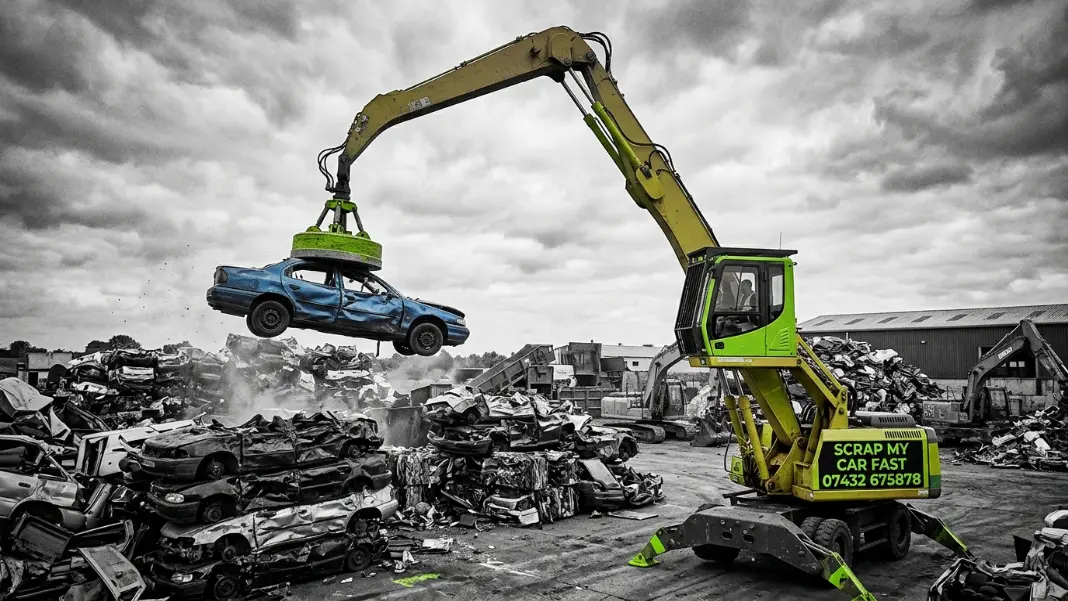
Most people hand over their keys, watch the car get loaded onto a truck, and never give it another thought. Which is completely fair. But if you have ever been curious about what actually happens next, the process is genuinely interesting and the environmental impact of modern car recycling is significant.
More practically, understanding what happens after collection helps you make sure the paperwork side is handled correctly and that you receive everything you are entitled to, including your Certificate of Destruction and any road tax refund.
Here is the full journey, from the moment your car leaves your Manchester driveway to the point where the metal becomes something new.
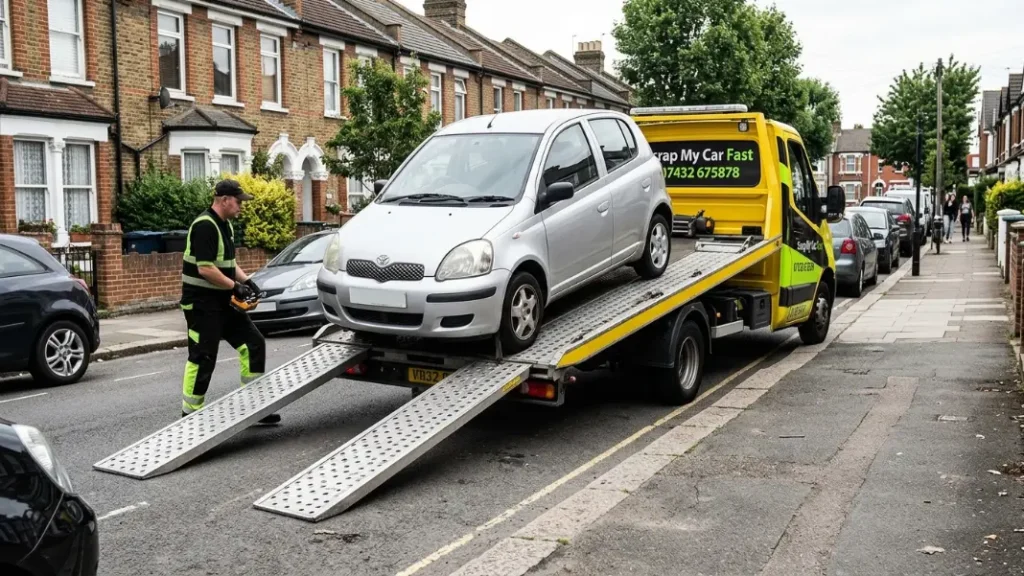
Step 1: Collection and Transport to the ATF
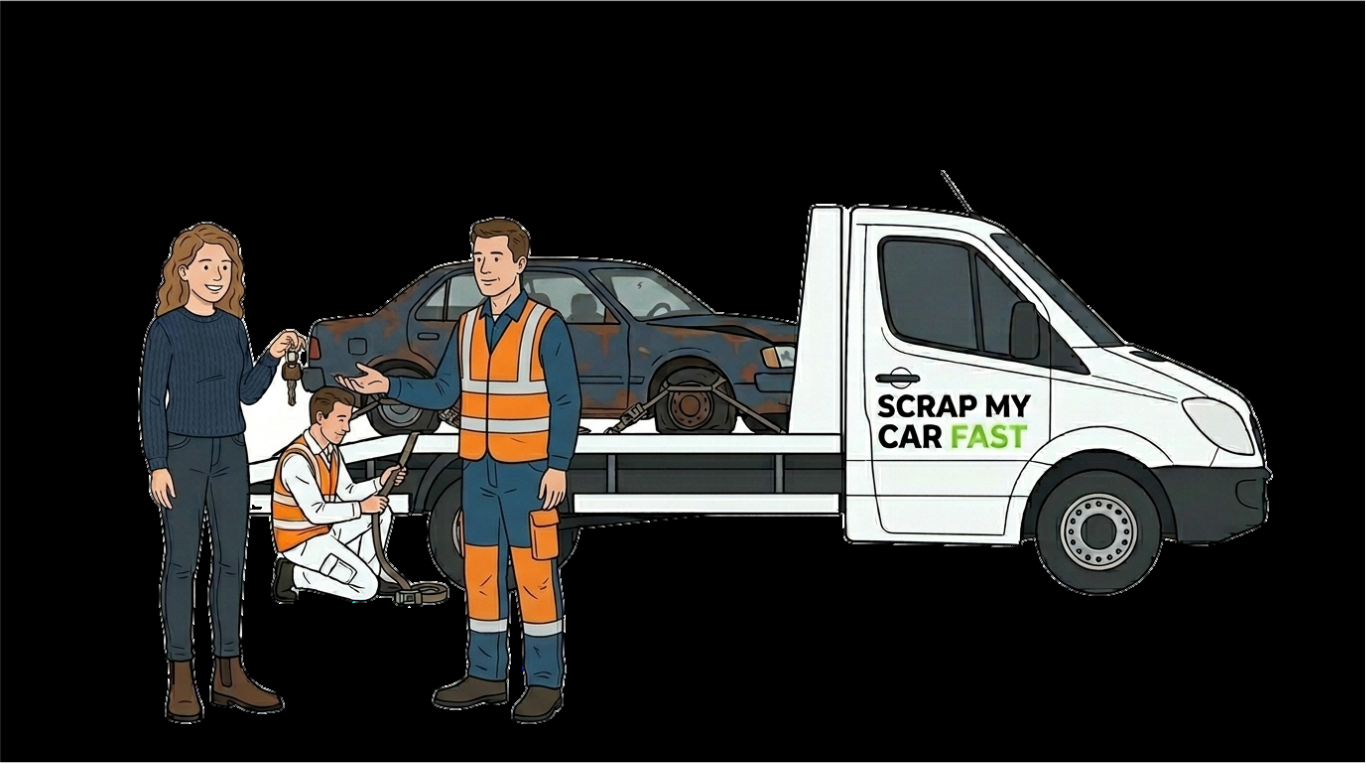
Once you book collection and the driver arrives, the car is loaded and transported to an Authorised Treatment Facility. ATFs are the only legal destination for end-of-life vehicles in the UK under the End of Life Vehicles Regulations 2003.
ATFs are licensed by the Environment Agency. Operating as a scrap metal dealer without ATF status is illegal, and using an unlicensed buyer means you will not receive a Certificate of Destruction, which leaves you legally responsible for the vehicle even after it has left your possession.
Scrap My Car Fast works exclusively with licensed ATFs. You can check any ATF’s licence through the Environment Agency’s public register if you want to verify legitimacy before handing over your car.
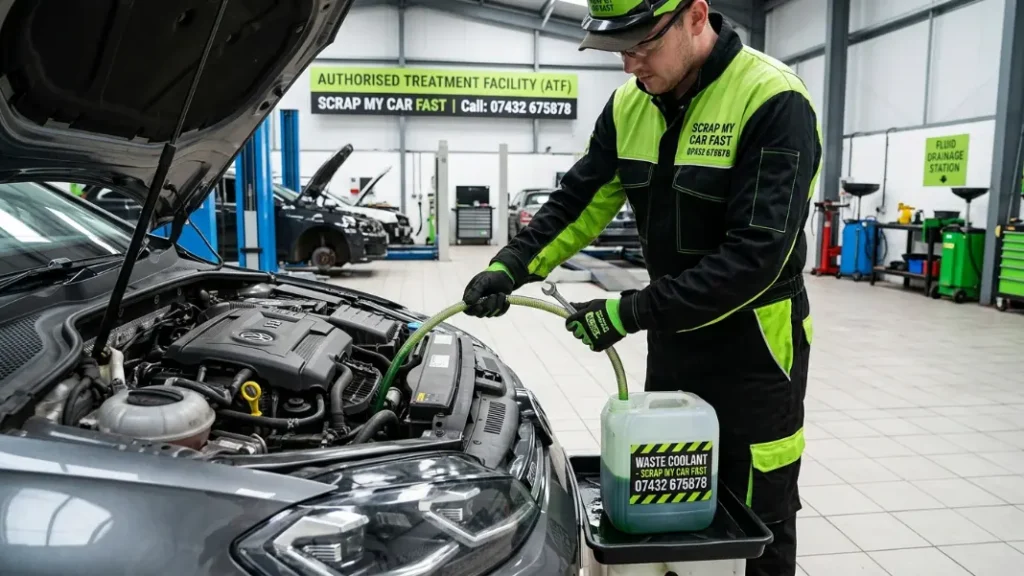
Step 2: Depollution
The first thing that happens when your car arrives at the ATF is depollution. This is a legal requirement under UK environmental law and involves the careful removal and safe disposal of all hazardous fluids and materials.
This includes:
Engine oil: Drained and processed. Used engine oil is either re-refined into lubricant or used as fuel in industrial processes.
Coolant (antifreeze): Drained and disposed of as hazardous waste or recycled where the process allows.
Brake fluid: Removed and disposed of safely. Brake fluid is hygroscopic and degrades, but it is also toxic and must be handled correctly.
Fuel: Any remaining petrol or diesel is removed and stored. Usable quantities may be reused.
Refrigerant gas (from air conditioning): This is one of the most carefully regulated parts of depollution. The refrigerant gases used in car air conditioning systems are powerful greenhouse gases. Certified equipment is used to capture them without release into the atmosphere.
Airbag inflators: These contain explosive charges. They must be deployed or removed under controlled conditions before the car is crushed.
Tyres: Removed and sent for tyre recycling. Old car tyres are shredded and turned into rubber crumb used in sports surfaces, playground flooring, and road surfacing.
Battery: Removed and sent for battery recycling. Standard lead-acid batteries are almost entirely recyclable and the materials are reclaimed for new battery production.
This process is what makes modern car scrapping environmentally responsible compared to older practices. Nothing is simply dumped.
Step 3: Parts Removal and Resale
After depollution, the car is assessed for parts that can be removed and resold. Not every ATF does this, but many operate alongside used parts dealers or have their own resale channels.
Parts with the most recovery value include:
Catalytic converters: These contain platinum, palladium, and rhodium, all precious metals with significant market value. Catalytic converters from high-mileage cars still carry meaningful metal content.
Engines and gearboxes: Running or repairable units are tested and sold on to garages, independent mechanics, or direct to consumers. A low-mileage engine from a written-off car can be worth far more than its scrap weight.
Alternators and starters: Reconditioned and resold through the automotive parts trade.
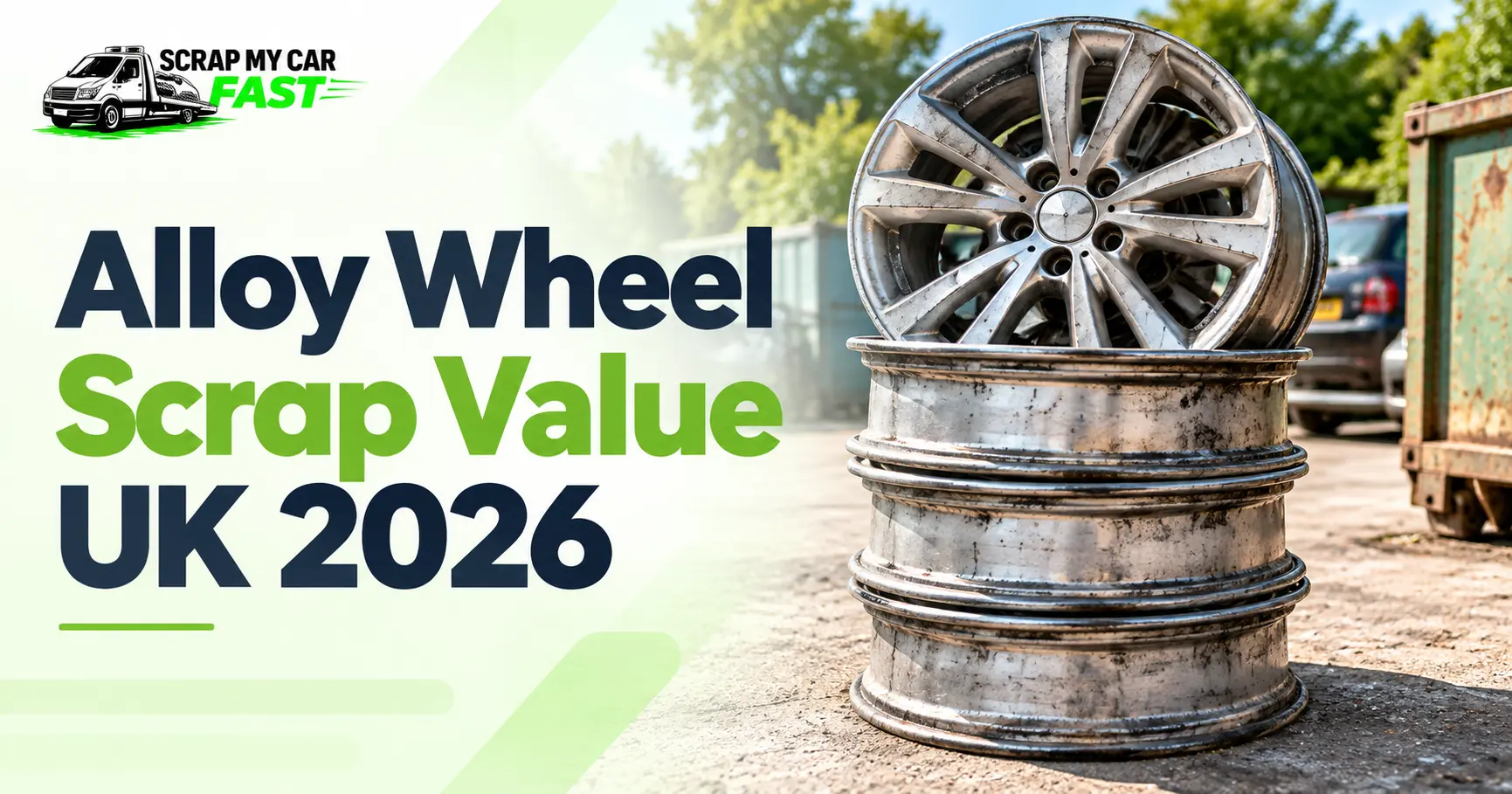
Alloy wheels: Undamaged sets are cleaned and sold. Cracked or buckled wheels go to aluminium recycling.
Body panels: Undamaged panels from accident write-offs or single-impact cars are valuable to owners repairing the same model.
Infotainment and electronics: Newer vehicles with touchscreen systems, reversing cameras, and integrated nav units often have electronics that are saleable to independent repairers.
The parts resale market is a significant part of the circular economy for vehicles. It extends the useful life of components that would otherwise just go to metal weight.
Step 4: Crushing and Shredding
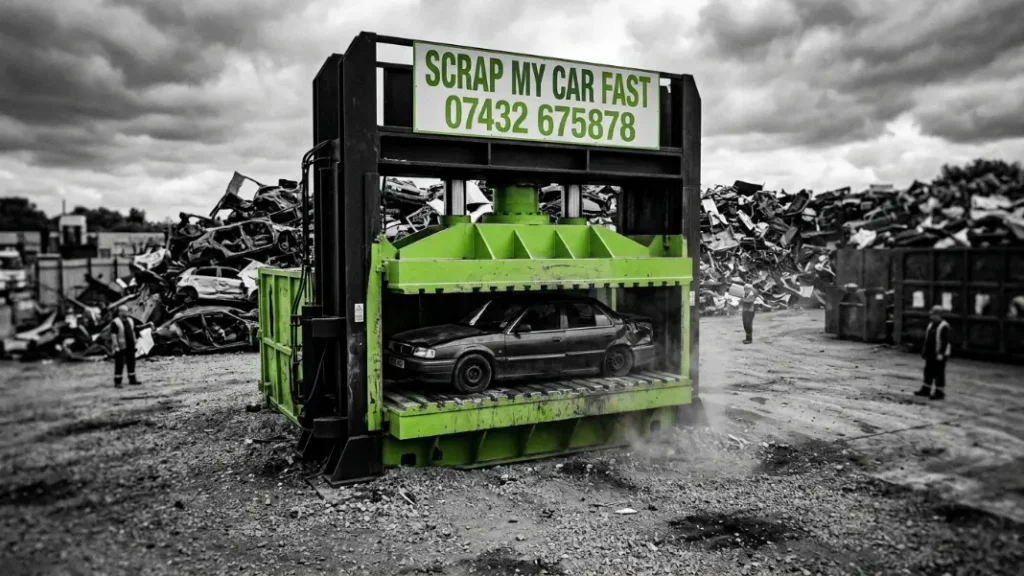
Once depollution is done and any saleable parts have been removed, the bodyshell goes to the crusher. Modern ATFs use a range of equipment depending on throughput, from hydraulic baling presses (which flatten the car into a compact block) to shredders that reduce the whole car into fist-sized fragments in seconds.
The crushed or shredded material is then processed through a separation system to sort ferrous metals (steel and iron), non-ferrous metals (aluminium, copper, zinc), and non-metallic residue.
Ferrous metal: The steel from your car is sent to steel mills. Steel is one of the most recycled materials on the planet, and recycled steel requires significantly less energy to produce than virgin steel from ore. Roughly 70% of the average car’s weight is steel.
Aluminium: Recovered separately and sent for aluminium smelting. Engine blocks, transmission casings, and alloy wheels are predominantly aluminium. Recycled aluminium takes around 5% of the energy needed to produce primary aluminium.
Copper: Wiring harnesses and electrical components are rich in copper. This is recovered and sold to copper refiners.
Non-metallic residue (ASR): The remaining material after metal extraction is called automotive shredder residue. It includes plastic, foam, glass, rubber, and fabric. Modern recovery systems are improving the recycling rate for ASR, though some still goes to landfill or energy recovery. Research and regulation in this area continues to evolve.
Step 5: The Certificate of Destruction and DVLA Notification
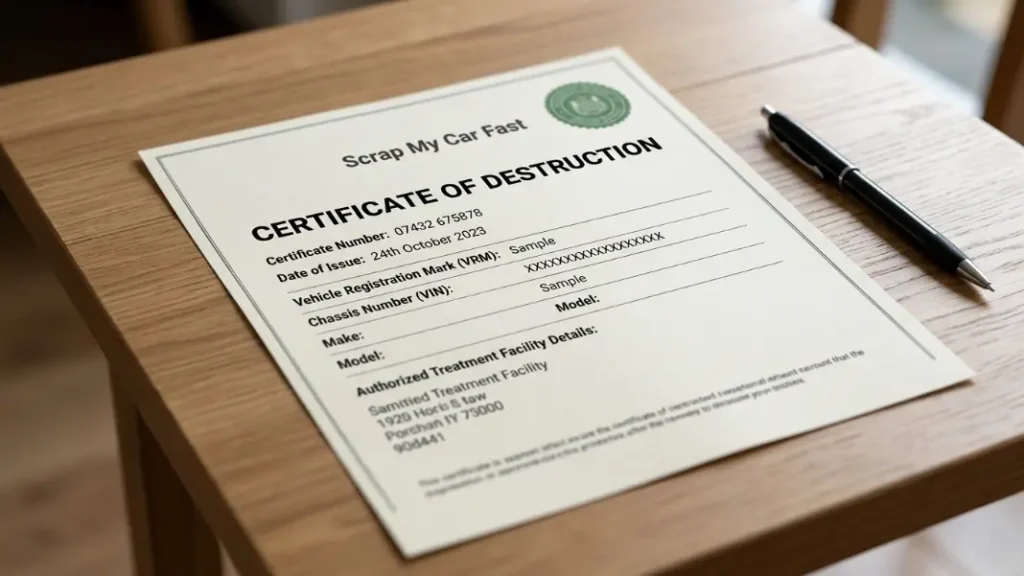
While the physical process is happening at the ATF, the paperwork side runs in parallel. The ATF is legally required to issue a Certificate of Destruction (CoD) and notify the DVLA electronically.
The CoD is your proof that the vehicle was legally scrapped. It removes your legal responsibility for the vehicle from the date of destruction. If you receive a road tax renewal, a parking fine, or any other correspondence about the vehicle after this date, the CoD is your defence.
You should receive the CoD by post or email within a few days of collection. If it has not arrived within two weeks, contact the ATF directly.
The DVLA updates their records to show the vehicle as scrapped. Any remaining full months of road tax are automatically refunded to the registered keeper. You do not need to apply for this refund separately.
How to Check If Your Car Has Been Scrapped
If you want to confirm the scrapping has been registered with the DVLA, you can check online using the DVLA vehicle enquiry service at gov.uk. Enter the registration number and the system will confirm the current status of the vehicle. A scrapped vehicle will show as no longer registered for road use.
This check is also useful if you are buying a used car and want to verify it has not had a previous scrapping record, or if you are concerned a car you previously owned has not been properly processed.
How Many Cars Are Scrapped Each Year in the UK?
Around 1.8 to 2 million cars are scrapped in the UK each year. This makes the automotive recycling sector one of the largest material recovery industries in the country.
Globally, the numbers are far higher. Hundreds of millions of vehicles reach end-of-life each year, and the recycling infrastructure varies enormously by country. The UK’s ATF system, underpinned by the End of Life Vehicles Regulations, is one of the more robust frameworks internationally.
What Can You Do With a Number Plate From a Scrapped Car?
Personalised number plates can be retained before a car is scrapped. You need to apply to the DVLA to have the plate transferred to another vehicle or placed on a certificate of entitlement (also called putting it on retention). This must be done before the car is scrapped, not after, because once the vehicle is recorded as destroyed, the registration is cancelled.
Standard number plates (non-personalised) have no special value and are destroyed with the car. If you have a cherished plate on your scrap car, act on this before booking collection.
Why Scrapping Through a Licensed ATF Matters
Fly-tipping, unlicensed dismantlers, and illegal scrap operations are still a problem in parts of Greater Manchester as they are across the UK. Using an unlicensed buyer not only denies you a Certificate of Destruction, it can leave your personal data exposed (cars often contain paperwork with names and addresses), and the vehicle may be broken down in ways that cause pollution or create safety hazards.
A licensed ATF is accountable, regulated, and audited. When you use one, you can be confident the environmental and legal obligations are being met.
To get your car collected by a licensed operation in Manchester, the scrap my car near me page covers all collection areas, and the car collection page has more on how the service works. If you want to get a price first, the instant quote tool takes two minutes.
Frequently Asked Question
Q: What happens to a car when it gets scrapped?
A: After collection, the car goes to a licensed ATF where it is depolluted (all fluids and hazardous materials removed), assessed for salvageable parts, then crushed or shredded. The metal is sorted and sent to steel mills and metal processors. A Certificate of Destruction is issued and the DVLA is notified.
Q: How do I check if my car has been scrapped?
A: Use the DVLA’s free vehicle enquiry service at gov.uk. Enter the registration number to see the vehicle’s current status. A scrapped vehicle will no longer show as registered for road use.
Q: What is a Certificate of Destruction?
A: A Certificate of Destruction is an official document issued by the ATF confirming that your vehicle has been legally scrapped. It removes your liability for the vehicle. All licensed ATFs are legally required to issue one.
Q: Can you keep a number plate when scrapping a car?
A: Yes, but you must transfer or retain the plate before the car is scrapped. Apply to the DVLA to transfer it to another vehicle or put it on retention before arranging collection.
Q: How long does it take to get a Certificate of Destruction?
A: Most ATFs issue the Certificate of Destruction within a few days of collection. If you have not received it within two weeks, contact the ATF directly.
Q: What percentage of a scrapped car is recycled?
A: Approximately 80% of a car by weight is recycled, mostly as steel and other metals. The remaining 20%, known as automotive shredder residue, includes plastics, foam, and rubber, and recovery rates for this material are improving as technology develops.