Vans get scrapped for all sorts of reasons. A failed MOT with a repair bill that makes no financial sense. An old workhorse that has done its last mile and is sitting on the drive. A lease return that nobody wants to buy. An accident write-off where the insurance payout has already cleared and the shell is just taking up space.
Whatever brought you here, the process of scrapping a van in Manchester is more straightforward than most people expect. But it is not identical to scrapping a car, and if you go in without understanding how van pricing works, you could end up picking the wrong company or leaving money on the table.
This guide covers everything: how van scrap value is calculated, what you can realistically expect to get for different sizes of van in 2026, what pushes the price up or down, and exactly what happens from the moment you request a quote to the moment payment lands in your account.
Can Any Van Be Scrapped?
Yes. There is no condition that makes a van unscrappable. Vans that are regularly collected for scrap include:
- Vans with failed MOTs and prohibitive repair costs
- Non-running vans that will not start or cannot be driven
- Accident-damaged and insurance write-off vans (Cat S, Cat N, Cat A, Cat B)
- Vans with blown engines, seized gearboxes or electrical faults
- High-mileage vans that have simply reached the end of their working life
- Old vans sitting unused, with flat tyres, dead batteries or corroded bodywork
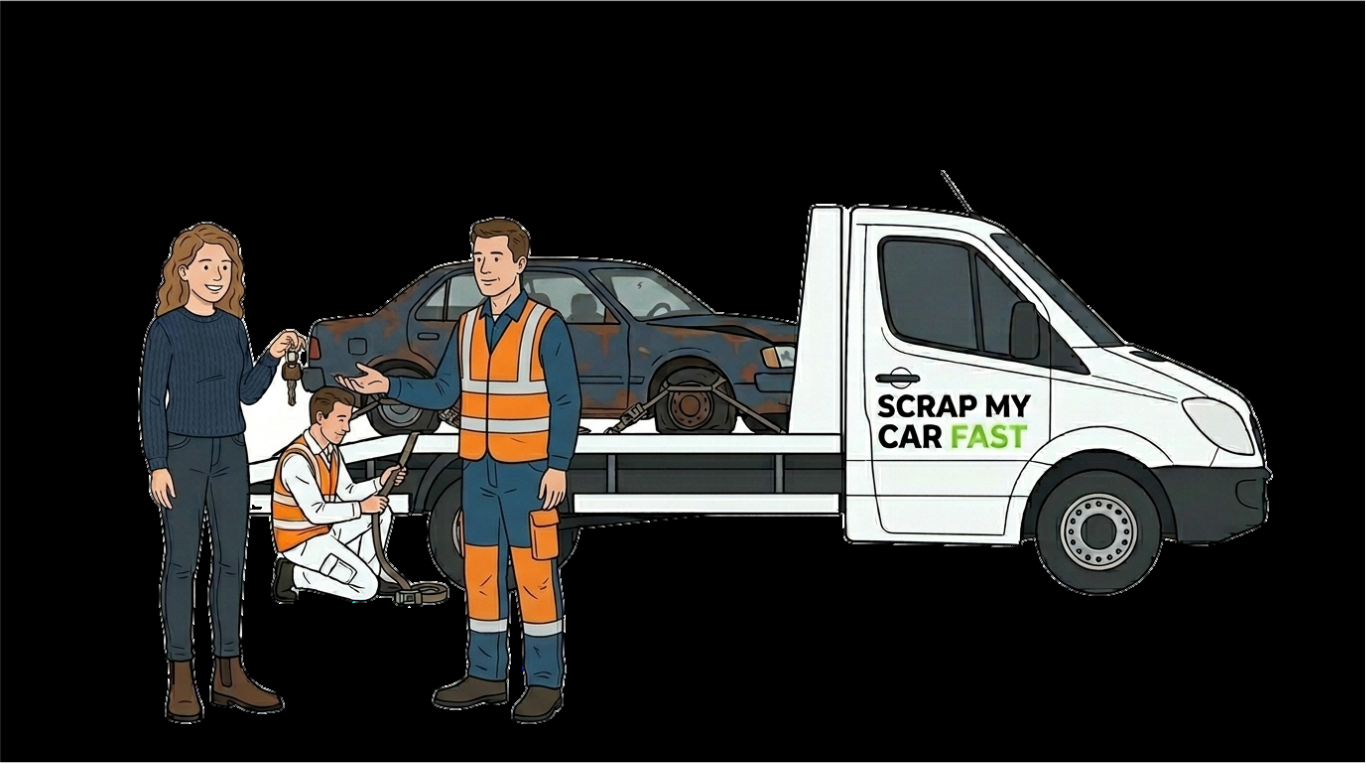
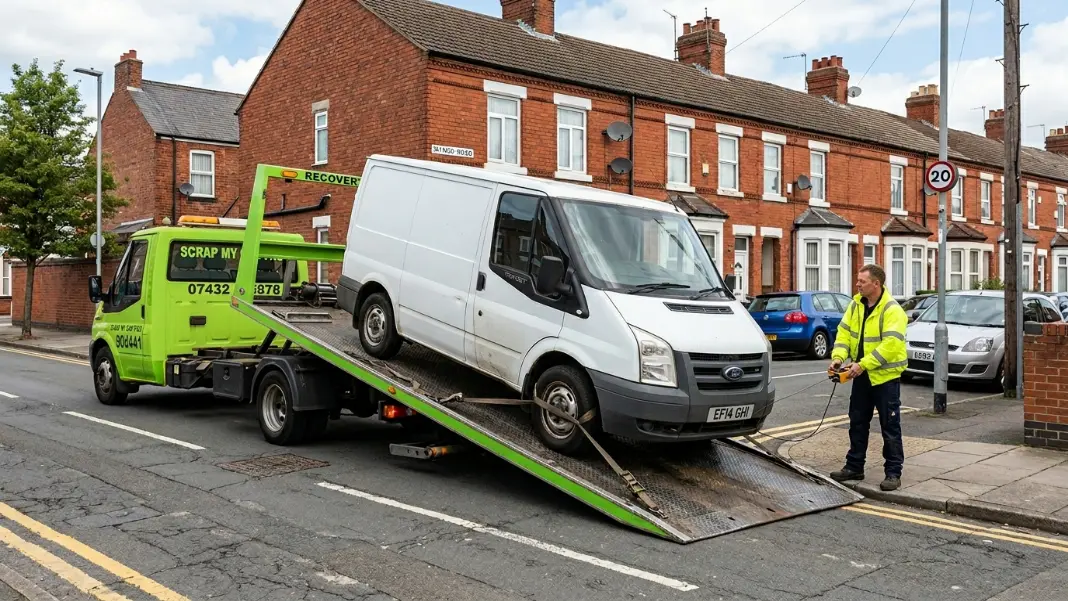
If your van falls into any of these categories, it can be collected and paid for. A non-running van is collected using a specialist flatbed recovery truck with a hydraulic tilt bed and electric winch, so the van does not need to move under its own power.
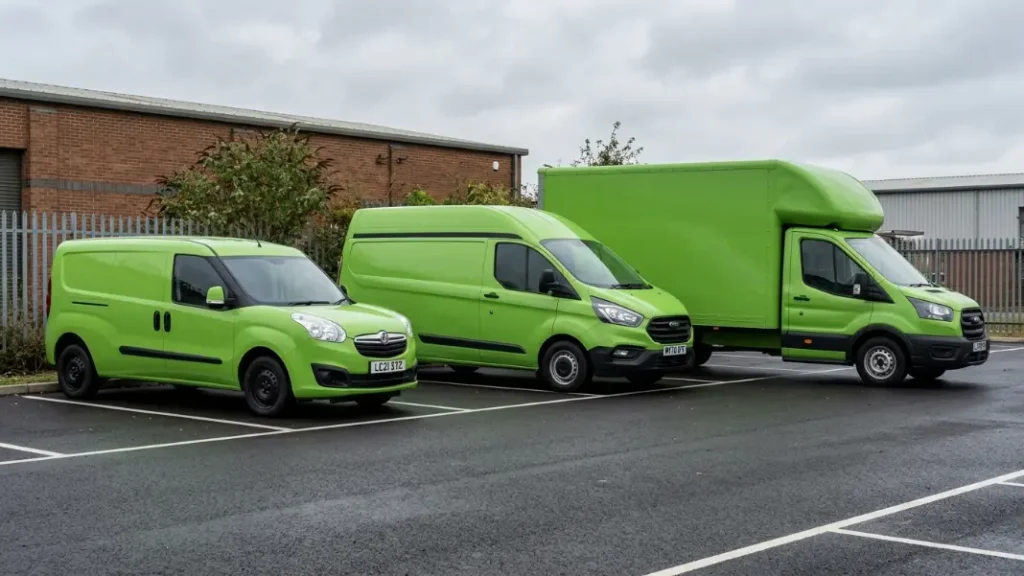
The types of van covered include small panel vans (Vauxhall Corsavan, Ford Fiesta Van, Citroën Nemo), medium panel vans (Ford Transit Connect, Renault Trafic, Vauxhall Vivaro), large panel vans (Ford Transit, Mercedes Sprinter, Volkswagen Crafter, Fiat Ducato) and Luton or box vans. All sizes, all makes, all conditions.
How Is Van Scrap Value Calculated?
This is where van scrapping differs from what most people expect. With a used car sale, condition, age, mileage and service history all play a significant role in what you receive. With scrap vehicles, the price is driven almost entirely by two things: the weight of the vehicle and the current scrap metal rate.
Vans are heavier than cars. That is what makes scrapping a van often more lucrative than scrapping a similarly aged car. More metal means more value. A large Transit or Sprinter contains significantly more steel than a family hatchback, and the scrap price reflects that directly.
The scrap metal rate changes daily based on commodity markets, so the price quoted on a Monday is not necessarily what you would get on Friday. Reputable scrappers fix your price at the point of quote acceptance, not on the day of collection. This protects you from any downward movement in the market between booking and collection day.
For a detailed breakdown of how scrap pricing works and why online quotes can sometimes differ from what you actually receive, the guide to how scrap car quotes work is worth reading before you request a price for your van.
Van Scrap Prices in Manchester in 2026
The figures below are typical ranges based on current scrap metal rates across Greater Manchester. These are realistic collection-day prices, not best-case estimates.
Small panel vans (Corsavan, Combo, Fiesta Van, Berlingo, Nemo) Typical weight: 800 to 1,200 kg Price range: £90 to £180
Medium panel vans (Transit Connect, Vivaro, Trafic, Dispatch, Expert) Typical weight: 1,200 to 1,800 kg Price range: £150 to £280
Large panel vans (Transit, Sprinter, Crafter, Ducato, Movano) Typical weight: 1,800 to 2,800 kg Price range: £250 to £450
Luton vans and box vans Typical weight: 2,500 to 3,500 kg Price range: £320 to £550
These are scrap values. If your van is in driveable condition and under 10 years old, a private sale or trade buyer will almost always offer more. But if it is a non-runner, has major faults, or the cost of getting it roadworthy exceeds what any buyer would pay, scrap is the fastest and most practical route.
For an instant figure based on your specific van’s registration, use the scrap car calculator or go straight to the instant quote page. Enter the reg and postcode and you get a live price in seconds.
What Affects Van Scrap Value
Weight is the main driver, but several other factors can push the price up or down.
Catalytic converter
Diesel vans fitted with catalytic converters carry some additional value in the converter itself, which contains platinum group metals. Petrol vans also have cats, and the precious metal content varies by age and model. Older, high-mileage converters are worth less because the precious metals degrade over time. The catalytic converter value is typically factored into any instant quote you receive based on the registration lookup.
Alloy wheels
Standard steel wheels have scrap value as steel. Alloy wheels are worth slightly more as a separate material. The difference is not enormous on a commercial van, but it exists and is usually calculated automatically.
Missing or stripped parts
If your van has already had components removed, such as the engine, gearbox, doors or body panels, the scrap value falls accordingly because there is less metal. A complete van is always worth more than a partial shell. If you are thinking about selling parts before scrapping, read what affects scrap car value first to understand whether the effort is genuinely worthwhile.
Fuel type
Diesel vans dominate the commercial market in the UK and scrapping diesel vans is entirely standard. Electric and hybrid vans are increasingly common and can be scrapped, but high-voltage battery disposal adds a layer of complexity. If you have an electric or hybrid van, mention it when requesting a quote as the process differs slightly from a standard diesel collection.
Body condition
Body condition has very little impact on scrap value because the metal is melted down regardless of what state the bodywork is in. A van covered in rust, dents and damage is worth essentially the same as a clean one of identical weight. This is one area where scrapping is significantly fairer than a private sale, where cosmetic condition dramatically affects what buyers will pay.
The Scrapping Process for Vans
The process follows the same three steps as scrapping a car.
Step 1: Get an instant quote
Enter your van’s registration number and postcode at scrapmycarfast.com/instant-quote. The system looks up the vehicle’s kerb weight and applies the current scrap metal rate to calculate a price. The quote is instant and there is no obligation to accept it.
Step 2: Book free collection
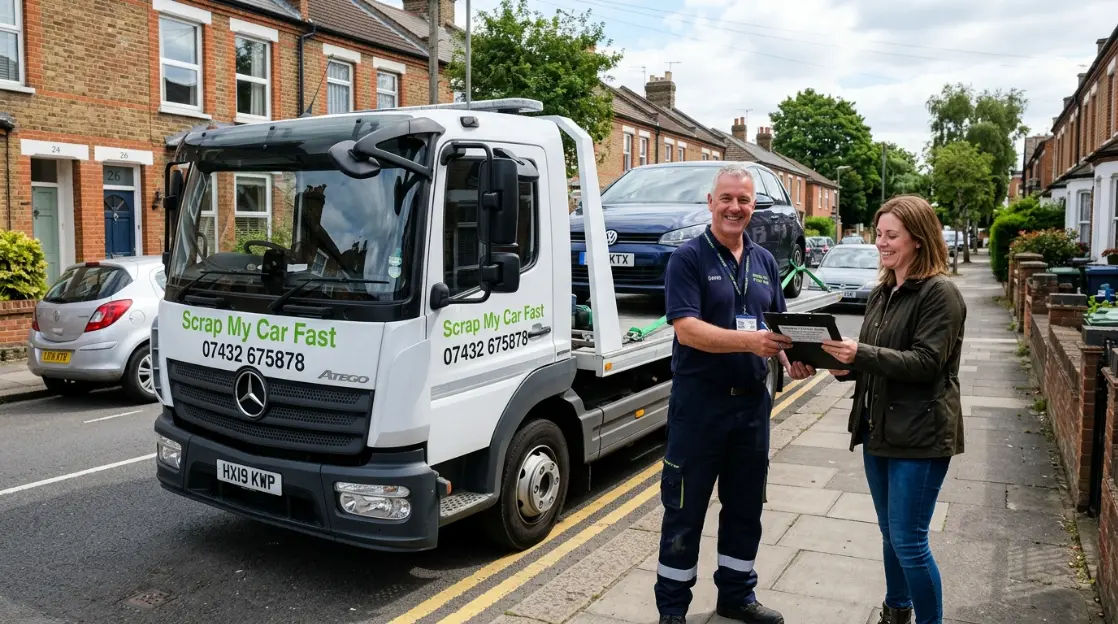
If the quote works for you, accept it and choose a collection slot. Collection is free from anywhere across Greater Manchester, and same-day or next-day slots are available across most boroughs. The driver comes directly to your door. You do not need to arrange transport or get the van to a yard.
Step 3: Get paid same day
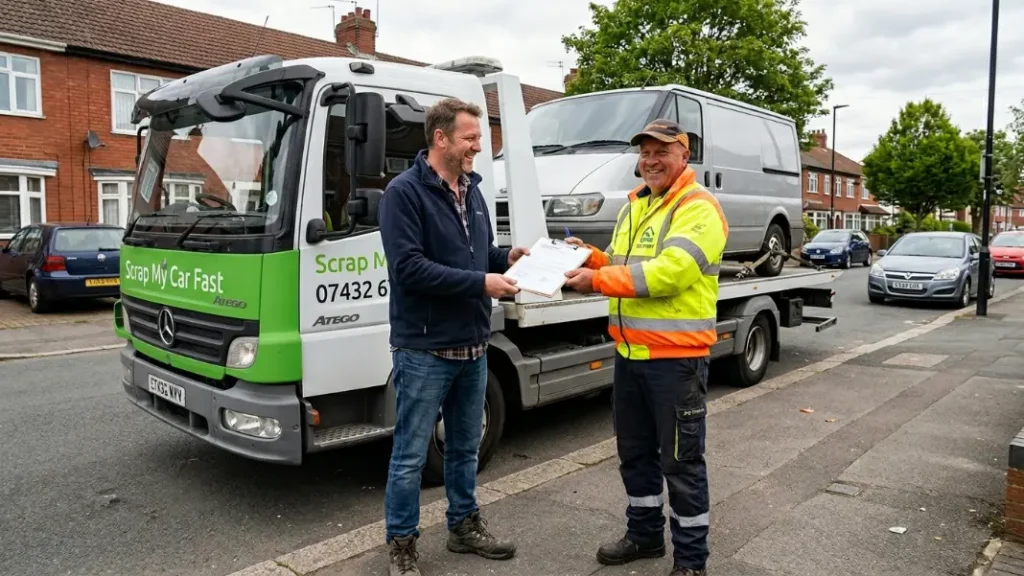
On collection day, the driver arrives at the agreed time, verifies your ID, completes the paperwork and issues your Certificate of Destruction. Payment goes to your bank account by bank transfer on the same day. The amount paid is exactly the amount quoted. No deductions, no fuel surcharges, no last-minute revisions at the kerb.
The full process is explained in more detail on the how it works page.
Non-Running and Damaged Vans
This is one of the most common situations for van owners. The van stopped running, repair quotes came back too high, and now it is sitting on a driveway or yard taking up space with no obvious solution.
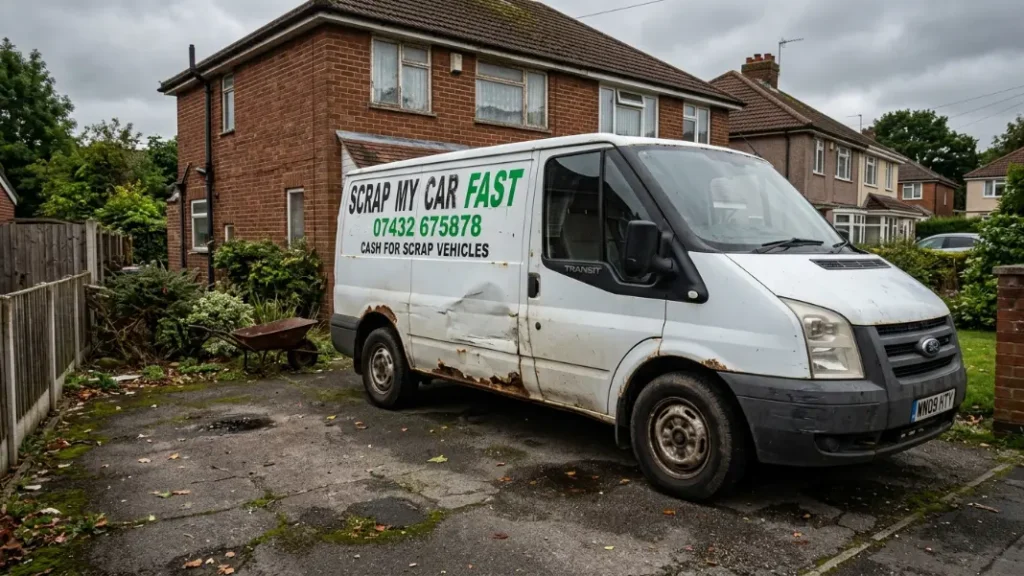
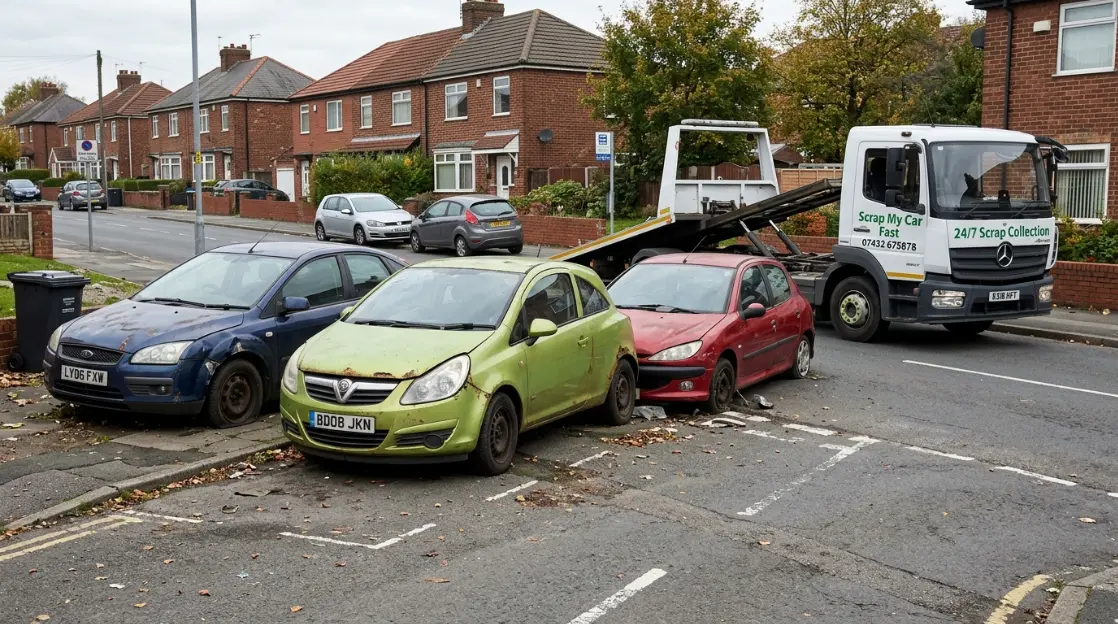
Non-running vans present no problem for collection. Specialist flatbed trucks with hydraulic tilt beds and electric winches can load a van that has flat tyres, seized brakes, no battery power or no engine at all. The winch pulls the van onto the bed without the vehicle needing to start or roll freely. It is the same equipment used for car breakdowns and recovery, scaled for commercial vehicles.
Damaged vans are equally straightforward. Insurance write-offs across all categories are accepted. Cat S vans (structurally damaged but potentially repairable), Cat N vans (non-structural damage), Cat A (crush only) and Cat B (body shell crush) are all collected. If your van has been written off by an insurer, you may have already received your settlement payout. The shell sitting on your property can be collected and paid for the same way as any other end-of-life vehicle. The damaged car and van scrapping service covers this scenario in full.
What to Do Before Your Van Is Collected
A few practical steps before the driver arrives will make collection day run without issues.
Remove all your belongings. Vans used for work accumulate tools, equipment, paperwork, chargers, spare clothing and other personal items over years of use. Check every storage compartment, the cab, the load area floor and any overhead storage. Once the van is collected, nothing can be recovered from it.
Remove any racking or shelving you want to keep. If the van has custom racking installed, you can strip it before collection or leave it in place. If you leave it, it goes with the van. Racking has no impact on the scrap price either way.
Do not worry about the fuel. There is no need to drain the tank, and no benefit to topping it up before collection. The ATF facility drains all fluids as part of the depollution process. If the van happens to have a nearly full tank and you have another vehicle to transfer it to, that is worth doing, but it is not a requirement.
Have your photo ID ready. Under the Scrap Metal Dealers Act 2013, all scrap metal dealers are legally required to verify the identity of the person surrendering a vehicle before any payment can be made. A valid driving licence or passport is sufficient. This applies to vans exactly as it does to cars.
Have the V5C logbook if you have it. The logbook is helpful but not essential in most cases. If you have it, fill in Section 9 and hand it to the driver on collection day, or post it to the DVLA directly. If you have lost it, the process can still proceed through an alternative DVLA notification route.
Paperwork: DVLA Notification and Certificate of Destruction
When your van is collected, two things happen with the paperwork.
You receive a Certificate of Destruction. This is a legal document issued by an Authorised Treatment Facility confirming that your vehicle has been formally accepted for recycling. It removes the van from your name with the DVLA and protects you from any future liability, including road tax charges, parking fines or any incidents involving the van after it leaves your possession.
The DVLA is also notified electronically. You can additionally notify the DVLA yourself using Section 9 of the V5C or through the gov.uk online service. If any road tax (Vehicle Excise Duty) remains on the van, the DVLA will automatically issue a refund for any complete remaining months.
Vans used for business purposes should also be removed from any fleet insurance policies and company vehicle records at the point of scrapping.
Scrapping a Van Across Greater Manchester
The collection service covers every postcode across all ten Greater Manchester boroughs. That includes Manchester, Salford, Stockport, Bolton, Wigan, Oldham, Rochdale, Bury, Tameside and Trafford.
Collection is free regardless of where you are within Greater Manchester. Whether you are in the city centre, a residential suburb or a commercial estate with restricted access, the driver comes to you. There is no minimum distance fee and no additional charge for awkward addresses or narrow roads.
Should You Sell a Van Privately or Scrap It?
For vans in reasonable running condition under around 10 years old, private sale will almost always return more than scrapping. Vans hold their value well in the used market because demand from trades and small businesses is consistent and strong.
However, for vans that are non-running, heavily damaged, very high mileage or carrying significant mechanical problems, the gap between private sale and scrap value narrows sharply. A non-running Sprinter with 300,000 miles and a blown engine has very limited appeal to any private buyer. A scrapper buys it on weight alone, within 24 hours, with no negotiation and no need to fix it first.
If your van can be driven and presented well, explore the private market first. If it cannot be driven, has major faults that would require disclosure to any buyer, or has been sitting unused and deteriorating, scrapping is the faster, more reliable and less stressful option. Start with an instant quote to know exactly where you stand before making any decisions.
Frequently Asked Questions
How much is my van worth for scrap in Manchester? Van scrap values in Manchester in 2026 range from around £90 for a small panel van up to around £550 for a large Luton or box van. The exact price depends on your van’s kerb weight and the current daily scrap metal rate. Enter your registration at scrapmycarfast.com/instant-quote for a live price based on your specific vehicle.
Do you collect non-running vans in Greater Manchester? Yes. Non-running vans are collected using specialist flatbed recovery trucks with hydraulic tilt beds and electric winches. The van does not need to start, roll or be in any driveable condition. Collection is free across all ten Greater Manchester boroughs.
Is van collection free in Manchester? Yes. Collection is completely free from any postcode across Greater Manchester. There are no fuel charges, no distance surcharges and no deductions from the quoted price on collection day. The price agreed at quote stage is the exact amount paid into your bank account.
Do I need a V5C logbook to scrap a van? A V5C logbook is helpful but not essential in most cases. If you have lost the logbook, collection can still proceed using an alternative DVLA notification method. You will need valid photo ID and to confirm you are the legal owner or registered keeper of the van.
How long does scrapping a van take in Manchester? From accepting a quote to having payment in your bank account, the process typically takes less than 24 hours. Same-day collection is available across most of Greater Manchester. The actual collection on site takes around 20 to 30 minutes.
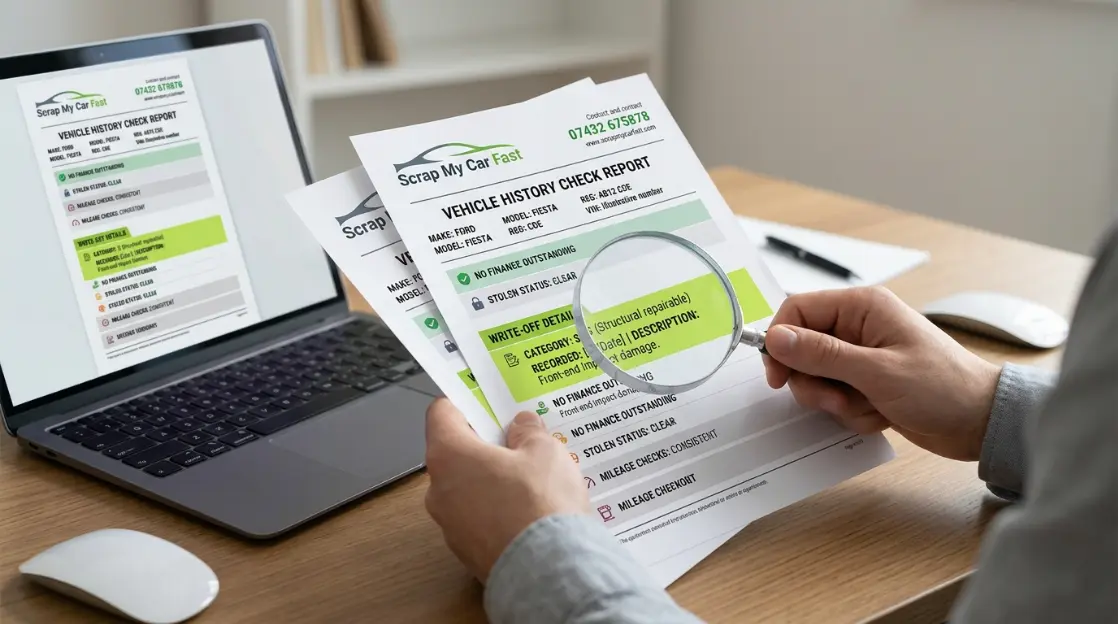
Can I scrap a van with outstanding finance? No. If a van has outstanding hire purchase or PCP finance, the finance company is the legal owner, not you. A vehicle with active finance cannot be legally scrapped without the finance company’s written permission. Contact your finance provider first to settle or voluntarily terminate the agreement before arranging collection.
What paperwork do I receive when I scrap a van? You receive a Certificate of Destruction from the Authorised Treatment Facility. This legally removes the van from your name with the DVLA. You should also notify the DVLA using Section 9 of the V5C or through the gov.uk online service so you can claim back any remaining road tax.
Do you scrap electric vans? Yes, though the process for electric and hybrid vans differs slightly due to the high-voltage battery. Mention that your van is electric or hybrid when requesting a quote so the correct collection equipment and handling procedures can be arranged.