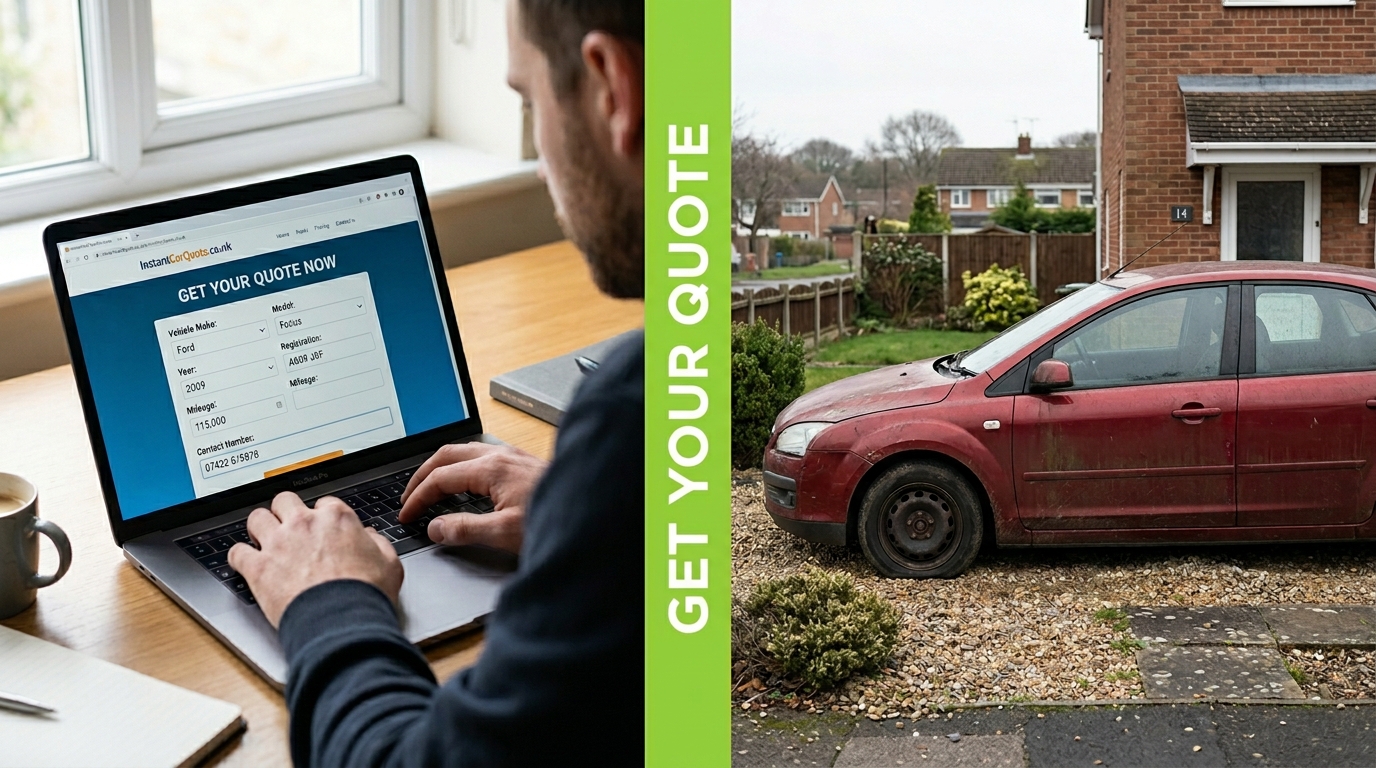
A scrap car quote is generated automatically using your vehicle registration number, your postcode and the current scrap metal rate. An honest instant quote is a firm price calculated at the moment you request it. It should not change on collection day unless your car is materially different from what you described when you booked.
Where Your Quote Comes From
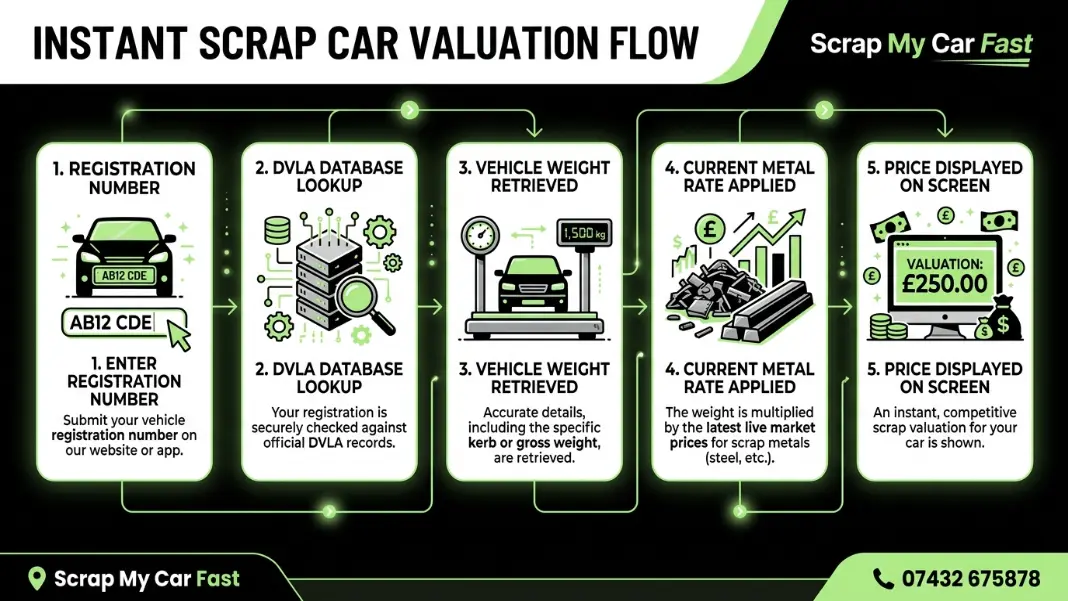
When you enter your registration number into a scrap car quote tool, the system does three things in quick succession. First, it looks up your vehicle details from the DVLA database: make, model, engine size, fuel type and approximate weight. Second, it checks the current scrap metal price, typically expressed as a price per tonne for steel scrap. Third, it multiplies the vehicle’s estimated weight by that price and applies any adjustments for catalytic converter value or collection distance.
The whole process takes about two seconds. The price that comes out is what you should receive on collection day, provided the vehicle matches what the system looked up.
There is no human involved at that stage. Nobody has looked at your car. Nobody knows whether it has been in a collision, whether the catalytic converter is still there, or whether the seats have been stripped out. The quote is a formula applied to a registration plate. This is not inherently dishonest. The problem comes when companies present this figure as a firm offer and then change it when they arrive at your door.
What an Instant Quote Actually Means
The word instant is accurate. The quote is generated in real time, not reviewed by a human before it is shown to you. This is useful because you get a price immediately without a salesperson applying pressure.
What instant does not always mean is fixed. Some companies generate an indicative price online but then have a human review it before confirming the booking. In those cases, what you see on screen is a starting point, not a commitment. A guide price that gets revised later is a very different thing from a firm quote.
A firm quote is one where the company is committed to the stated price provided the vehicle matches the description. A guide price is an estimate that can be adjusted. Always ask before booking: is this a fixed price or a guide price?
How Scrap Metal Prices Work
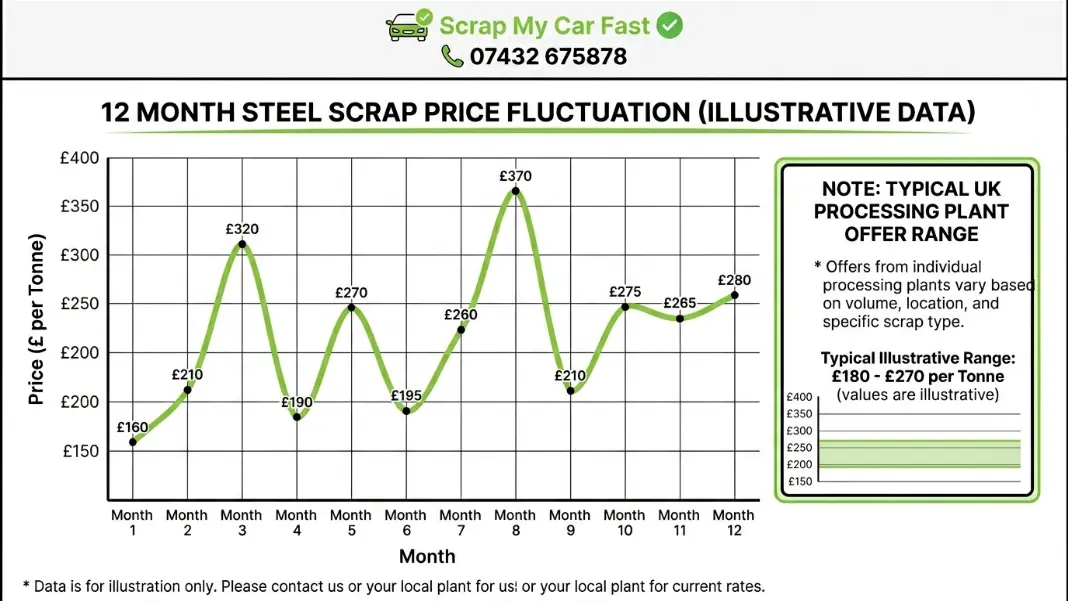
Scrap car prices move because scrap metal prices move. Steel, the primary material in most vehicles, is traded on commodity markets including the London Metal Exchange. The price for steel scrap at UK processing plants fluctuates weekly, sometimes by five to ten percent in either direction, depending on global demand, energy costs and production levels at steel mills.
In 2024 and into 2025, steel scrap prices in the UK have ranged from roughly £150 to £230 per tonne depending on grade and timing. A typical small hatchback weighing around 1,100 kilograms generates roughly 900 to 950 kilograms of usable scrap steel after the fluids and non-metallic components are removed. At £180 per tonne, that is around £162 to £171 in base scrap metal value before any catalytic converter premium.
This means the same car quoted on two different days can produce a different price, not because the company changed its mind, but because the underlying metal price moved. Most reputable scrap companies hold the quoted price for 24 to 48 hours to give you time to decide. Beyond that, they may need to requote.
Fixed Quote vs Guide Price: The Key Difference
| Quote Type | What It Means | Can It Change at Collection? | Watch Out For |
|---|---|---|---|
| Fixed Quote | A committed price, subject to car matching description | Only if car is materially different from described | The most honest form of pricing. Confirm it is truly fixed. |
| Guide Price | An estimate only, subject to human review | Yes, often significantly lower | Companies that use guide prices routinely reduce them on the day |
| Comparison Site Price | Highest bid from multiple dealers aggregated | Almost always: each dealer sets their own real price | The highest number on a comparison site is rarely what you receive |
| Auction-Style Bid | Dealers bid on your car, highest shown | Yes: bids can be retracted when the actual buyer calls | Very high bids that collapse on contact with the buyer |
In our experience, the most common complaint in the scrap car industry is being offered one price online and then receiving less when the driver arrives. This almost always happens with guide prices or auction-style bids, not with genuine fixed-price systems. Our quotes are fixed at the moment you accept them. We do not call to renegotiate.
Why Some Companies Reduce the Price on Collection Day
Price reductions on the day of collection are the most frustrating experience in the scrap car process. They are also common with certain operators. Understanding why it happens helps you avoid it.
The Condition Report Reduction
When a driver arrives and inspects the car, some companies train drivers to identify reasons to reclassify the vehicle’s condition and offer a lower price. Sometimes a price adjustment is genuinely fair: a car described as running that turns out to be seized, or significant underbody corrosion not disclosed when booking, represents a real change in value. A legitimate adjustment in these cases is understandable.
But some companies use the condition report as a routine way to reduce quotes. The driver arrives, finds the smallest reason to adjust the condition rating and offers a lower price, knowing that many people will accept rather than refuse the collection and start again.
The Missing Component Reduction
Catalytic converters add value to scrap cars. If your car’s catalytic converter has been removed, the quote should reflect this from the outset. Some companies include full catalytic converter value in their initial quote and then apply a deduction on the day when the driver notes the cat is missing.
Be upfront when requesting a quote. If your car’s catalytic converter has been stolen or removed, say so when you enter your details. A reputable company will factor this into the original quote so there are no surprises at collection.
The Hidden Collection Fee Reduction
Some quote systems show a gross price for the vehicle without making clear that a collection fee will be deducted from it. This is not a price reduction on the day so much as an undisclosed term in the original quote. Read the terms carefully before accepting any quote to check whether the stated price is net of collection fees.
We offer free collection across Greater Manchester. The price you accept is the price you receive. There are no collection fees and no deductions applied on the day.
What Can Legitimately Change a Quote
There are circumstances in which a price adjustment after the original quote is entirely fair. There is a real difference between a company protecting itself from being misled and a company using invented reasons to pay you less.
Here are circumstances where a price change is reasonable:
- The car has been stripped of parts since quoting. If wheels, seats, panels or the catalytic converter have been removed between the quote and the collection, the vehicle is lighter and worth less. This is a material change that warrants a revised price.
- The car was described as running but cannot be started. A seized or non-starting engine may require additional equipment to load safely, which affects the collection economics.
- Significant undisclosed structural damage. Serious accident damage not mentioned when booking may affect the safe loading and processing of the vehicle.
- The car location changed significantly from what was described. A car described as on a standard driveway that turns out to require specialist recovery from a basement car park represents an undisclosed collection challenge.
For a straightforward car in the condition described when you booked, there should be no reason for any price change on the day. Normal wear and tear, surface rust, minor bodywork dents, worn tyres and faded paintwork are not reasons to reduce a scrap price.
How to Get the Best Scrap Quote
Getting the best possible price for your scrap car comes down to a few practical steps:
- Be accurate in your description. Do not say the car is running if it is not. Do not claim a full interior if panels are missing. Accurate descriptions produce accurate quotes that hold on the day.
- Get at least two quotes from different companies. The scrap market is competitive. Prices from different ATFs in the same area can vary by £30 to £80 on the same vehicle. Getting two or three quotes takes ten minutes and is worth it.
- Ask directly whether the price is fixed. This is the most important question. If the answer is vague, push back. A reputable company will confirm clearly whether the price is fixed or a guide price.
- Do not remove the catalytic converter before scrapping. Removing it will reduce your scrap quote by more than the cat’s separate sale value in most cases. The cat’s value is already included in the overall car quote.
- Book collection promptly after getting a quote. Scrap metal rates move weekly. A quote from last month may no longer reflect today’s market. If you want the price you were shown, book within a day or two of requesting it.
Red Flags to Watch For in a Scrap Car Quote
These warning signs suggest a company is not operating transparently:
- A price significantly higher than all other quotes you receive. Unusually high prices are almost always reduced on collection day.
- A company that calls to confirm your quote and introduces new conditions during that call.
- No clear statement of whether the price is fixed or a guide.
- Inability to confirm they will issue a Certificate of Destruction on collection day.
- Any offer to pay you in cash. Cash payments for scrap vehicles are illegal under the Scrap Metal Dealers Act 2013. The gov.uk guidance on scrapping a vehicle explains the legal payment requirements.
- Pressure to accept the quote within the next hour or before a deadline expires.
What Scrap Car Weight Means for Your Price
Weight is the primary driver of scrap car value. Most cars are priced on a per-tonne basis at the ATF, so a heavier car is worth more in scrap.
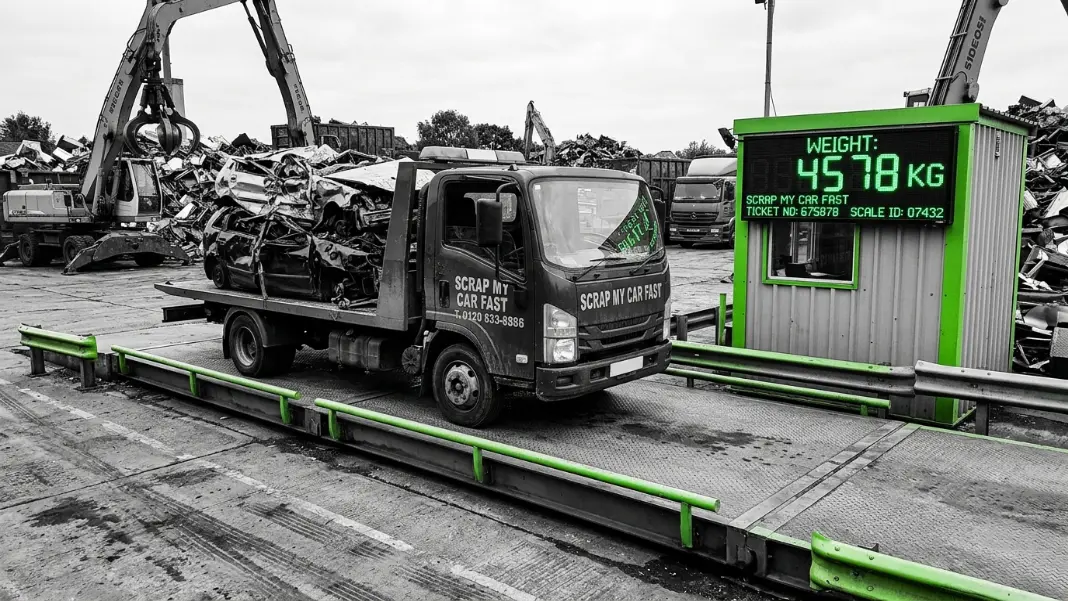
When your car arrives at an ATF, it is weighed on a trade-approved weighbridge. The transporter weighs in, the car is offloaded, the transporter weighs out again, and the difference is the net weight of your vehicle. This is the actual weight, not the manufacturer’s stated kerb weight.
A few things to know about weight and pricing:
- Fuel in the tank adds weight. If the car has a near-full tank, that fuel weighs something. The ATF drains and processes the fuel separately, but it contributes to the initial measurement.
- A stripped interior reduces weight. Missing seats, door panels or carpets mean your car weighs less than the reference weight used in your online quote.
- The manufacturer’s kerb weight is only a reference. The actual weight your specific car comes in at on the day is what gets used for the final payment calculation.
VAT on Scrap Car Sales
When you sell your car to a licensed ATF, you are not charged VAT. You are the seller receiving payment, not a business charging for a service. The ATF handles VAT accounting on their side as part of their normal business operations.
You will not see a VAT charge on your bank transfer payment. The amount you agree to is the amount you receive. VAT does not affect private individuals selling a personal vehicle for scrap.
If you are a VAT-registered business selling company vehicles, different accounting rules may apply. Speak to your accountant in that case. For the vast majority of people, VAT is not something to think about when scrapping a car.
How Our Quote Process Works
When you enter your registration number and postcode on our website, you receive a fixed price. That price is calculated from your vehicle’s estimated weight and the current scrap metal rate we are paying that day.
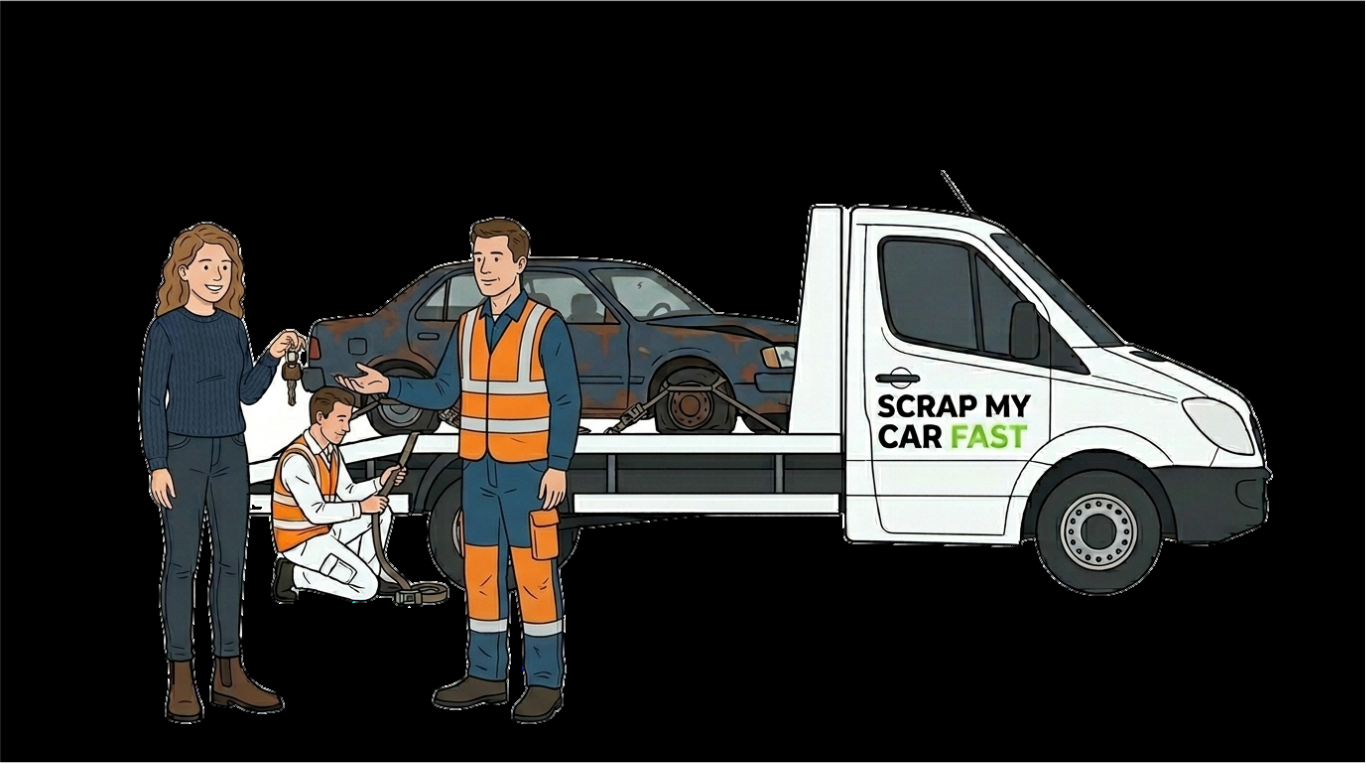
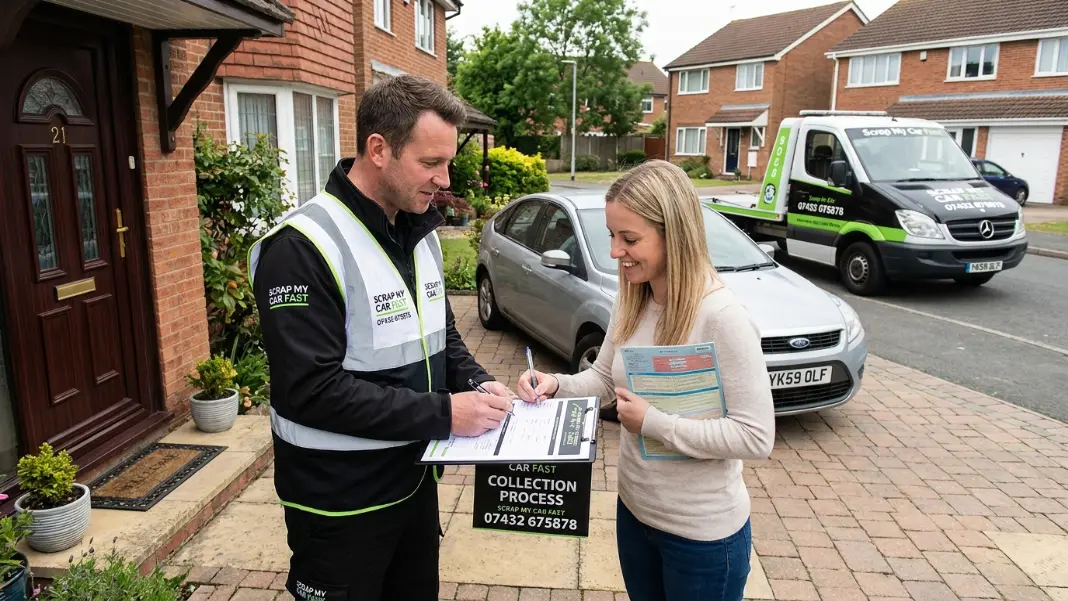
If you accept the quote and book a collection, the price is locked in for your booking. When our driver arrives, they load the vehicle and pay you the agreed amount by bank transfer. The transfer is initiated when the car is on the vehicle. Most transfers arrive the same day.
We do not apply a condition adjustment on the day unless a vehicle is materially different from what was described, meaning something significant: a missing engine, a completely stripped interior, or a car described as accessible that requires specialist recovery. Scratched paintwork, worn tyres and minor bodywork issues are not reasons to reduce a scrap price. We train our drivers not to renegotiate as a routine practice, and our pricing structure does not incentivise it.
Frequently Asked Questions
Why did my scrap car company reduce the price on collection day?
Price reductions on the day almost always happen because the original quote was a guide price rather than a fixed price, or because the company uses condition assessments as a routine bargaining tactic. To avoid this, always confirm before booking whether the price is fixed, and give an accurate description of the car’s condition when you request the quote.
How are scrap car prices calculated?
Scrap car prices are primarily calculated by multiplying your vehicle’s estimated weight by the current scrap metal price per tonne for steel scrap. The catalytic converter may add a premium depending on the make and model. Collection may be free or may be deducted from the quoted price depending on the company. Check the terms before accepting.
How long is a scrap car quote valid for?
Quote validity varies by company. Most reputable scrap dealers hold a price for 24 to 48 hours, after which it may be updated to reflect current metal rates. If you have accepted and confirmed a collection booking, the price should be held until your collection date regardless of market movement during that period.
Can I get a higher scrap price by removing parts first?
Generally no. Removing parts before scrapping reduces the vehicle’s weight and therefore its scrap value. The price you are quoted already assumes the car is complete with all its components. Removing the catalytic converter, alloy wheels or seats before collection typically results in a lower quote than if the car were complete.
Is the online scrap quote the same as what I will actually get paid?
It should be, if the company operates a fixed-price system and the car matches what was described. If you receive a guide price rather than a fixed price, the final amount may be lower. Always confirm the quote type and get it confirmed before booking your collection.
Can I negotiate on a scrap car price?
You can ask, but most fixed-price systems do not have room to negotiate since the price is calculated from weight and metal rates. Where there is more room to improve your outcome is in choosing the right company: getting two or three quotes and comparing them. The difference between companies is often more significant than any discount you could negotiate with a single one.