If you’ve searched “Ford scrap value” or “Toyota scrap value” hoping for a straight answer, here it is. The badge on your car matters far less than most people assume. Weight and the current scrap steel price do most of the work. But make and model aren’t irrelevant either, and there’s one specific factor that genuinely changes what your car is worth that almost nobody explains properly: what’s sitting inside your catalytic converter.
This guide covers what actually drives the difference between a Ford Fiesta and a Toyota Prius at the scrapyard, which makes tend to sit where in the pricing bands, and why two cars of the same weight can still end up on different quotes.
The Short Answer First
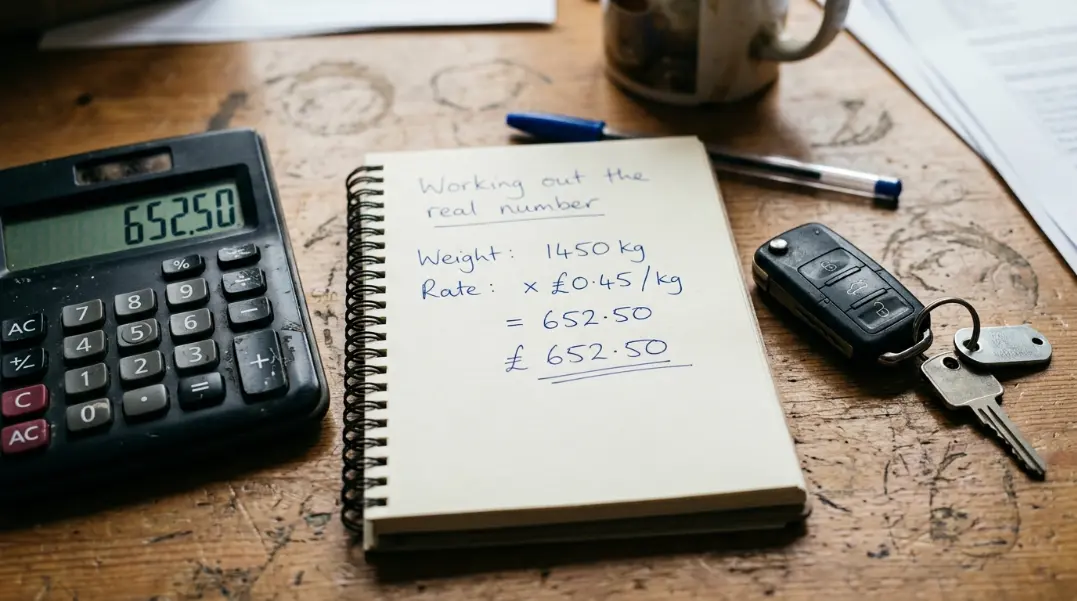
Your car’s weight sets the baseline. The current scrap steel price sets the multiplier. Make and model shift the number in two real ways: how much precious metal is in your catalytic converter, and how much demand there is for usable parts. Everything else, the badge, the brand reputation, how much the car cost new, makes almost no difference once a car is being scrapped rather than sold.
For the full breakdown of how the base figure is worked out, our guide on how scrap car prices are calculated covers the formula in detail. This page focuses specifically on where make and model actually come into it.
Weight Still Decides the Baseline
Before getting into individual makes, it helps to know the bands most cars fall into. These are the same weight-based figures we use across our pricing guides, correct as of September 2026. Scrap steel prices move week to week, so always check the instant quote tool for the live figure on your exact vehicle.
| Vehicle Type | Typical Models | Approximate Scrap Value |
|---|---|---|
| Small cars | Fiesta, Polo, Corsa | £145 to £215 |
| Medium family cars | Focus, Astra, Golf | £195 to £275 |
| Large cars and estates | Passat, Mondeo, 5 Series | £255 to £355 |
| SUVs and 4x4s | Freelander, RAV4, Qashqai | £305 to £455 |
| Vans and large SUVs | Transit, Sprinter | £380 to £570 |
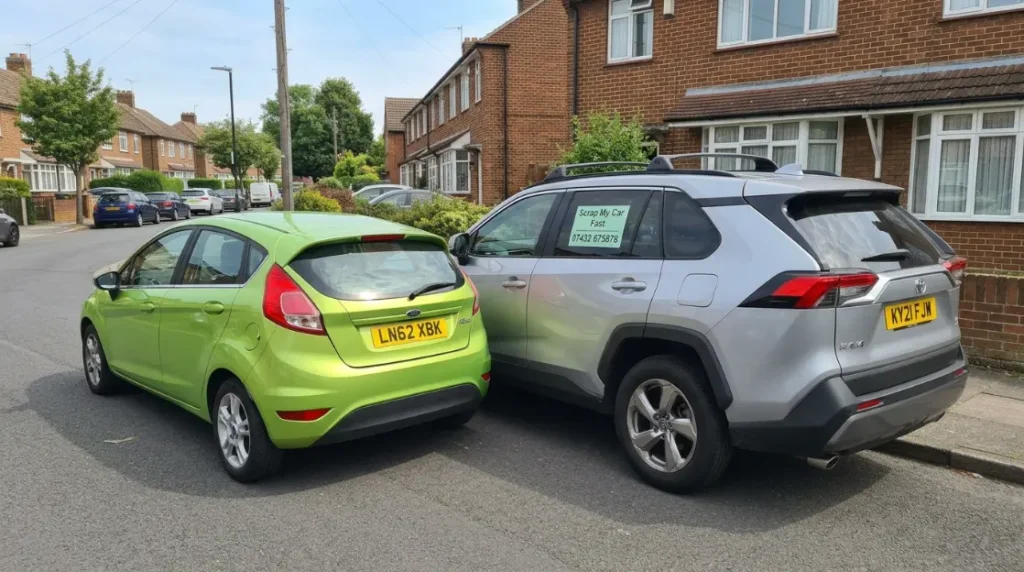
Notice that the models are grouped by size, not by brand. A Ford Mondeo and a VW Passat sit in the same band because they weigh roughly the same, not because Ford and Volkswagen are priced differently as brands.
Where Make and Model Genuinely Change the Number
Ford
Fiesta sits in the small car band, Focus and Mondeo in medium to large. Ford is consistently the most scrapped brand on UK roads simply because there are so many of them, which keeps demand for used Ford parts steady but doesn’t push scrap value above the standard weight bands.
Vauxhall
Corsa and Astra are two of the most common cars scrapped in the UK each year, for the same reason as Ford. High volume on the road means a steady parts market, but nothing that lifts scrap value beyond what the weight already dictates.
Volkswagen, Audi, SEAT and Skoda
Polo and Golf sit in the small to medium bands. Where this group differs is in diesel models fitted with larger diesel particulate systems, and in Audi’s SUV range. The Q3, Q5 and Q7 carry noticeably bigger catalytic converters than an equivalent-weight car from a mainstream brand, which can push the precious metal content, and therefore the value, above what you’d expect for the size alone.
Toyota and Lexus
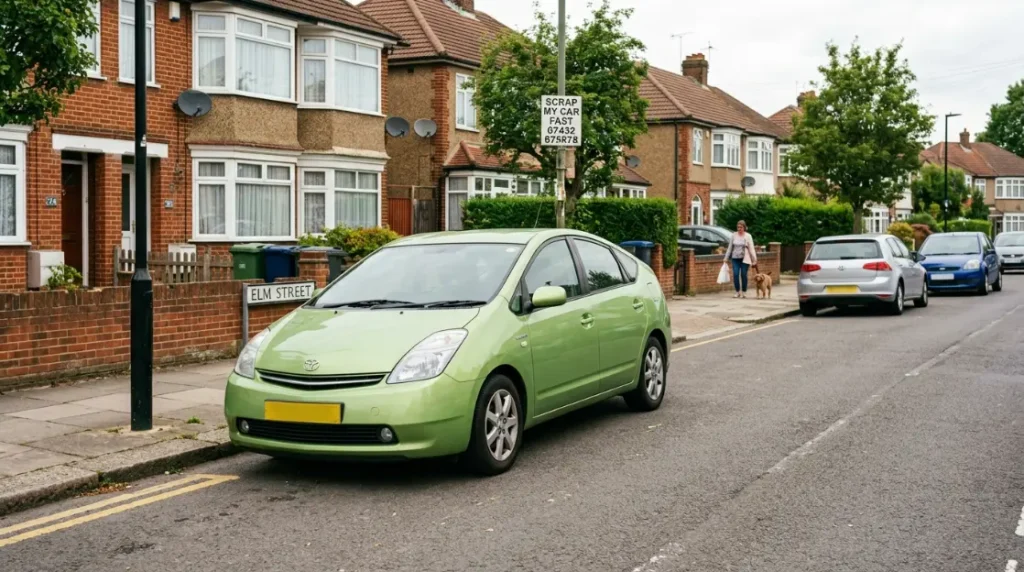
This is where make and model matters most. Toyota Corolla, Auris and Yaris fall into the usual weight bands based on size. But hybrid models, the Prius in particular, plus Lexus RX and CT, are consistently flagged in UK vehicle crime data as the cars most targeted for catalytic converter theft. That’s not a coincidence. Hybrid engines run less often because the electric motor shares the load, so the converter processes less exhaust over the car’s life. Less exposure means less corrosion, which means the platinum, palladium and rhodium inside stay closer to their original purity. A well-preserved hybrid converter is worth more than a petrol equivalent that’s been running constantly for a decade.
Honda
Jazz, Accord and CR-V show up in the same theft and recycling data as Toyota’s hybrids, for similar reasons around converter accessibility and preserved metal content, particularly on older models built before manufacturers started reinforcing converter housings.
BMW and Mercedes
3 Series, C-Class and equivalent models sit in the large car band by weight. Where BMW and Mercedes differ is in their larger SUVs. An X5 or an equivalent Mercedes SUV carries a bigger converter than a saloon of similar weight, simply because the engine is bigger and needs more catalyst material to process the exhaust.
Nissan, Peugeot, Citroën and Renault
These sit firmly in the weight-based bands with no particular make or model factor pushing values up or down. A Nissan Qashqai is priced as an SUV of its weight, not differently because of the badge.
The Catalytic Converter Factor, Explained Properly
Most scrap car guides mention catalytic converters in passing. It’s worth explaining properly because it’s the single biggest make and model factor there is.
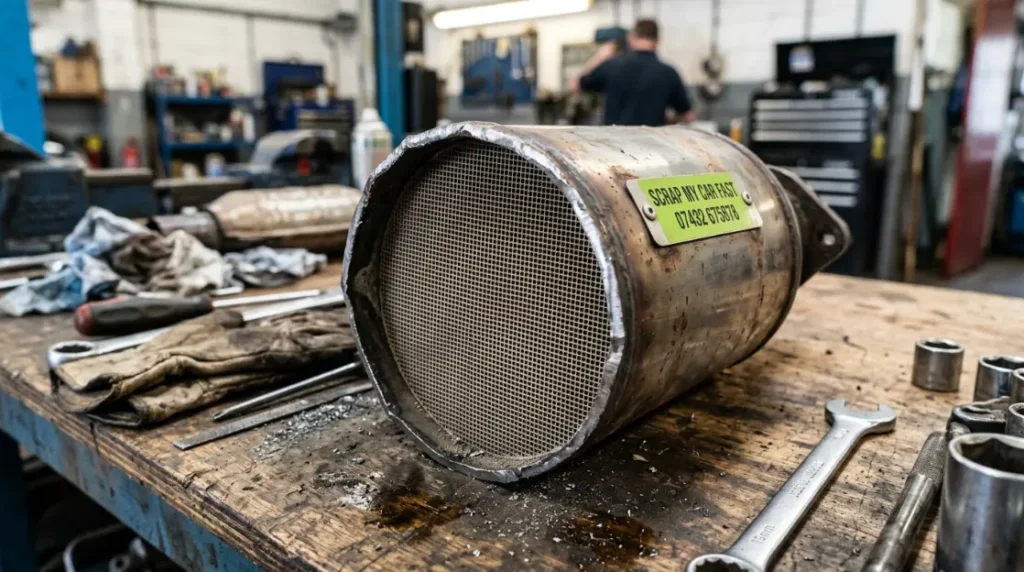
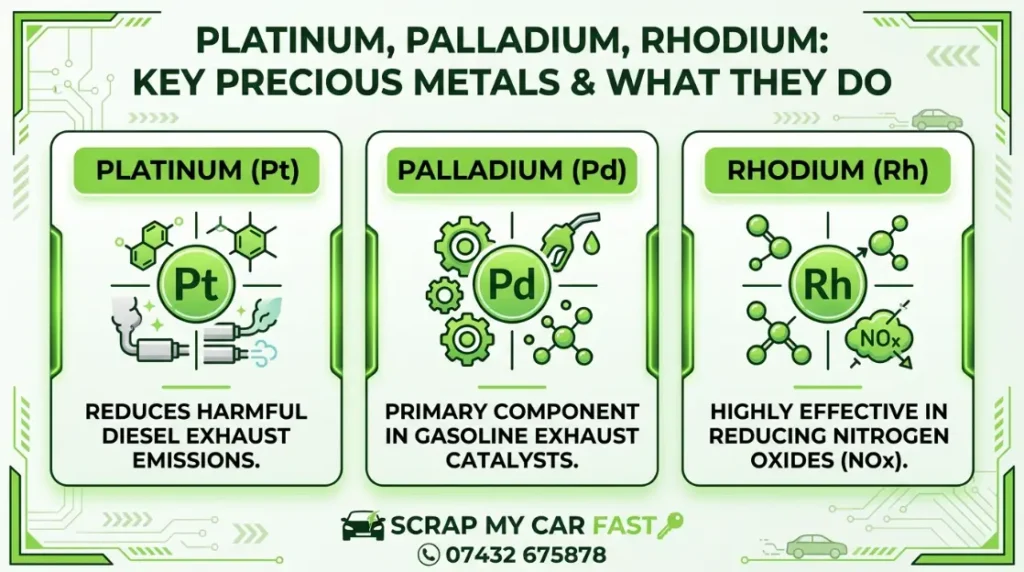
A catalytic converter contains small amounts of platinum, palladium and rhodium, the metals that convert harmful exhaust gases into less harmful ones. These metals are genuinely valuable on the open market and their prices move independently of scrap steel prices. Rhodium in particular has traded at several times the price of gold per ounce in recent years.
Two things affect how much is actually recoverable from a specific car’s converter. First, how much precious metal was fitted in the first place, which varies by engine size and emissions standard rather than by brand loyalty. Second, how corroded that metal has become, which comes down to how hard the engine has worked over the car’s life.
This is exactly why hybrid models like the Prius and Auris, along with certain Honda and Lexus models, appear so consistently in UK catalytic converter theft statistics. Thieves aren’t targeting them because they’re popular, they’re targeting them because the converters inside are worth more, for the reasons above. Toyota itself has confirmed this, specifically naming the second and third generation Prius (2004 to 2015) and the second generation Auris Hybrid (2013 to 2019) as the models most affected, which is exactly why it started fitting protective converter casings to these ranges. If you’re driving one of these specific models or years, it’s worth knowing your converter is genuinely worth more than most, whether you’re protecting it or scrapping it.
The same logic applies at the scrapyard, just legally and with the payment going to you rather than someone cutting your exhaust off in a car park.
If your car has an intact catalytic converter, you can generally expect a premium on top of the standard weight-based figure, typically in the £30 to £100 range for most cars, with hybrid models and larger SUV converters sometimes sitting above that. If the converter has already been stolen or removed, this premium simply won’t apply, but it won’t disqualify you from a fair price on the rest of the vehicle.
What About Electric and Hybrid Cars
Fully electric cars change this picture in a different way. There’s no catalytic converter at all, since there’s no exhaust system to treat, but a modern car of any type now carries roughly a kilometre of copper wiring throughout its electrics, and an EV’s drive motor adds more copper again in its windings. That copper has real, stable scrap value regardless of the badge on the car.
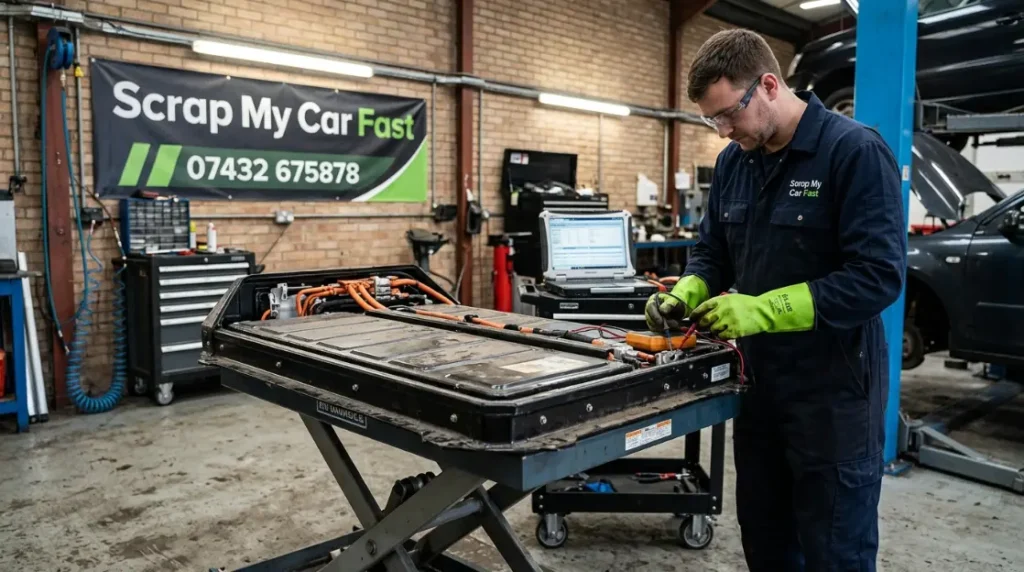
The bigger factor with an EV is the battery pack. A damaged or end-of-life battery contains recoverable lithium, cobalt and nickel, and demand for these materials tends to hold up even when general scrap metal prices dip. In practice, EVs and plug-in hybrids often need to go through a specialist recycling route rather than a standard weight-based scrap quote, particularly if the battery itself is damaged, so if you’re scrapping an EV it’s worth calling ahead so we can confirm exactly how your specific vehicle needs to be handled.
Does Mileage or Age Affect This
Age and mileage matter far less for scrap value than they do for resale value. A car being scrapped is being sold for its materials, not as a working vehicle, so a low-mileage example of the same model won’t earn meaningfully more than a high-mileage one. The exception is the catalytic converter again: an older car that’s covered a lot of miles on a conventional petrol or diesel engine will typically have a more corroded, less valuable converter than a younger equivalent, hybrid or not.
Getting an Accurate Figure for Your Specific Car
Everything above explains the general pattern, but the only way to know what your specific car is worth is to check it against today’s rate. Scrap steel prices and precious metal prices both move independently, sometimes week to week, so a figure that was accurate last month may not be accurate now. Our scrap car calculator gives you a firm number based on your registration, and if you’d rather see the full picture of what moves prices throughout the year, our guide on what actually drives scrap car prices covers it in more depth.
We collect every make and model, including vans, across all ten Greater Manchester boroughs, with free collection and same-day payment regardless of what you’re driving. If you’re scrapping a Transit or a Sprinter rather than a car, our van scrapping page covers the same pricing logic with commercial vehicle weight bands.
Frequently Asked Questions
Does the make of my car really affect its scrap value?
Only in specific ways. Weight decides the baseline for every car. Make and model shift that figure mainly through catalytic converter content, and to a lesser extent through parts demand for high-volume models. The brand name itself has no direct effect once a car is being scrapped.
Which cars are worth the most as scrap in the UK?
Heavier vehicles and vans generally earn the most from weight alone. On top of that, older hybrid models like the Toyota Prius and Auris, along with certain Honda and Lexus models, can carry a stronger catalytic converter premium than a similarly sized petrol or diesel car.
Is a Ford worth more as scrap than a Vauxhall?
No, not because of the brand. A Ford Fiesta and a Vauxhall Corsa are priced the same way because they weigh roughly the same. Any difference between two specific cars comes down to weight, condition and the catalytic converter, not which manufacturer made them.
Do hybrid cars really have more valuable catalytic converters?
Yes. Because a hybrid’s petrol engine runs less often, the converter is exposed to less exhaust over the car’s life, so the precious metals inside corrode more slowly and stay closer to their original value. This is well documented in UK vehicle crime data, where hybrid models are consistently the most targeted for catalytic converter theft.
Does mileage affect scrap value?
Not directly. A high-mileage and low-mileage version of the same model earn a similar scrap price, since the value comes from materials rather than how well the car runs. The one exception is the catalytic converter, which tends to be more corroded, and therefore slightly less valuable, on a car that’s covered a lot of miles.
What is the most scrapped car in the UK?
The Ford Focus has consistently topped industry recycling figures, with the Vauxhall Astra, Vauxhall Corsa, Ford Fiesta and Volkswagen Golf close behind. This reflects how popular these models have been on UK roads over the last two decades rather than any pricing advantage.
How do I find out exactly what my car is worth?
The only reliable way is to check it against the current rate, since both scrap steel and precious metal prices move regularly. Enter your registration on our instant quote tool for a firm, no-obligation figure covering your exact make, model and postcode across Greater Manchester.