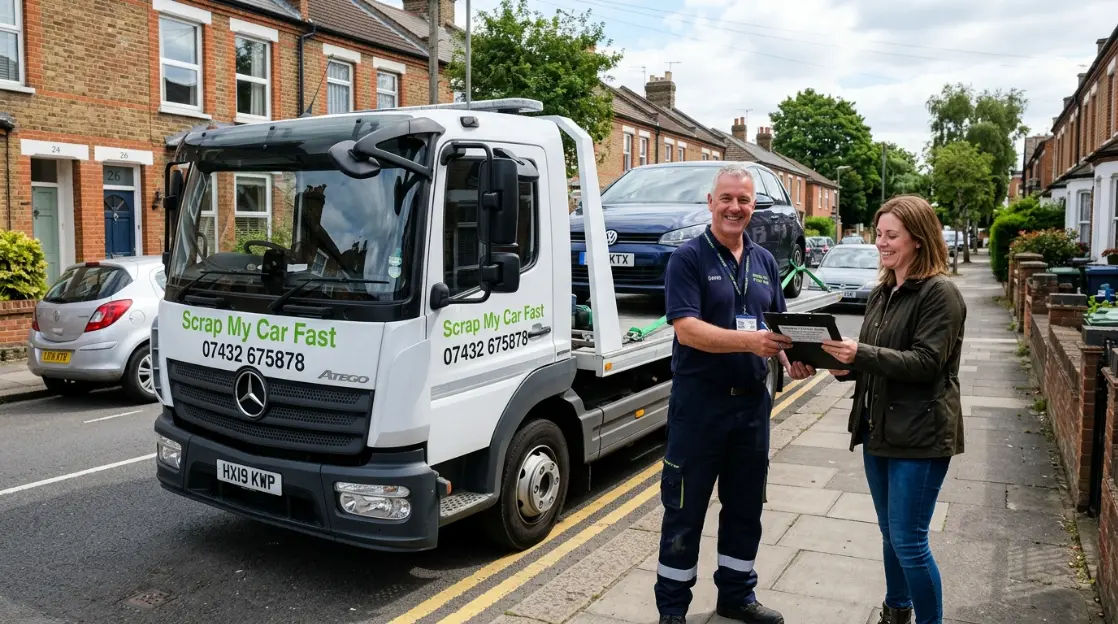
Nearly every scrap car company in the UK advertises free collection. Search “scrap my car” and the same promise shows up on page after page: free, fast, no hidden fees. If it were actually that simple everywhere, people wouldn’t still be typing “is scrap car collection really free” into Google. Enough drivers have been caught out by extra charges that it’s worth explaining properly, not just repeating the line everyone else uses.
Here’s where “free” actually stops being free, what a genuinely free collection looks like in practice, and what to check before you book instead of finding out on the day.
What “Free Collection” Is Supposed to Mean
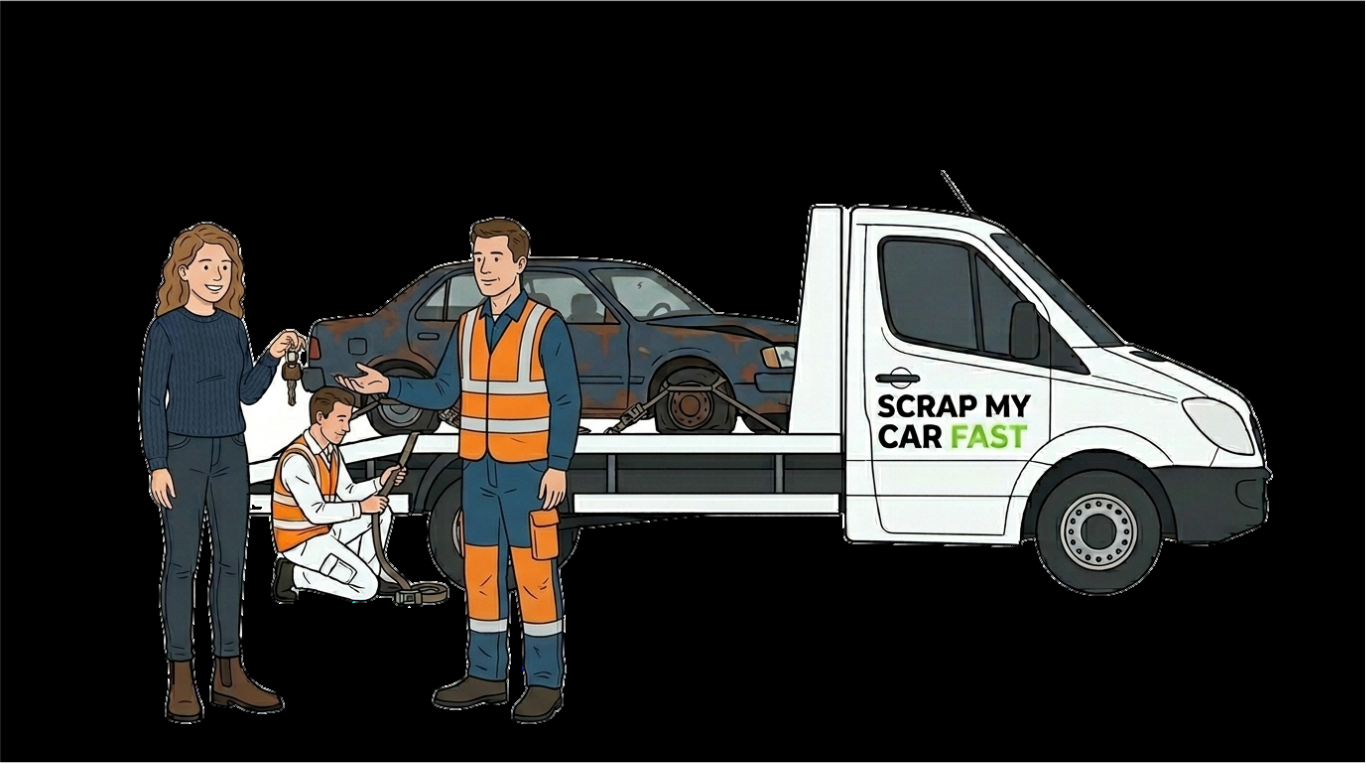
In plain terms, free collection means a company sends a driver to wherever your car is, loads it, and pays you the full amount you were quoted, with nothing deducted for turning up. No callout charge for the visit itself. No separate fee for the vehicle not starting. No reduction because your address is a few miles further out than the buyer would like. The number you accept online should be the number that lands in your account.
That’s the theory. In practice, several common tactics chip away at it.
The Fuel or Callout Surcharge
Of the tactics here, this is the one people run into most. You get a quote, book the collection, and on the day you’re told there’s a small fuel surcharge or callout fee because of where you live or how far the driver had to travel. It’s usually framed as reasonable, twenty or thirty pounds to cover the diesel, and most people pay it rather than argue on their own doorstep with a truck already there.
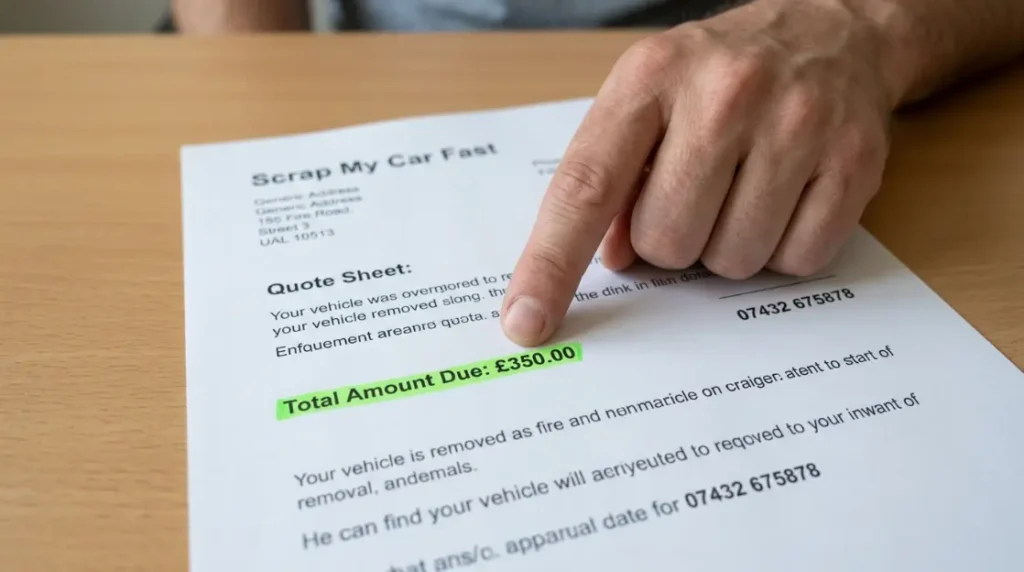
A genuinely free collection service has already priced this into what it can offer you, the same way any business builds its running costs into what it can afford to pay, rather than adding it back on once you’ve agreed a price.
The “Condition Reassessment” on Collection Day
This shows up most often with cars that aren’t running or have visible damage. You describe the car accurately over the phone or through the online form, get a quote based on that description, and then the driver arrives and suddenly the price drops because the car is “worse than expected” or “heavier to collect than usual.” Sometimes this is legitimate, if you genuinely under-described the damage. Often it isn’t, it’s a way of clawing back margin from a quote that was never going to be honoured at full value. It’s one of the most common reasons people switch to a local buyer after trying one of the bigger national websites first.
The way to protect yourself here is simple: be accurate when you describe the car, and use a company that puts its price guarantee in writing rather than as a verbal promise on the phone.
The Broker Markdown
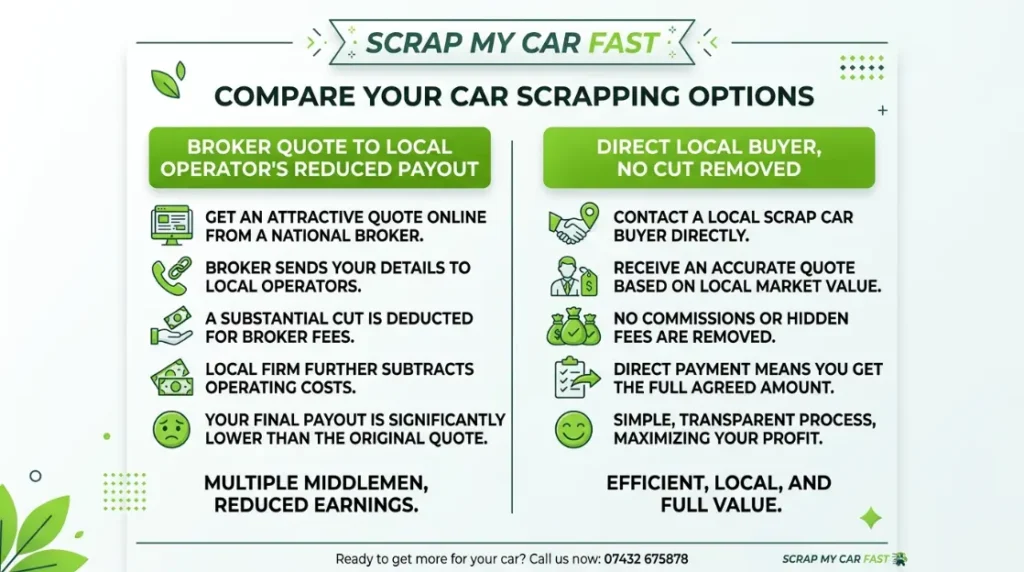
Several of the biggest scrap car websites in the UK aren’t actually collecting your car themselves. They’re brokers, they take your details, give you a headline price, then pass the job to a local operator in your area for less than you were quoted. The difference is the broker’s cut. We’ve covered how this specifically affects pricing in our guide on using a local buyer instead of a national platform, but it affects collection too. A local operator working off a reduced fee from the broker has less reason to treat the collection itself as genuinely free, since part of the margin is already gone before the job reaches them.
Rural or “Hard to Reach” Surcharges
Unlike the fuel surcharge above, this one is sometimes disclosed upfront rather than sprung on you at collection. If you live on the edge of a borough, down a farm track, or somewhere a driver considers inconvenient, some companies quietly add a distance charge. Disclosed or not, it still means the free collection promise only applies to convenient addresses. A company that genuinely covers a whole region, rather than just the easy parts of it, shouldn’t need this at all.
What Genuine Free Collection Should Actually Include
Based on the tactics above, here’s what to check before you book, regardless of which company you use:
- The price you’re quoted online or over the phone is the price you’re paid, with nothing deducted for the visit itself
- Non-running, seized, or hard-to-access vehicles are collected on the same terms as a car that starts and drives
- Your specific address, whether that’s a city centre street or a rural lane, doesn’t change the collection fee
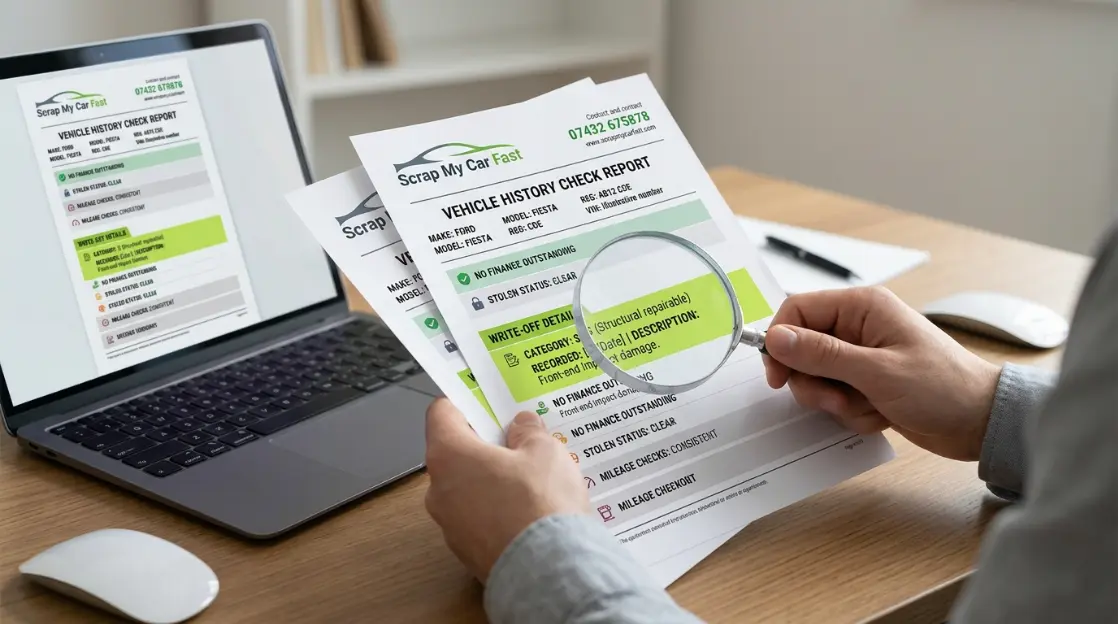
- Missing your V5C logbook doesn’t add a charge or complicate collection, since a licensed buyer can still process the vehicle with valid photo ID and confirmation of ownership, covered in more detail in our guide to scrapping a car without a logbook
- Payment happens by bank transfer on the day, not a promise of payment “within a few days” that gives a company room to adjust the figure later
If a company can’t confirm all of these before you book, that’s the point to ask directly rather than finding out with a truck already on your drive.
Does This Apply to Vans as Well as Cars
Yes, and it’s worth checking specifically if you’re scrapping something larger than a standard car. Vans and light commercials are heavier and sometimes harder to access, which is exactly the kind of vehicle a company looking to add a surcharge will target first. The same collection terms should apply regardless of vehicle type, which we cover in our van scrapping guide.
Our Own Collection Promise
Across all ten Greater Manchester boroughs, collection is free from any address, city centre or edge of borough, and that figure doesn’t change based on whether your car starts, whether you have the V5C, or how far our driver has to travel within the region. You can see the full breakdown of what’s included on our collection page, and if you want to check what your specific car is worth before booking, our instant quote tool gives you a firm figure in seconds.
Frequently Asked Questions
Is scrap car collection really free in the UK?
It can be, but not every company delivers on the promise. The advertising is nearly identical across the industry, so the only way to know is to check whether a specific company’s price stays the same regardless of your address, your car’s condition, or whether you have the logbook.
What hidden fees should I watch for when scrapping a car?
The most common ones are:
- A fuel or callout surcharge added on the day
- A lower price offered once the driver sees the car in person
- Rural or distance charges applied to certain addresses
- Reduced payouts caused by a broker taking a cut before the job reaches a local collector
Does a non-running car cost more to have collected?
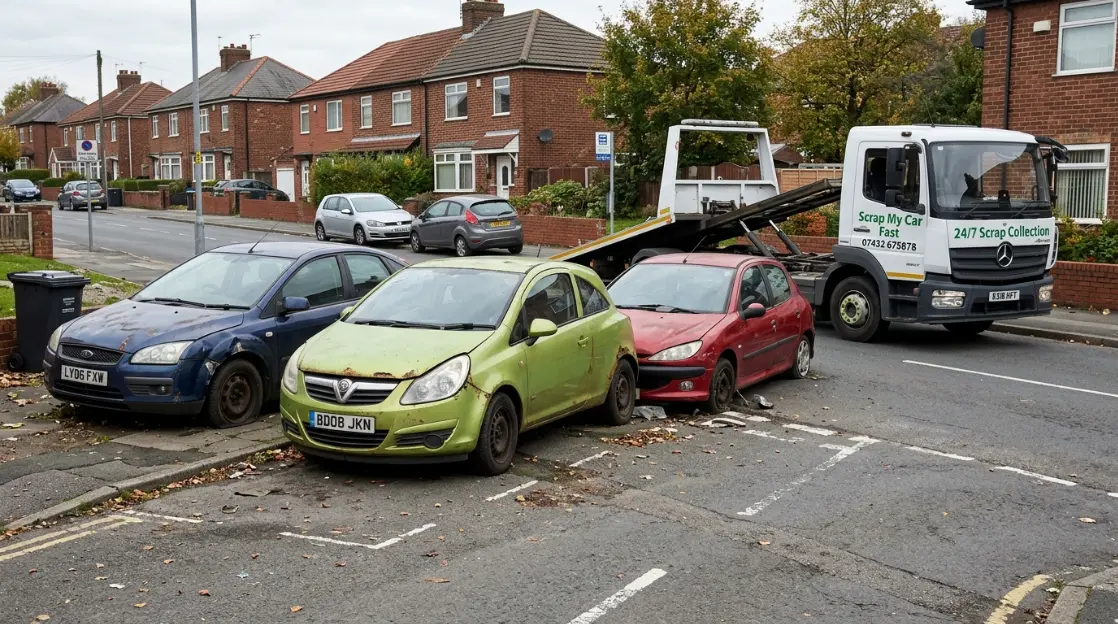
It shouldn’t. Flatbed trucks and winching equipment are standard for any scrap car collector, so a non-runner costs a legitimate operator very little extra to collect. If a company tries to charge more purely because the car won’t start, that’s a sign to get a second quote elsewhere.
Will I be charged if I live outside the city centre?
With a genuine free collection service, no. Your address within the coverage area shouldn’t change the price. If a company adds a rural or distance surcharge, ask exactly which postcodes that applies to before you book.
Do I need the V5C logbook for free collection?
No. A missing logbook doesn’t affect whether collection is free, it only means you’ll need valid photo ID and proof you’re the registered keeper instead.
How do I know if a quote is genuinely fixed?
Ask directly whether the price can change on collection day for any reason other than the car’s actual condition being materially different from what you described. A company confident in its pricing will confirm this without hesitation before you book.