
No, not in the way most people mean when they search for this. The Cat N marker itself is permanent and stays on your car’s record for as long as the vehicle exists. But there’s a real, legitimate service that gets marketed using words like “removed” or “cleared”, and it’s worth understanding exactly what it does, because it isn’t what the advertising implies.
Where the Confusion Comes From
Search “remove Cat N” and you’ll find companies offering a paid structural inspection, often a few hundred pounds, that promises to clear the marker from your HPI check. Some forum threads describe exactly this happening, a car goes in with a Cat N or Cat S history and comes out with what looks like a clean report. That’s technically true, but it’s not the full picture.
What’s actually happening is that HPI maintains a separate record called the Condition Inspected register, which has existed since 1990. It logs vehicles that were previously written off and have since passed an independent structural examination confirming the repair meets the required standard. Once that inspection is added, some checking services display the car differently, and a quick glance can genuinely look like the write-off history has gone.
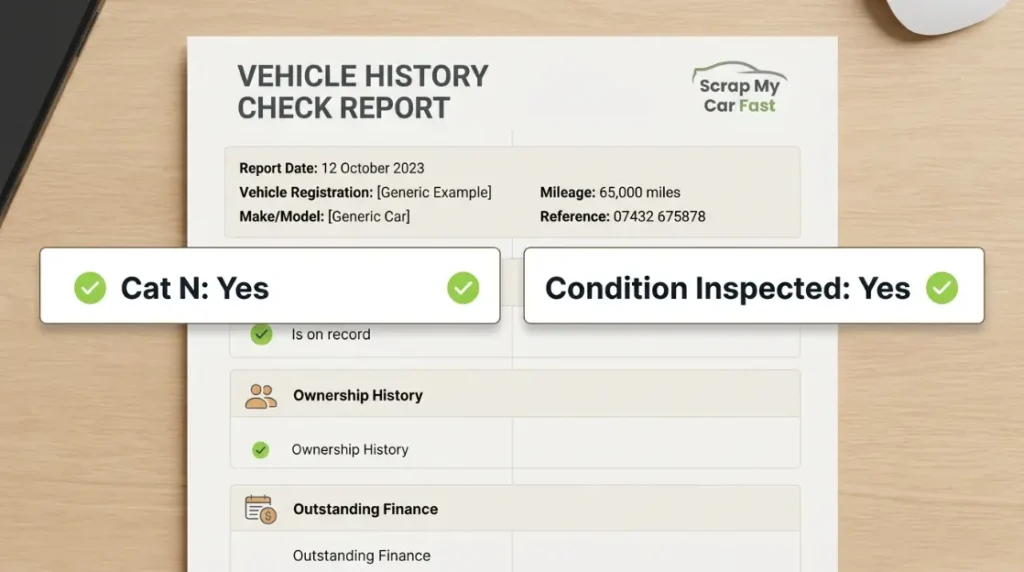
It hasn’t. The original Cat N entry is still there in the underlying data. What’s changed is that a second, positive entry now sits alongside it.
What the Inspection Actually Changes
Booking a structural inspection through a qualified engineer is a real, useful step if you’ve repaired a Cat N car and want to reassure a future buyer. Here’s what it does and doesn’t do:
- It confirms your repair meets a recognised structural standard, which genuinely helps buyer confidence
- It adds a second entry to your vehicle’s history, it does not delete or overwrite the original write-off record
- A thorough HPI check, an AutoCheck report, or an insurer’s own history search will still show the car was previously written off
- It has no effect on your legal obligation to declare the write-off when you insure the car
If a company’s marketing tells you the Cat N marker itself disappears, that’s not accurate. If a company explains that you’re paying for an additional certified inspection record, that’s the honest version of the same service.
Why the Original Entry Never Actually Goes Away
No. Once a car is logged with a Cat N marker on the insurance industry’s shared database, that record doesn’t expire, get deleted after a set number of years, or reset when the car changes hands. It’s a permanent part of that specific vehicle’s history, in the same way a previous owner count or an MOT failure stays on record. Our full breakdown of what Cat N and Cat S actually mean and what you’re legally allowed to do with each covers the categories themselves in more depth if you’re still working out which one applies to your car.
Is Paying for the Inspection Worth It
That depends on what you’re trying to achieve. If you’ve already repaired the car properly and plan to keep or sell it, a structural inspection can genuinely help. Private buyers and some trade buyers are more confident purchasing a Cat N car with a passed inspection on file than one with just the write-off marker and no supporting evidence. It won’t get you back to the price of an equivalent car with no history, but it narrows the gap.
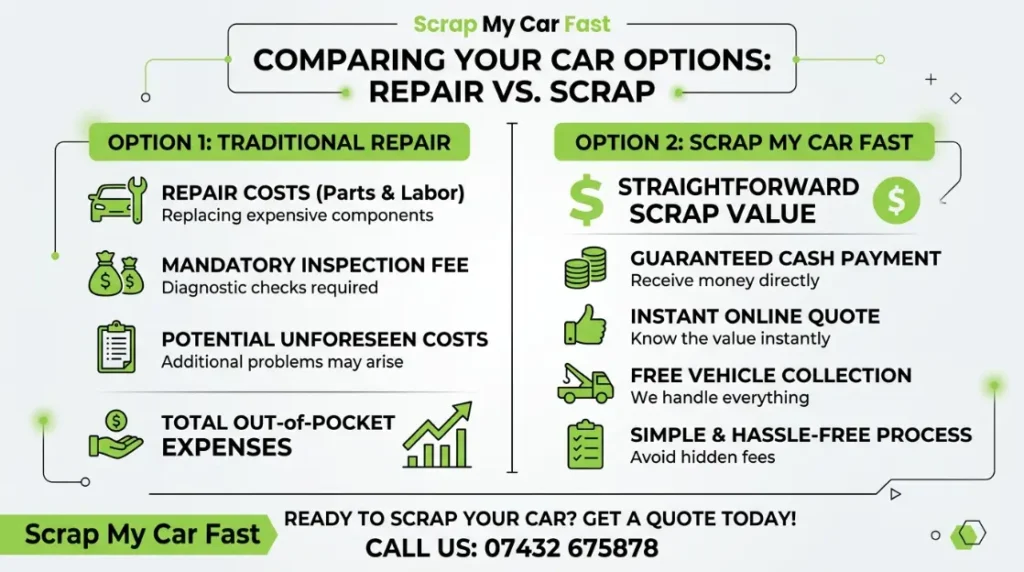
If you’re weighing up whether to repair and inspect versus simply scrapping the car, the maths usually comes down to three numbers: the repair cost, the inspection fee on top of that, and how much the permanent write-off marker will still knock off the resale value even after both. For an older car or one where the damage touches anything expensive, sensors, wiring, or an interior that needs full replacement, those three costs combined often exceed what the car would actually be worth afterwards.
When Scrapping Makes More Sense
If the repair and inspection costs don’t stack up, scrapping the car for its parts and metal value is usually the simpler route, and it sidesteps the marker question entirely since you’re not trying to resell it. We collect written-off and accident-damaged vehicles across Greater Manchester regardless of category, and you don’t need the car to be driveable. Our sell written off car page covers exactly what we need from you, and you can get a firm instant quote before deciding either way.
Frequently Asked Questions
Can a Cat N marker be permanently removed from HPI?
No. The original write-off entry stays on the vehicle’s record for as long as the car exists. A paid structural inspection can add a separate “passed inspection” entry alongside it, but this does not delete the underlying Cat N marker.
What is the HPI Condition Inspected register?
It’s a register that has existed since 1990, recording vehicles that were previously written off and have since passed an independent structural examination. It sits alongside the original write-off record rather than replacing it.
Will an inspection make my car show as never written off?
No reputable check should show that. A thorough HPI check, AutoCheck report, or insurer history search will still return the original Cat N or Cat S marker even after a passed inspection has been added.
Do I still have to declare a Cat N history to my insurer after an inspection?
Yes. The legal requirement to declare a write-off history applies regardless of whether the car has since passed a structural inspection. Not declaring it can invalidate your policy.
Is it worth paying for a structural inspection on a Cat N car?
It can help resale confidence if you’ve repaired the car properly and plan to sell it privately. It’s less worthwhile if the combined cost of repair and inspection is close to what the car would be worth afterwards, in which case scrapping the car is often the more straightforward option.
Does scrapping a Cat N car avoid the marker issue entirely?
Yes. If you’re not planning to resell the car, the write-off marker becomes irrelevant, since you’re being paid for the vehicle’s parts and materials rather than its resale value.