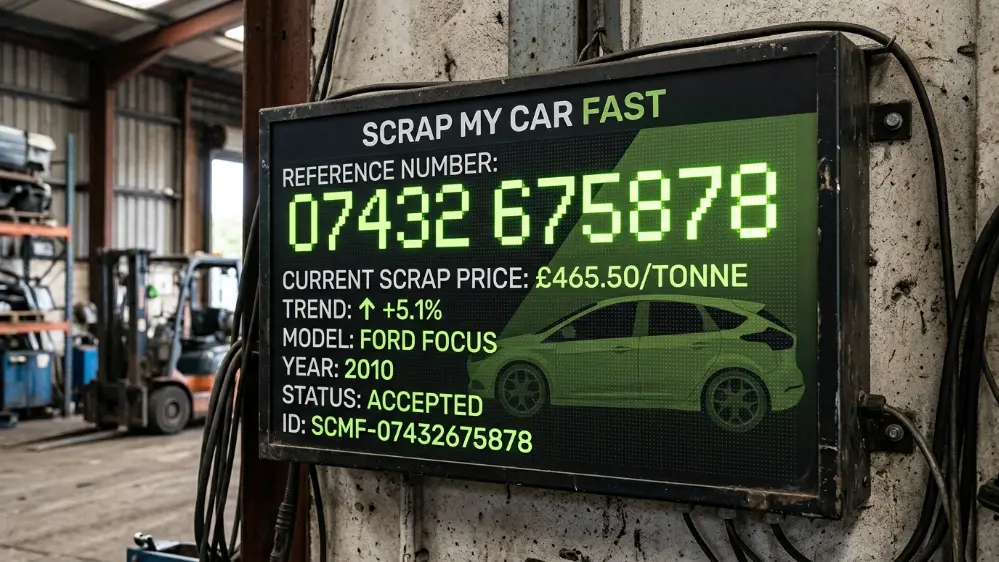
Scrap car prices are not fixed, they are not posted on a public exchange anywhere, and they are not the same from one buyer to the next. They move with the global steel market, shift between regions, and can change meaningfully week to week. If you have been trying to get a straight answer on what your car is worth right now, this guide will give you the actual picture rather than the round number that looks good on an aggregator.
What Scrap Car Prices Actually Look Like in 2026
At the time of writing, scrap car prices in the UK are reflecting a relatively stable steel market following a period of volatility through 2024 and early 2025. Here is where things sit for typical vehicles:
| Vehicle Category | Estimated Scrap Value (June 2026) |
| Small cars (under 1,050 kg) | £145 – £210 |
| Medium cars (1,100 – 1,350 kg) | £195 – £275 |
| Large cars and estates (1,400 – 1,700 kg) | £255 – £360 |
| SUVs and 4x4s (1,600 – 2,100 kg) | £310 – £460 |
| Large SUVs and vans (over 2,000 kg) | £390 – £580 |
These figures apply to Greater Manchester and the surrounding area. National buyers and broker platforms may quote differently sometimes higher to attract bookings, sometimes lower after deductions are applied on collection day.
For a full breakdown of how these figures are calculated and what affects where your car sits within the range, our scrap car value guide has the complete picture.
The Steel Market: Why It Matters More Than Your Car’s Condition
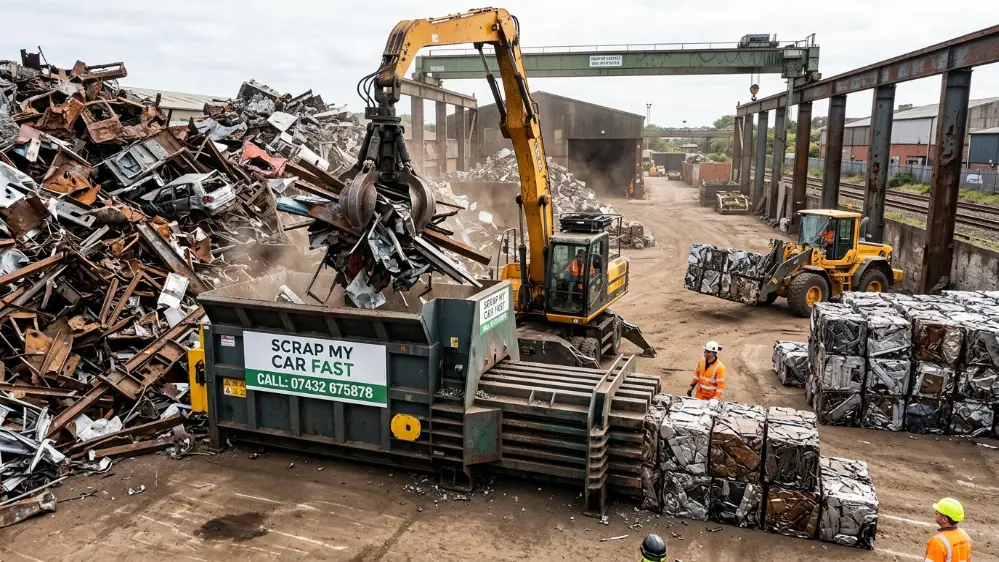
When a scrap buyer looks at your car, they are not assessing it the way a used car dealer would. They are not thinking about the service history, the interior condition, or whether the tyres have life in them. They are thinking about the weight of the vehicle and what the steel in it will sell for at the recycling stage.
UK scrap metal buyers operate on tight margins. They collect vehicles, process them at an Authorised Treatment Facility, extract reusable metals, and sell the resulting ferrous and non-ferrous materials into the recycling supply chain. The price they pay you has to leave room for their collection costs, processing costs, and profit all against a steel price that fluctuates.
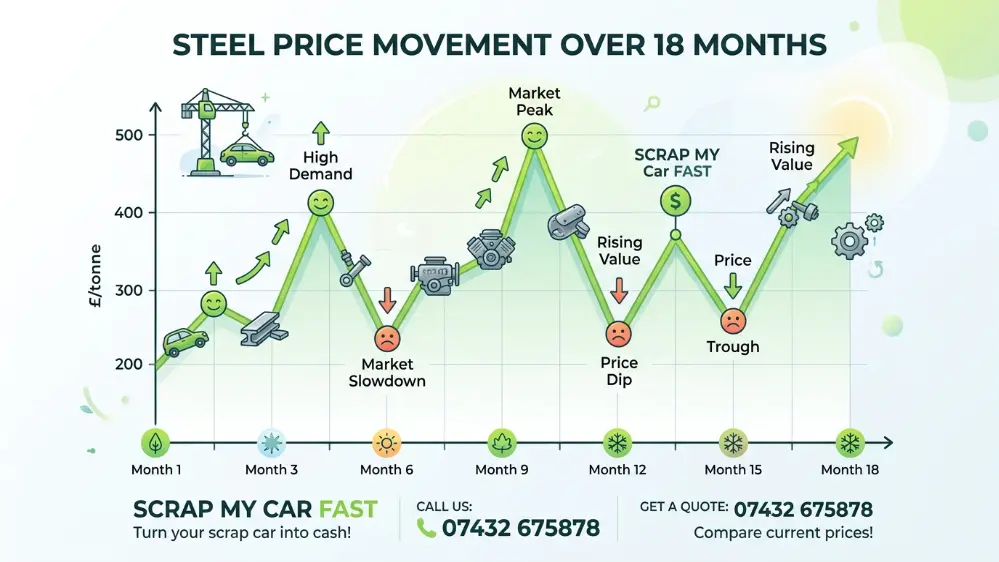
In practical terms, steel scrap in the UK has traded between roughly £130 and £210 per tonne over the last 18 months, with the most recent period sitting toward the middle of that range. When steel prices rise, scrap car buyers can afford to pay more. When they fall, margins compress and quotes drop with them.
This is why the same car same registration, same condition can get different quotes in different months of the year.
What Drives Prices Up
A few factors push scrap car prices higher in the UK:
Global demand from China and Asia. The steel market is global. When Chinese manufacturing ramps up, demand for raw materials increases, including recycled steel feedstock from the UK. This feeds through into better prices for vehicles at the collection end.
Energy costs falling. Steel recycling is energy-intensive. When energy costs fall, processing becomes cheaper and buyers can offer more. The inverse is also true energy spikes hit margins and quotes drop.
Seasonal demand. There is a loose seasonal pattern to scrap car volumes in the UK. More cars tend to come to market after harsh winters when older vehicles fail MOTs or develop irreparable faults. Buyers who need to maintain throughput sometimes pay a small premium during quieter periods.
Precious metals in catalytic converters. Platinum, palladium, and rhodium prices have a direct effect on the value of cars with intact catalytic converters. During periods of high precious metal prices, a working cat on a mid-size or larger car can add meaningful money to a quote. We explore this further in our 2026 scrap car value guide for Manchester.
What Drives Prices Down
Falling steel demand. The same logic in reverse. When industrial output drops globally, scrap steel demand softens and prices follow.
High collection volumes. If the local market is flooded with vehicles after a particularly harsh winter, for example buyers have less urgency to price aggressively to fill their collection schedules.
Stripped vehicles. A car missing its catalytic converter, battery, or wheels is worth less. The scrap buyer cannot recover the value of components that are not there. If your car has been targeted for parts theft, you will likely see a lower quote than you would for a complete vehicle.
How Manchester and Greater Manchester Compares to the Rest of the UK
Scrap car prices vary by region, primarily because of collection logistics. Buyers operating in Greater Manchester benefit from a dense urban area with high vehicle volumes, which keeps collection costs per vehicle relatively low. That efficiency can translate into marginally better quotes compared to rural areas where collection routes are longer and less efficient.
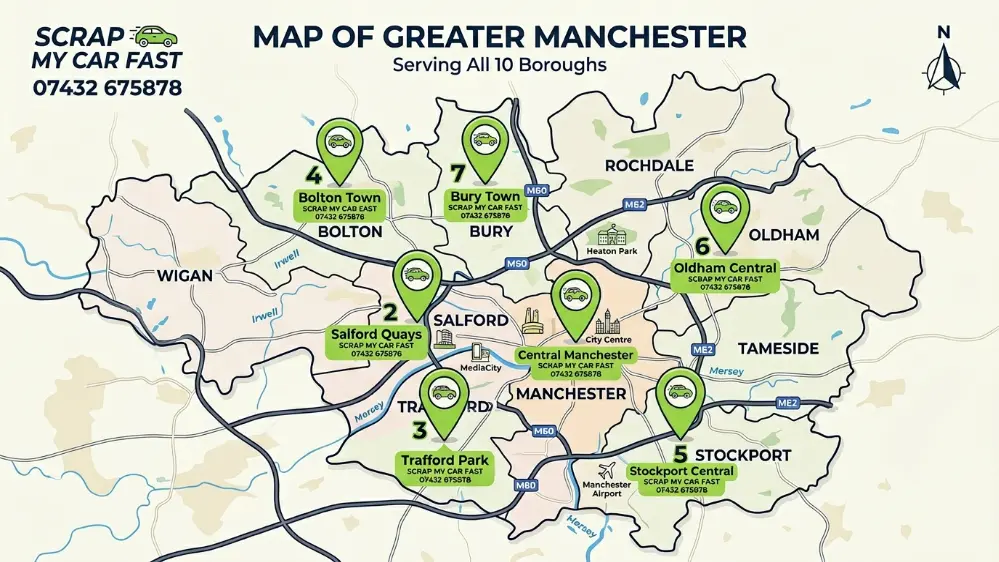
Buyers local to Greater Manchester operating across Manchester, Salford, Stockport, Bolton, Bury, Wigan, and the surrounding boroughs also do not carry the overhead costs of national broker platforms, which typically take a margin before passing the job to a local collector. Getting a quote directly from a local licensed buyer rather than through an aggregator can put an extra £30 to £60 in your pocket on a typical family car.
If you are in the Greater Manchester area, our locations pages show exactly which areas we cover and what to expect from collection.
Is There a Best Time to Scrap Your Car?
Honestly, the difference between the best and worst months of the year for scrap car prices is unlikely to be more than £20 to £40 on a typical car. Trying to time the market precisely is not worth the effort.
What is worth doing is getting multiple quotes in the same week. Because buyers price to their current margin requirements, two buyers operating in the same area can legitimately offer different prices for the same car on the same day. A ten-minute comparison exercise can be worth more than waiting six months for better steel prices.
If you want to check the current rate being offered for your specific vehicle, you can get an instant quote from us in about 60 seconds. The price we give is firm and does not change on collection day there are no deductions applied after the fact.
What About Electric and Hybrid Cars?
This is an increasingly relevant question as more EVs and hybrids reach end-of-life. The honest answer is that scrap values for electric vehicles are currently lower than for comparable petrol or diesel cars, for a few reasons.
The traction battery requires specialist disposal. It cannot simply go through the standard vehicle shredding process. Authorised Treatment Facilities need to remove and store batteries separately, which adds a processing cost that some buyers pass on in the form of a lower quote.
Some buyers will not collect electric vehicles at all. Others will, but the quote reflects the additional handling requirement. This is a fast-moving area and prices for EV scrap are likely to improve as the recycling infrastructure for lithium-ion batteries develops in the UK.
For petrol and diesel vehicles, the picture is straightforward: weight plus metal rate plus cat value equals your quote.
How to Make Sure the Quote You Get Reflects Today’s Prices
A few practical points:
The quote you received last month may not apply today. Steel prices move weekly. Always get a fresh quote rather than relying on a figure from a previous enquiry.
Check whether the quote is described as “firm” or “subject to inspection.” A firm quote based on your registration and a brief vehicle description should hold on collection day. An “indicative” quote is an estimate that can be revised downward when the buyer arrives.
Ask whether collection is included at no extra charge. Some buyers quote the vehicle value separately and then apply a collection fee on booking or on the day. A genuine all-in price with free collection is what you should be comparing against.
Our post on how to get the best scrap car price in Manchester covers the comparison process in detail if you want to go through it systematically before committing.
The Bottom Line on 2026 Scrap Car Prices
Prices are stable in 2026, reflecting a steel market that has settled after a period of volatility. Most cars are fetching between £150 and £450 depending on weight, with catalytic converter condition adding a meaningful premium for larger vehicles.
The best way to know exactly what your car is worth today is to get a quote from a local, licensed buyer rather than relying on the averages in a guide like this. Every car is slightly different, and a 60-second registration lookup will give you a more accurate number than any table.
If you are ready to find out, get your instant quote here and if you want to understand whether scrapping is the right move for your situation compared to selling privately or part-exchanging, our comparison guide scrap vs part exchange vs private sale has the full breakdown.