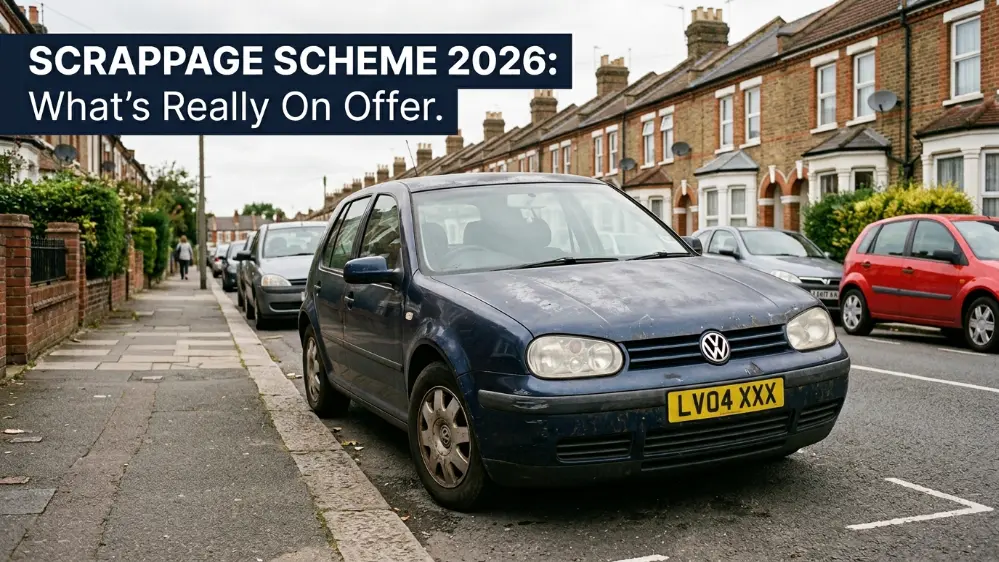
If you’ve typed “car scrappage scheme” into Google, chances are you’ve got an old car sitting on the drive, a rough idea that the government used to give people money for scrapping their car, and a hope that the same deal still exists. It’s a fair thing to look for. The truth in 2026 is a bit more complicated than a straight yes or no, and it changes depending on where in the country you live.
This guide covers what a scrappage scheme actually is, whether one is running right now, what happened to the scheme people remember from a few years back, and what your realistic options are if you’re in Manchester or anywhere else in Greater Manchester with an old car you want gone.
What Is a Car Scrappage Scheme?
A scrappage scheme is a deal where you hand over an old vehicle to be destroyed and, in return, you get money off a new one. The money usually comes from a mix of government funding, local council budgets, or the car manufacturer itself, sometimes all three at once. The idea is always the same: get old, higher-polluting vehicles off the road and encourage people to buy something newer and cleaner.
The key detail that trips people up is that a scrappage scheme is not the same thing as scrapping your car for cash. A scrappage scheme ties your payout to buying a specific new car, often from a specific manufacturer, within a limited time window. Scrapping your car for cash through a licensed scrap dealer has no strings attached at all. You get paid, and what you do next is entirely up to you.
Is There a Nationwide Government Scrappage Scheme Right Now?
No. There is no single UK-wide government scrappage scheme running in 2026. The last time the government ran one for everyone in the country was 2009 to 2010, and it hasn’t been repeated since, despite plenty of calls for one, particularly around diesel emissions from 2015 onwards.
What exists instead is a patchwork of smaller, regional schemes tied to specific Clean Air Zones, plus a handful of manufacturer-led offers that come and go depending on what car brands are trying to shift stock. None of these are permanent, and none of them cover the whole country.
What Happened to the 2009 Scrappage Scheme
This is the one most people vaguely remember, so it’s worth explaining properly. In 2009, following the financial crash, the government introduced a scheme offering £2,000 off a new car, split £1,000 from the government and £1,000 from the manufacturer, if you scrapped a vehicle that was more than 10 years old. It ran for about a year and generated close to 400,000 claims. It was designed to protect car manufacturing jobs during the recession as much as it was to help individual drivers, and once the funding ran out, it wasn’t brought back.
Since then, several governments have looked at reintroducing something similar, especially as air quality became a bigger political issue, but as of 2026 there are no confirmed plans for a new nationwide version.
Regional Scrappage Schemes: What’s Actually Available
Where scrappage-style help does exist, it’s almost always linked to a city’s Clean Air Zone (CAZ) or Ultra Low Emission Zone (ULEZ), and the eligibility rules are tight.
London runs the best-known example through Transport for London’s ULEZ scrappage scheme. It’s aimed at low-income Londoners, people on certain disability benefits, and small businesses, offering grants toward scrapping or retrofitting a non-compliant vehicle. It’s specifically for people who live or work inside the ULEZ boundary.
Birmingham has offered grants of up to £2,000 to £4,000 for residents and workers affected by its Clean Air Zone, again tightly means-tested and tied to proof you’re registered inside the zone.
Bristol has run a similar grant and loan scheme for vehicles that don’t meet the city’s emissions standards.
In every case, these schemes are local, funded by that city’s council, and only available to people who actually live or work within that specific zone.
What About Greater Manchester?
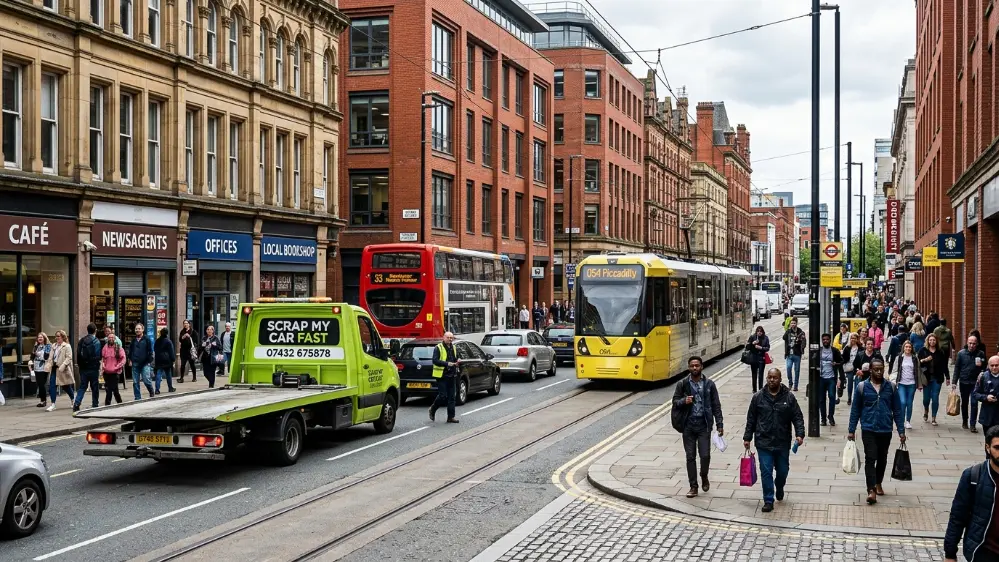
This is the part that matters most if you’re reading this from Manchester, Salford, Bolton, Stockport, or anywhere else across the ten Greater Manchester boroughs, and it’s genuinely good news. Greater Manchester does not have a charging Clean Air Zone or a ULEZ. Back in 2022, days before a charging CAZ was due to launch here, it was shelved after significant public and political pushback, and Greater Manchester’s ten councils switched to what’s called an investment-led Clean Air Plan instead.
That plan focuses on cleaner buses and support for licensed taxi and private hire drivers through a Clean Taxi Fund. It is not a scrappage scheme for ordinary car owners, and there’s no daily charge for driving an older private car anywhere in Greater Manchester. In practical terms, this means nobody in Manchester or the surrounding boroughs is being forced to scrap or replace their car because of a zone charge, and there isn’t a local scrappage grant sat waiting for private car owners the way there is in London or Birmingham.
Manufacturer Scrappage Deals
Away from government and council schemes, individual manufacturers sometimes run their own scrappage-style trade-in offers. These come and go fairly often. As an example, some brands have offered anywhere from £1,000 to £2,500 off a new model if you trade in an older vehicle that meets their criteria, usually a minimum age and a requirement that you’ve owned it for a set number of months.
The catch is always the same. You can only spend the discount on that one manufacturer’s new car range, the vehicle you’re scrapping has to fit their specific rules exactly, and the offer usually has an end date. If you’re not already planning to buy new from that particular brand, it’s not really a scrappage scheme for you, it’s a marketing offer that happens to use the word scrappage.
How to Check If Your Car Would Even Qualify
Before spending time chasing any scrappage offer, it’s worth checking the basic criteria most schemes share, because a surprising number of cars simply don’t qualify. Regional CAZ-linked schemes generally require proof you live or work inside the specific zone boundary, which rules out anyone outside London, Birmingham, or Bristol entirely. Manufacturer offers usually specify a minimum age for the car you’re trading in, often seven to ten years, plus a minimum ownership period, sometimes 90 days or more, so a car you’ve only just bought secondhand might not count even if it’s old enough. Most schemes also require the vehicle to be currently taxed, insured, and roadworthy at the point of trade-in, which immediately excludes anyone with a car that’s failed its MOT or been sitting SORN for a while.
If your car ticks all of those boxes and you were already planning to buy new from a manufacturer running an offer, it’s worth pursuing. If it doesn’t, or if you’re simply not in the market for a brand new car right now, none of this really applies to you, and that’s a perfectly normal position to be in.
Is a Scrappage Scheme Actually Worth Chasing?
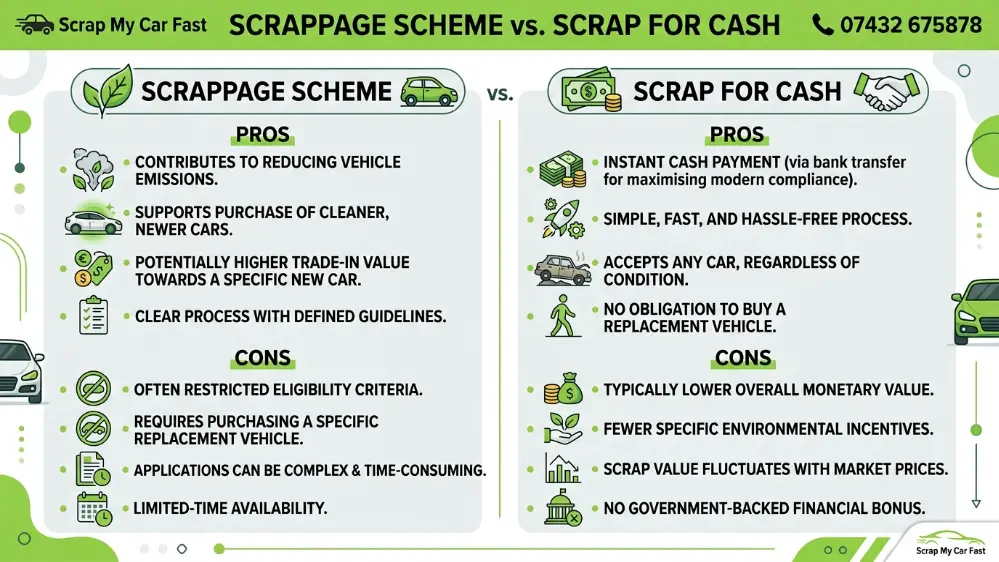
Honestly, for most people with an old car in Greater Manchester, no. Here’s why. A scrappage deal only pays out if you’re buying a specific new car from a specific manufacturer, right now, on their terms. If you weren’t already planning that purchase, you’re not really being offered a scrappage scheme, you’re being offered a discount on a decision you hadn’t made yet.
Compare that to simply scrapping your car for cash. There’s no requirement to spend the money on anything in particular, no manufacturer restrictions, and no waiting around for a scheme you might not even qualify for. If your car is old, worn out, or just costing more to keep than it’s worth, getting a straight cash offer based on its weight and current scrap metal prices is usually the simpler, faster route, and you keep full control of what happens to the money afterwards.
Getting Your Car’s Actual Scrap Value
If a scrappage scheme isn’t realistic for your situation, the more useful question is what your car is actually worth as scrap right now. That comes down to its weight, the current market price for scrap steel, and whether it still has an intact catalytic converter, which can add a bit extra to the final figure. Our scrap car calculator will give you a firm, no-obligation number in under a minute, and you can see the wider picture of how prices move throughout the year on our page covering what actually drives scrap car prices in the UK.

How the Process Works Once You’ve Decided
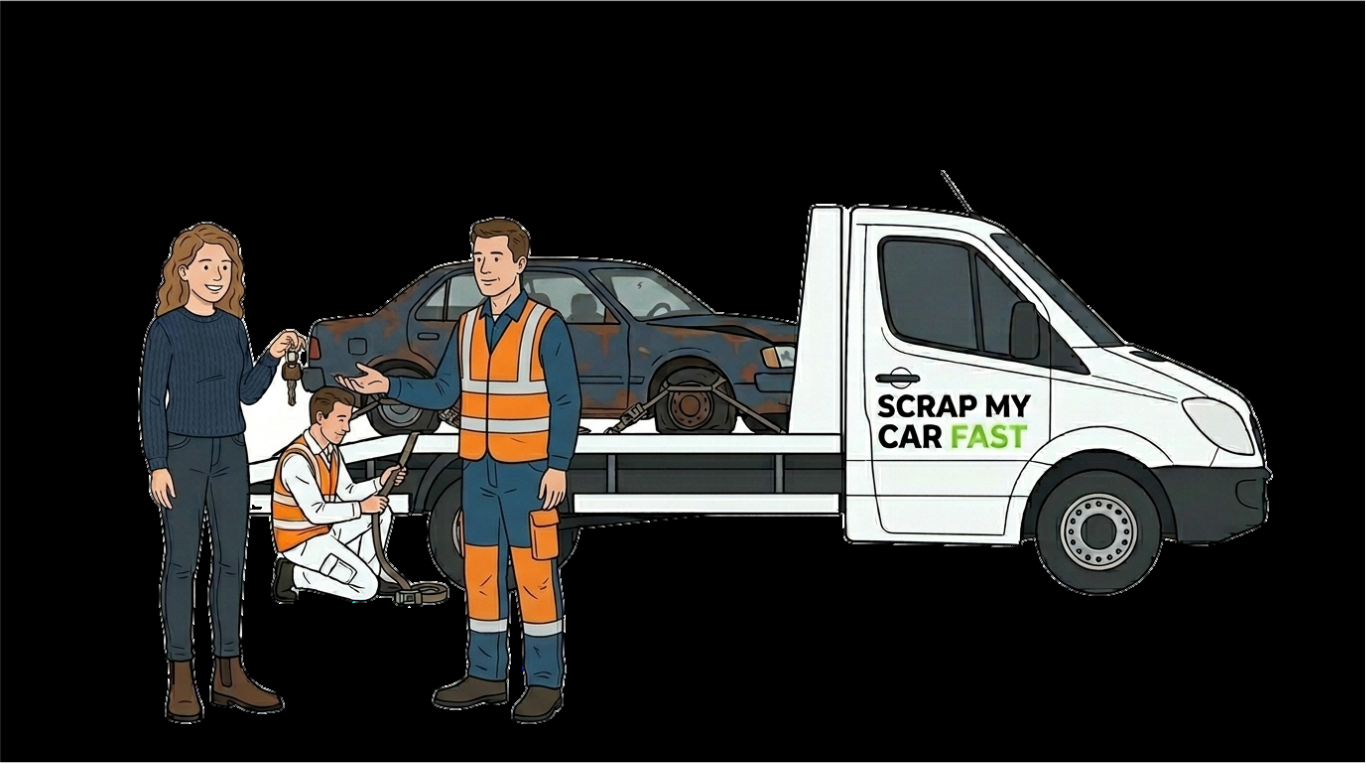
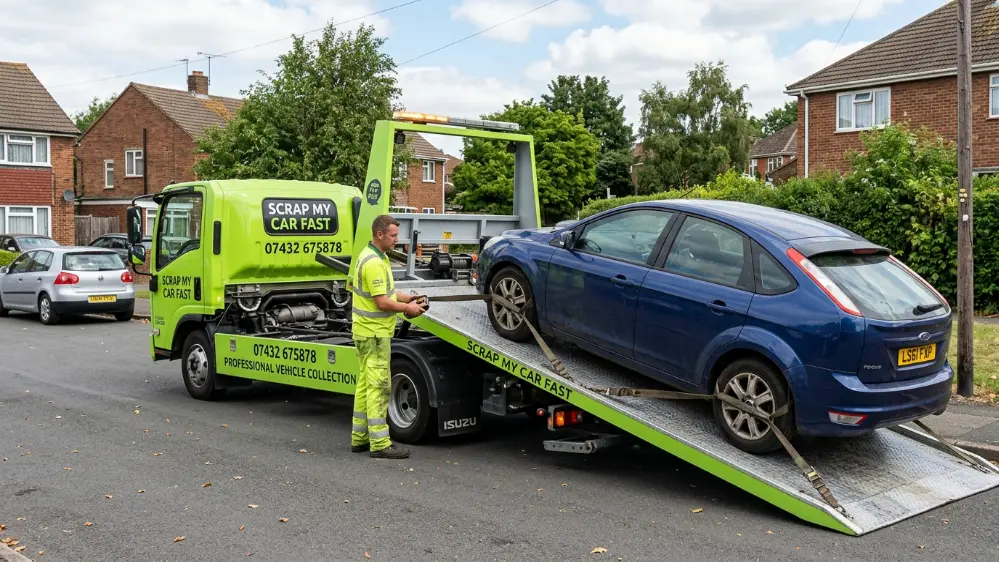
Once you’ve got a number you’re happy with, the rest is straightforward. You book a collection slot, one of our drivers comes to you anywhere across Greater Manchester, and you’re paid by bank transfer the same day the car leaves your driveway. There’s no need to drive it anywhere yourself, which matters if it’s not roadworthy in the first place. You can see the full breakdown of how that works on our how it works page, and if you’re specifically dealing with an older vehicle that’s simply reached the end of its useful life rather than one with a specific fault, our scrap my old car service covers exactly that.
We collect from every borough, including full coverage across Manchester and the wider Greater Manchester area, so wherever you’re based, whether that’s Bolton or anywhere else across the ten boroughs, getting rid of an old car doesn’t need to involve waiting on a scheme that may never apply to you. If you’ve got any questions about the process before booking, our FAQs page covers the most common ones we’re asked.
Frequently Asked Questions
Is there a UK government car scrappage scheme in 2026? No. There has been no nationwide scheme since 2009 to 2010. What exists now are smaller, regional schemes tied to specific Clean Air Zones, plus occasional manufacturer trade-in offers.
How much was the original 2009 scrappage scheme worth? It offered £2,000 off a new car, split evenly between the government and the manufacturer, for vehicles over 10 years old. It ran for about a year and generated roughly 400,000 claims before the funding ran out.
Does Manchester have a Clean Air Zone or a local scrappage scheme? No. Greater Manchester scrapped its plans for a charging Clean Air Zone in 2022 and moved to an investment-led Clean Air Plan focused on buses and licensed taxis. There’s no daily charge for driving an older private car anywhere in Greater Manchester, and no local scrappage grant for private car owners.
Can I scrap my car without using a scrappage scheme at all? Yes, and for most people this is the simpler route. You get a straightforward cash offer based on your car’s weight and current scrap prices, with no requirement to buy anything afterwards.
What’s better, waiting for a scrappage scheme or scrapping for cash now? If you’re already planning to buy a new car from a specific manufacturer that happens to be running a trade-in offer, it’s worth checking their terms. For everyone else, scrapping for cash gets you paid faster, with no restrictions on what you do next.
Does my car need to be roadworthy to qualify for a scrappage scheme? For manufacturer and regional CAZ schemes, generally yes, most require the vehicle to be currently taxed, insured, and driveable at the point of trade-in. This is another reason scrapping for cash tends to suit older or non-running cars better, since roadworthiness makes no difference to a scrap quote.
Do scrappage schemes still exist for vans as well as cars? Some manufacturer offers do extend to light commercial vehicles, though the terms tend to be even narrower than for cars, often restricted to specific van models within a manufacturer’s own range. For most van owners in Greater Manchester with an older commercial vehicle, scrapping it for cash through a service that covers vans up to 3.5 tonnes remains the simpler, more universally available option.
Ready to find out what your car is actually worth? Get an instant quote now, and we’ll arrange free, same-day collection anywhere across Greater Manchester.